


A democracy is deepened when citizens are not only voters but participants, and when leaders are not only winners of elections but genuine representatives of the people. It deepens when institutions are open to scrutiny, when public office is tied to service, when excluded voices are brought into the centre, and when the distance between state and society narrows.
Nigeria’s democracy has survived. The harder question is whether it is deepening.
Since 1999, the country has sustained civil rule longer than at any other period in its post-independence history. Elections have been held. Governments have come and gone. Political parties have risen and fallen. At important moments, power has changed hands peacefully. These are not small achievements.
But democratic survival is not the same thing as democratic success.
For many Nigerians, democracy still feels distant from daily life. Citizens are courted during campaigns and forgotten after elections. Representatives emerge in the people’s name but often govern without a meaningful connection to the people’s voice. Voter turnout has been troubling. Public trust is weak. Political inclusion remains uneven. Too many Nigerians see democracy as a ritual of voting, not a lived experience of belonging, influence and accountability.

This is why the relationship between participation and representation deserves urgent attention.
Dr Benet, WJ (2013), in his Polarities of Democracy, identifies the correlation between participation and representation as signalling one of the democratic tensions that must be managed wisely, not “solved” once and for all. His point is a powerful one: democracy is not an either/or choice between citizens participating directly and elected officials representing them. It is a both/and responsibility. A healthy democracy needs both active citizen participation and credible political representation. If one weakens, the other eventually suffers.
That is exactly where Nigeria now finds itself.
Participation gives democracy its energy. Representation gives it structure. Participation is the voice of the people in action: voting, organising, questioning, protesting, engaging, debating and holding power to account. Representation is the institutional side of democracy: elected officials, legislatures, parties and public bodies acting on behalf of the people.
Neither can do the job alone.
A democracy built on participation without effective representation can slide into noise, instability and unstructured outrage. Public energy may be high, but without institutions capable of translating demands into policy, it often ends in frustration. On the other hand, a democracy built on representation without participation quickly becomes hollow. Elections may still hold, but citizens become spectators. Leaders grow distant. Institutions become insulated. Accountability weakens. Public trust declines.
This second danger is one that Nigeria knows too well.
One of the great weaknesses of Nigerian democracy is that participation is too often reduced to the election season. Citizens are mobilised when votes are needed, then sidelined when governance begins. Democracy becomes episodic, instead of continuous. The people appear briefly at the centre of political life and are then pushed back to the margins.
That is not democratic deepening. It is democratic minimalism.
A serious democracy cannot be sustained on occasional voting alone. Citizens must matter between elections, not only during them. They must have channels to engage public policy, question leaders, influence priorities and monitor performance. Participation must not end at the ballot box.
At the same time, representation must mean more than occupying office. Too often in Nigeria, representation is treated as an electoral victory rather than a public responsibility. But winning an election is only the beginning of representation, not its fulfilment. To represent is to listen, explain, consult, deliberate and act in ways that reflect both constituency needs and the wider public good.
Civic education must also be taken more seriously. Democracy is not self-executing. Citizens need more than the right to vote; they need a practical understanding of how institutions work, how public decisions are made, and how leaders can be held accountable. A democracy of uninformed citizens is easily manipulated. A democracy of informed citizens is far harder to hijack.
Many Nigerians do not feel represented in this fuller sense. They see officeholders who are visible during campaigns but inaccessible in office. They see political parties dominated by elite bargaining rather than grassroots choice. They see defections that ignore voter mandates, poorly communicated legislative behaviour, and public institutions that often appear more responsive to power than to citizens.
This distance between the electorate and the elected is dangerous. When citizens lose faith in representation, participation declines. When participation declines, representatives become even less accountable. The result is a vicious cycle of alienation.
Nigeria must break that cycle.
The first step is to stop treating participation and representation as competing values. They are democratic partners. Participation keeps representation honest. Representation gives participation durable meaning. Participation creates pressure. Representation converts that pressure into laws, policies, budgets and institutions. Participation without representation is restless. Representation without participation is empty.
Nigeria needs both.
This is especially important in a country as large and diverse as ours. With enormous ethnic, religious, regional and social complexity, Nigeria cannot afford a democracy that speaks in only a few voices. Broad participation is necessary because no narrow elite can fully understand the country’s lived realities. Strong representation is equally necessary because such a complex society requires institutions capable of balancing interests and making legitimate decisions.
But for this balance to work, key democratic weaknesses must be confronted honestly.
One is the problem of weak internal democracy within political parties. If party structures are controlled by money, godfatherism and closed-door arrangements, then representation is compromised long before the general election. Citizens cannot feel truly represented when the route to candidacy is already disconnected from public choice.
Another is the corrosive influence of money politics. When political office becomes prohibitively expensive to seek, representation narrows. It favours the wealthy, the connected and the sponsored. It shuts out capable citizens who may have vision and integrity but lack financial muscle. Democracy suffers when leadership recruitment is shaped more by access to money than by public trust.
There is also the continuing underrepresentation of women and young people. This remains one of the clearest signs that Nigeria’s democracy is not yet deep enough. A country cannot claim robust representation when large sections of its population remain structurally marginal to decision-making. Inclusion is not tokenism. It is a democratic necessity.
Electoral credibility is another pressing issue. Citizens are more likely to participate when they believe their votes count and when the process appears transparent, fair and secure. Where elections are clouded by irregularities, violence, inducement or avoidable confusion, democratic faith weakens. Participation shrinks when hope shrinks.
Civic education must also be taken more seriously. Democracy is not self-executing. Citizens need more than the right to vote; they need a practical understanding of how institutions work, how public decisions are made, and how leaders can be held accountable. A democracy of uninformed citizens is easily manipulated. A democracy of informed citizens is far harder to hijack.
The media and civil society remain crucial in this regard. They help to convert public frustration into public scrutiny. They widen civic space. They give visibility to excluded voices. They track promises, expose abuse and sustain democratic conversation beyond campaign rhetoric. In a setting where formal institutions do not always listen well, these actors become essential democratic bridges.
Participation and representation are not rival democratic choices. They are a living polarity that must be managed with wisdom. When participation is strong and representation is weak, frustration grows. When representation exists but participation fades, democracy loses legitimacy. But when both are nurtured together, democracy becomes more resilient, more inclusive and more meaningful.
Still, the burden is not only on institutions. Citizens, too, must resist the urge to reduce politics to complaint, cynicism, or online outrage. Democratic participation requires persistence. It means paying attention to local governance, asking questions about budgets and public services, joining lawful civic action, rejecting vote-buying and insisting that those elected must remain accountable. Deep democracy is built not only in grand national moments but in the everyday habits of citizenship.
This is where local government and community-level governance matter greatly. Democracy becomes real when people can see and influence decisions that affect their schools, roads, markets, water, safety and livelihoods. If participation and representation are weak at the local level, democracy at the national level will remain fragile as well. The culture of democratic engagement must be built from the ground up.
Technology also presents both promise and peril. Digital platforms have opened new spaces for civic participation, especially among younger Nigerians. Information moves faster. Citizens can organise more easily. Public officials can be scrutinised in real time. Yet, digital politics can also reward misinformation, performative outrage and shallow engagement. Social media can amplify a voice, but it cannot substitute for institutions. Hashtags may spotlight injustice, but only responsive representation can convert public attention into lasting reform.
That is why Nigeria must pursue democratic reforms that strengthen both sides of the equation.
Political parties must open up. Elected officials must engage their constituents more consistently and transparently. Public hearings and town halls must become more than formalities. Legislative work must be better communicated. Women, youth and marginalised communities must have fairer access to the political space. Electoral processes must inspire greater trust. Civic education must become a national priority. Participation must become routine, not occasional. Representation must become accountable ,rather than ceremonial.
None of this is impossible. What is required is democratic seriousness.
Nigeria does not lack politically aware citizens. It does not lack civic energy. It does not lack debate. If anything, the country often overflows with political passion. The deeper problem is that this energy is not sufficiently connected to institutions that listen, include and respond. That is the gap democratic reform must close.
The country should not settle for a democracy that merely exists. It should insist on one that works.
A democracy is deepened when citizens are not only voters but participants, and when leaders are not only winners of elections but genuine representatives of the people. It deepens when institutions are open to scrutiny, when public office is tied to service, when excluded voices are brought into the centre, and when the distance between state and society narrows.
This is the real task before Nigeria.
Not simply to preserve democracy as a constitutional arrangement, but to deepen it as a public culture. Not simply to hold elections, but to make citizens matter in the life that follows them. Not simply to produce officeholders, but to produce representation worthy of the name.
Dr Benet’s insight is therefore timely for Nigeria. Participation and representation are not rival democratic choices. They are a living polarity that must be managed with wisdom. When participation is strong and representation is weak, frustration grows. When representation exists but participation fades, democracy loses legitimacy. But when both are nurtured together, democracy becomes more resilient, more inclusive and more meaningful.
Nigeria’s democratic journey will not be completed by rhetoric. It will be advanced by building a system in which the people are not occasionally remembered, but consistently central.
That is the quest to deepen Nigerian democracy. And that is the work that still lies ahead.
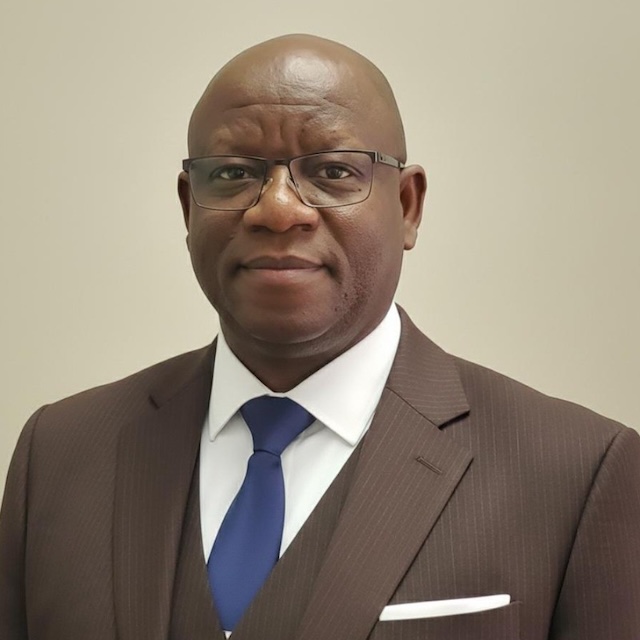
Bolutife Oluwadele is a public policy scholar, author, and governance commentator based in Canada. He holds doctoral qualifications and brings a cross-disciplinary perspective on democratic institutions, civic engagement, and public administration. He is also a chartered accountant and certified fraud examiner. Email: [email protected]