
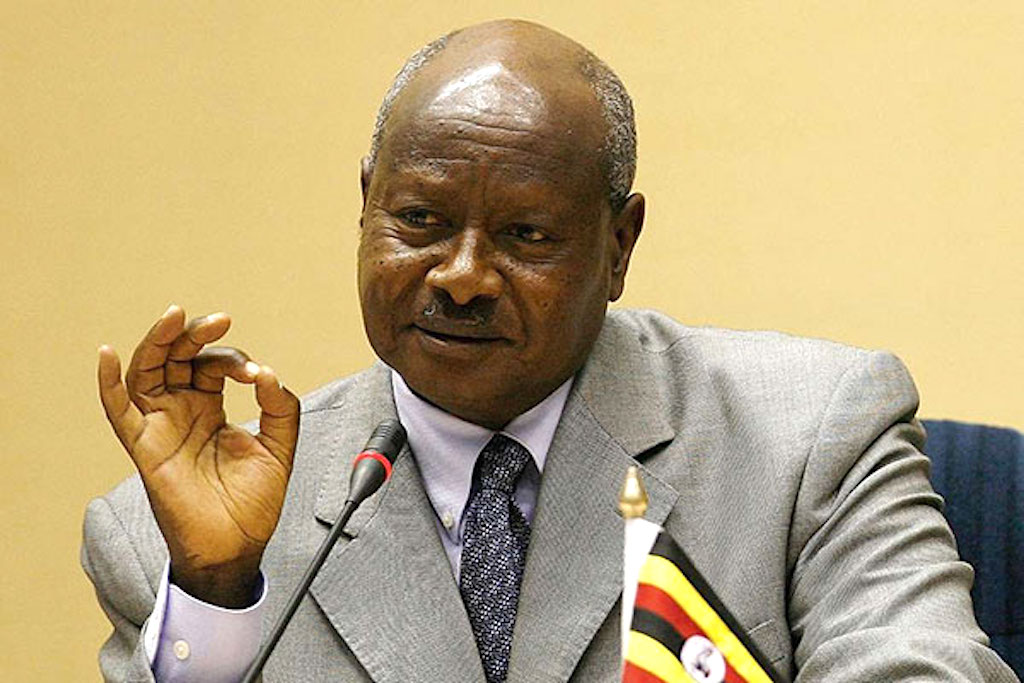

The Ugandan President, Yoweri Museveni, has signed into law a bill which the government says seeks to monitor and control foreign aid to opposition groups in the country but which the opposition says gives the government more powers to clamp down on the civic space.
The country’s Presidential Press Unit (PPU) disclosed in a statement on Sunday that the legislation has been signed into law, according to Reuters.
The bill, which Kampala claims seeks to wean the country from foreign influence, scaled through parliament only two weeks ago. It criminalises promoting foreign interests over Uganda’s interests, targeting local organisations and groups funded by foreign institutions.
It mandates that anyone or any organisation funded by “foreign entities” or working as “agents of foreign entities” be registered and overseen by the government. It also prevents these entities from developing or implementing policy without government approval.
The 81-year-old president has repeatedly criticised what he described as heavy external interference in Uganda’s domestic affairs. Mr Museveni secured a seventh term in the January 2026 presidential election, extending his 40-year rule.

However, opposition figures and rights groups warned that the law would restrict free speech and could be used to target civil society groups and shrink civic space.
They also said its broad language would allow the government to criminalise almost any form of political opposition.
Mr Museveni, who has been in power for 40 years, has overseen an intense clampdown on dissents. This effort is marked by arrests of opposition figures, restrictions on the media, and allegations of human rights abuses by security forces.
PREMIUM TIMES reported that the January 2026 presidential election, which extended Mr Museveni’s reign into a seventh term, was marred by violence.
At least 22 members of the opposition National Unity Party were killed in the pre-election crackdown.
This paper previously reported that the president’s son, Muhoozi Kainerugaba, attested to this crime in January while trying to flaunt political power.
The main opposition candidate, Bobi Wine, also claimed to have survived multiple attacks.
Human rights groups were also targeted as part of efforts to suppress dissent. Ahead of the election, the government suspended operations of at least 10 prominent media houses and human rights organisations. It also cut internet access two days before the election, citing online misinformation, disinformation, electoral fraud, and a potential incitement of violence as justifications for its actions.
Implementation of new law
However, Mr Museveni claimed that opposition groups are receiving funding to push policies antithetical to the country’s national interest.
The Ugandan government also accused critics of exaggerating the bill’s impact.
As such, the law establishes a clear hierarchy of engagement within the government, designating the Ministry of Internal Affairs as the implementing authority.
The legislation has also drawn criticism from the World Bank, which warned that the policy would affect remittances and development work.
The Ugandan parliament, after the World Bank’s intervention in April, scaled back on some of its contentious provisions. One such provision required that Ugandans receiving money from abroad be registered in the country as foreign agents.
Remittance from diaspora citizens is an important source of foreign exchange for the country. As such, Central Bank Governor Michael Atingi-Ego warned that the country risked an economic disaster with this provision.
This provision was eventually amended to apply only to those receiving funds for political purposes that advance foreign interests.
Meanwhile, the State House said the new law will ensure that the country’s development priorities align with national interests.
It stated that the law will provide clarity in the management of state authority, improve institutional coordination, and support governance and public accountability.
“The Sovereignty Act is expected to strengthen Uganda’s capacity to safeguard its independence in national decision-making processes.
“The law complements the broader national development agenda by promoting public sector efficiency and economic transformation,” the PPU said.