
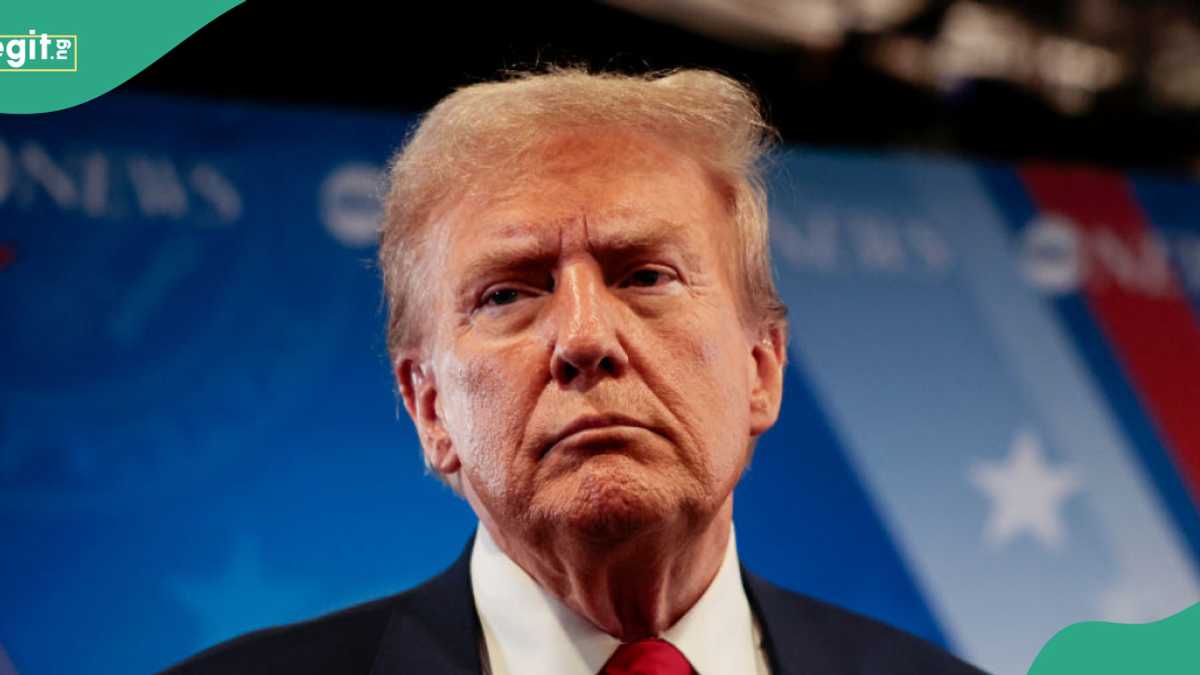

- President Trump signed two executive orders on Thursday targeting birthright citizenship and the commercial birth tourism industry
- The orders affect four categories of future births, including children of diplomatic staff and those born to mothers who entered the US solely to give birth
- Trump’s first birthright citizenship order was struck down by the US Supreme Court on June 30, raising fresh legal questions about the new directives
President Donald Trump signed two executive orders on Thursday, August 6, aimed at narrowing birthright citizenship in specific circumstances and cracking down on the commercial birth tourism industry in the United States.
The orders apply exclusively to future births and target four categories: children born to foreign diplomatic staff serving another government while in the US; children of people classified as alien enemies, including members of federally declared terrorist organisations; children born in US territories if Congress passes legislation ending automatic citizenship there; and children whose mothers entered the US deceptively and solely for the purpose of giving birth at a commercial birth tourism centre.


Source: Getty Images
Why the orders face legal challenges
This is Trump’s second attempt to limit birthright citizenship, which is protected under the 14th Amendment of the US Constitution, guaranteeing citizenship to nearly all persons born on American soil. His original executive order, signed on his first day back in office, was blocked by the US Supreme Court on June 30 after the court ruled it went too far.
The administration argues the new orders operate within exceptions the Supreme Court has long recognised. On diplomatic staff, the 14th Amendment does not automatically extend citizenship to ambassadors’ children, and the new order seeks to widen that category to other non-citizen government employees. On alien enemies, the amendment has historically not applied to invading armies, and the order expands that designation.
Birth tourism targeted at home and abroad
The second executive order instructs the Secretary of State and the Department of Homeland Security to develop rules and guidance to disrupt the birth tourism industry both domestically and overseas, axios reported.

US law already prohibits obtaining a tourist visa primarily to give birth in the country and gain citizenship for a child, and immigration officials already hold the authority to deny entry to pregnant foreign nationals suspected of travelling for that purpose.
The administration’s legal argument for restricting birth tourism rests on the concept of fraudulent misrepresentation. Officials said that just as the government can revoke citizenship obtained through fraud during the naturalisation process, a mother who deceptively uses commercial birth tourism services can also lose that entitlement for her child.
The House Oversight Committee launched an investigation into birth tourism centres and in May requested documents from a company called “Have My Baby in Miami.”
In a letter, the committee wrote:
“The benefits of U.S. citizenship are a unique privilege,” adding that concerns existed around “potential national security and election integrity threats posed by adversarial nations,” given that mothers travelling for this purpose come predominantly from China and Russia. A Senate Homeland Security Committee report on birth tourism was also released in 2022.
Estimates of births resulting from birth tourism each year range from the low thousands to the tens of thousands, Fox News reported.

Critics have previously argued the issue can be addressed without targeting birthright citizenship broadly. Amanda Frost, a University of Virginia immigration law professor, told PolitiFact: “If birth tourism is a problem, the answer is to enforce that regulation.”
US embassy explains how long Nigerians can stay in America
Previously, the United States Mission in Nigeria reminded travellers that holding a valid US visa does not automatically determine how long they can remain in the country.
The embassy urged international visitors to verify their authorised period of stay through their electronic arrival record after entering the United States.
Source: Legit.ng