
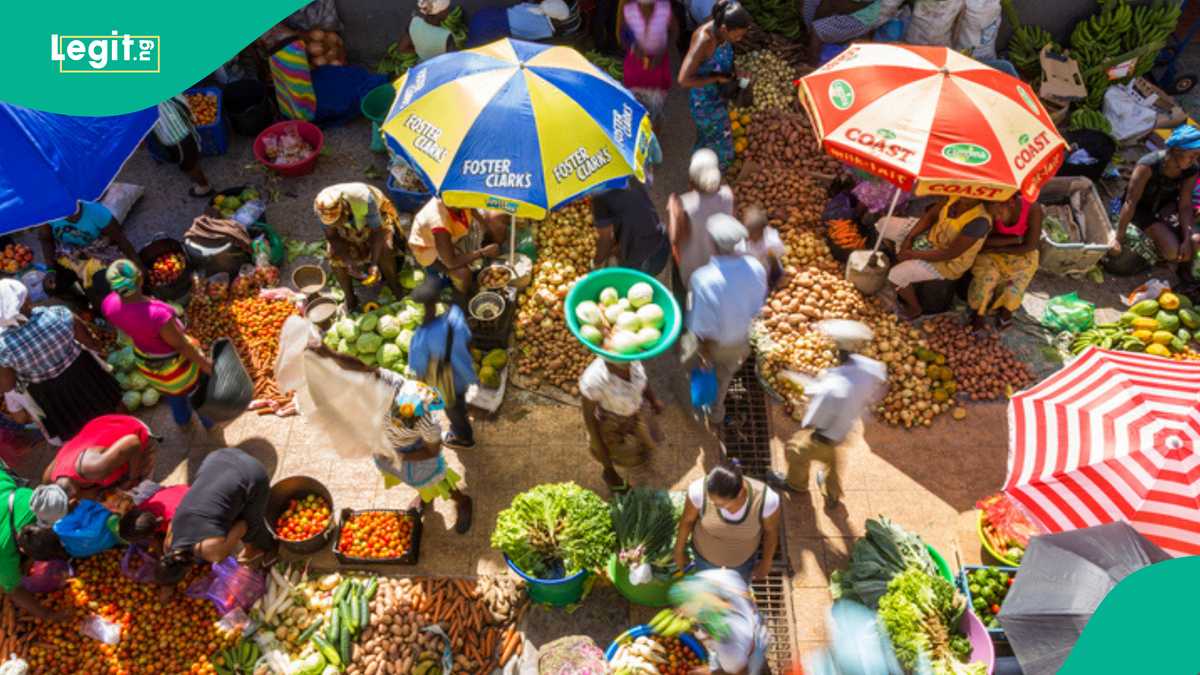

- The NBS recorded a 2.79 percentage point jump in Nigeria’s food inflation between June and July 2026
- Adamawa, Katsina, and Zamfara posted the steepest annual food price increases among all Nigerian states
- Borno was the only state to record a negative food inflation rate, while headline inflation eased slightly in July
Legit.ng journalist Dave Ibemere has experience in business journalism, with in-depth knowledge of the Nigerian economy, stocks, and general market trends.
Nigeria’s food inflation climbed to 20.31% in July 2026, the sixth straight monthly increase, according to data released by the National Bureau of Statistics (NBS).
The July figure is 2.79 percentage points higher than the 17.52% recorded in June 2026.

Photo: Bloomberg
Source: Getty Images
The NBS linked the rise to higher average prices for a range of everyday food items, including crayfish, fresh pepper, onions, carrots, rice, water yam, tomatoes, garri, plantain, beef, and eggs.
Despite the monthly uptick, the year-on-year picture showed some relief.

BusinessDay reports that Food inflation in July 2026 at 20.31% was lower than the 26.20% posted in the same month in 2025, suggesting the pace of annual price increases has slowed considerably from a year ago.
The NBS also reported that Nigeria’s headline inflation rate eased slightly to 15.43% in July, down from 15.91% in June, while month-on-month headline inflation fell to 1.57% from 1.66%.
States With the Highest Food Inflation
State-level data from the NBS showed wide variation in food price pressures across the country. Adamawa recorded the steepest annual food inflation at 51.36%, far above the national figure.
Katsina came second at 30.84%, followed by Zamfara at 30.65%. Delta, Lagos, and Ondo all posted annual rates above 26%.
The full top 10 states by annual food inflation in July 2026 were:
- Adamawa: 51.36%
- Katsina: 30.84%
- Zamfara: 30.65%
- Delta: 28.10%
- Lagos: 26.80%
- Ondo: 26.00%
- Gombe: 24.20%
- Kwara: 23.90%
- Benue: 22.30%
- Rivers: 22.20%

Photo: Bloomberg
Source: Getty Images
States With the Lowest Food Inflation
At the other end of the scale, Borno was the only state to record a negative annual food inflation rate, at -0.31%. Nasarawa followed at 6.88%, with Kebbi recording 12.50%.

On a month-on-month basis, Adamawa again topped the table at 17.02%, with Lagos at 13.48% and Borno at 13.26% close behind.
Jigawa recorded the sharpest monthly drop at -3.68%, followed by Kebbi at -3.67% and Bauchi at -1.85%.
The NBS said the average annual food inflation rate for the 12 months ending July 2026 stood at 16.06%, a decline of 14.79 percentage points from the 30.85% recorded in the corresponding period of 2025.
FG releases list of food and drinks Nigerians are banned from importing
Earlier, Legit.ng reported that the Nigerian Customs Service had released details of food products that remain prohibited from entering Nigeria in 2026.
Customs officers are expected to confiscate the banned products if they are found at the country’s airports, land borders or seaports.
The restrictions cover several categories, including animal products, processed foods, beverages and packaged food items. Live or dead birds, including frozen poultry products, are among the major items affected by the import ban.
Source: Legit.ng