
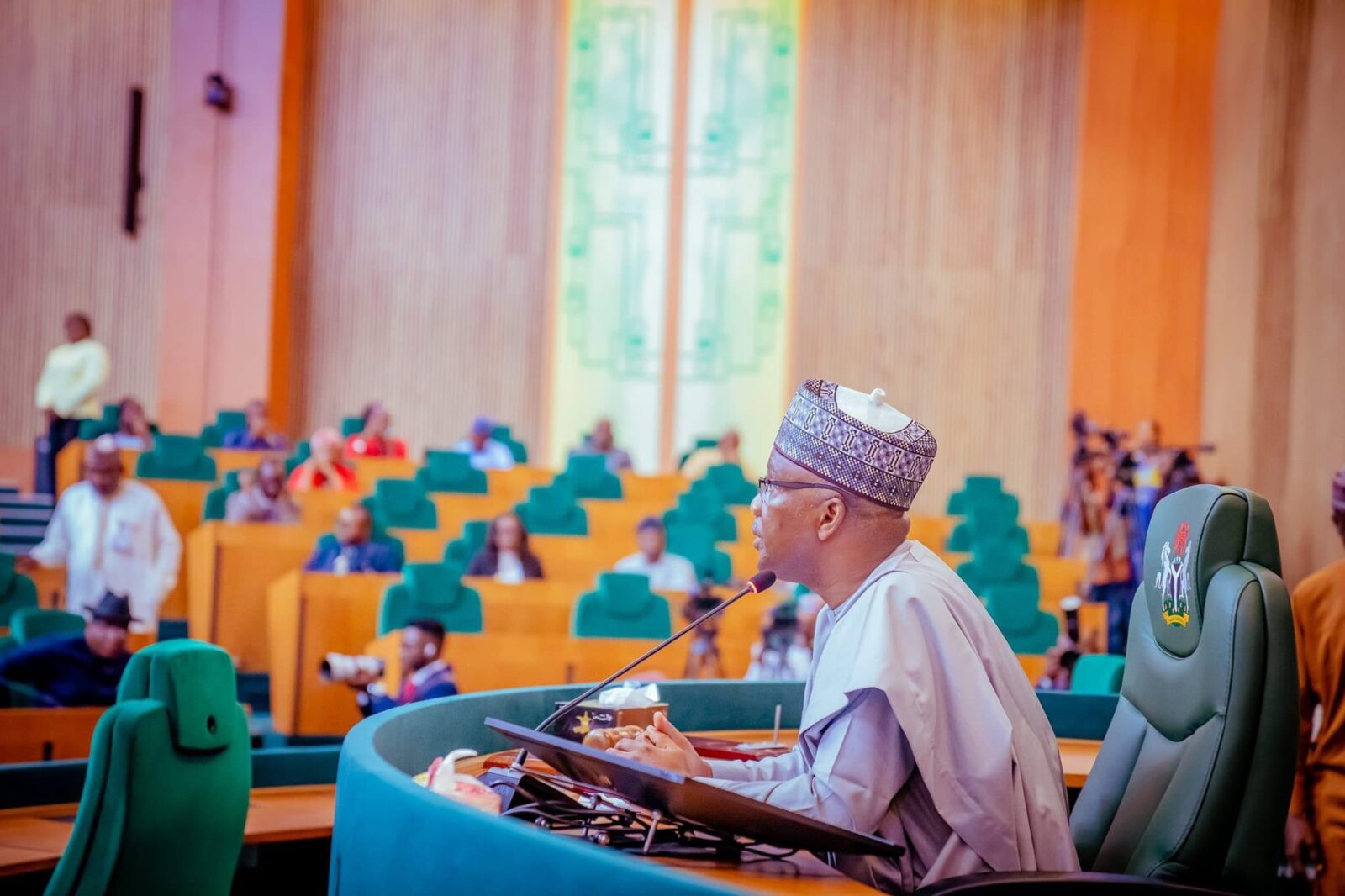


As the House of Representatives marked its third legislative anniversary and adjourned plenary until 7 July, lawmakers took several far-reaching decisions on security, constitutional reforms, parliamentary leadership and public safety.
The week witnessed major developments, including the emergence of House minority leaders, progress on the state police proposal, fresh security resolutions and a probe into a deadly train accident.
House resolves minority leadership dispute
The House finally announced its minority leadership team, bringing to an end days of controversy that trailed the nomination of the opposition’s principal officers.
Speaker Abbas Tajudeen, while reading a communication from minority caucus members during Thursday’s plenary, named Fred Agbedi (PDP, Bayelsa) as minority leader, Abdussamad Dasuki (ADC, Sokoto) as deputy minority leader, and Manu Soro (APM, Bauchi) as minority whip.
The announcement ended the uncertainty that followed efforts by some opposition lawmakers to nominate Ikenga Ugochinyere (APP, Imo) as minority leader. The dispute had centred on the interpretation of House rules, particularly provisions relating to legislative experience required for principal offices.

State police proposal scales major hurdle
In one of the most significant constitutional reform moves of the current Assembly, the House on Thursday passed, for further legislative action, a bill seeking to establish state police.
The proposal, considered under HB 617, received overwhelming support from lawmakers, with 289 voting in favour and only one opposing.
The bill is part of ongoing constitutional amendment efforts aimed at addressing worsening insecurity across the country, including terrorism, banditry, kidnapping and communal violence.
On the same day, the Senate passed the bill and referred it to its Committee on Constitution Review. If at the end of the day, there are differences in the versions passed by both chambers, they will set up a harmonisation committee to resolve the differences and transmit the bill to the 36 state Houses of Assembly, where at least two-thirds of the assemblies must endorse it before it can be forwarded to the president for assent.
Reps summon service chiefs, NSA over North-west insecurity
Concerned by the worsening security situation in the country, the House on Tuesday summoned the nation’s service chiefs and National Security Adviser Nuhu Ribadu to appear before lawmakers.
The decision followed the adoption of a motion sponsored by Sulaiman Gumi of Zamfara State, who warned that escalating attacks, kidnappings and banditry had evolved into a humanitarian crisis affecting several states, including Zamfara, Sokoto, Katsina, Kaduna, Kano, Kebbi and Jigawa.
The lawmakers expressed dissatisfaction with existing security measures and called for more effective strategies.
During the debate, Abdussamad Dasuki, representing Kebbe/Tambuwal Federal Constituency of Sokoto State, criticised what he described as a recurring pattern of legislative resolutions producing little measurable impact, while Stanley Olajide, who represents Ibadan North-west/Ibadan South-west Federal Constituency of Oyo State, advocated greater deployment of technology-driven security solutions.
The House subsequently urged the Ministry of Defence to deploy additional personnel and equipment to affected states and called for non-military interventions to address poverty, unemployment and other drivers of insecurity.
Lawmakers demand results or resignation of service chiefs
In a separate security-related resolution, the House on Tuesday called on the federal government to take immediate and decisive action against banditry, kidnappings and attacks on schools and places of worship.
The resolution followed a motion sponsored by Ibe Osonwa (LP, Abia), who lamented the growing insecurity threatening educational institutions, religious centres and rural communities.
He lamented that the continued abduction of schoolchildren across different parts of the country has disrupted education, forced thousands of children out of school and deepened Nigeria’s out-of-school children crisis.
Lawmakers demanded an aggressive security strategy capable of dismantling criminal camps, securing vulnerable communities and ensuring the release of kidnapped victims.
The House further declared that if insecurity continues unabated and authorities fail to restore safety within a specified period, the nation’s service chiefs should resign honourably for failing to fulfil their constitutional responsibility of protecting lives and property.
House orders probe of fatal train accident
The lawmakers also ordered a comprehensive investigation into a train accident along the Itakpe-Warri rail corridor that reportedly claimed lives and left several passengers injured.
The resolution followed a motion sponsored by Francis Waive (APC, Delta), who cited reports indicating that at least four people died while several others sustained injuries.
Beyond the casualties, lawmakers noted that passengers suffered emotional trauma, financial losses and disruption of personal and business activities.
READ ALSO: Reps to reconvene for emergency sitting on 2025 budget extension
Following deliberations, the House urged the Nigerian Railway Corporation (NRC) to conduct a thorough investigation into the incident, publicly release its findings and implement measures to prevent future accidents.
Reps adjourn plenary until July
The House on Thursday adjourned plenary until 7 July to enable members to embark on their annual end-of-legislative-year break and undertake constituency engagements.
Speaker Abbas Tajudeen said the recess would also provide lawmakers sufficient time to study the various constitutional amendment bills expected to come up for consideration when the House resumes.
The adjournment comes amid the third anniversary of the 10th National Assembly, which was inaugurated on 13 June 2023.
Over the past three years, lawmakers have overseen a period marked by intensive legislative activity, constitutional reform efforts, oversight engagements and debates on key national issues, including security, the economy and governance.
The break provides members an opportunity to reflect on the Assembly’s performance so far, engage with constituents on emerging concerns and prepare for the final year of the current legislative cycle.