
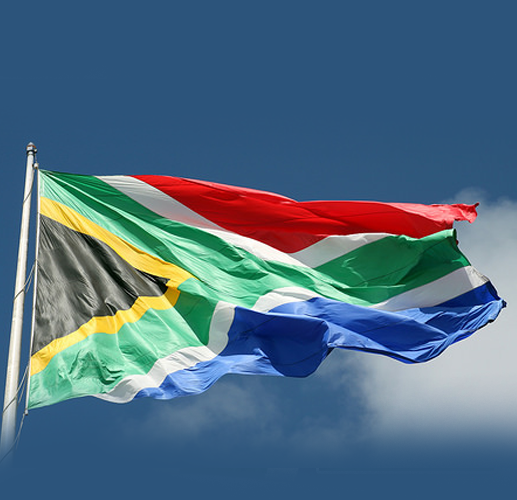

South Africa has announced an upward adjustment in fuel prices effective 6 May 2026, citing rising global crude oil prices, higher international petroleum product costs, and supply disruptions linked to tensions in the Middle East.
The development highlights mounting pressure on major fuel-importing economies, where fluctuations in international oil prices and shipping costs continue to influence domestic petrol prices following the removal of fuel subsidy in 2023.
In a statement issued on Monday, South Africa’s Minister of Mineral and Petroleum Resources said both international and local market conditions determine the country’s monthly fuel price adjustments.
The minister explained that because South Africa imports both crude oil and refined petroleum products, movements in global prices and shipping costs directly affect domestic fuel pricing.
Nigeria’s reality
Since the outbreak of the US-Israel-Iran conflict on 28 February, petrol prices in Nigeria have risen sharply, reflecting global crude oil price movements and worsening the cost-of-living crisis already triggered by subsidy removal.

Retail prices, which averaged about N870 per litre before the escalation, now hover around N1,370 per litre and above in many parts of the country, representing an increase of more than 25 per cent across major cities.
As Brent crude continues to fluctuate, Dangote Petroleum Refinery — now a major supplier of refined products in Nigeria and neighbouring countries — has adjusted its petrol gantry prices several times, resulting in an overall increase of more than 30 per cent.
These changes have translated into higher pump prices nationwide, intensifying inflationary pressures and raising transportation costs.
The hardship has also renewed calls for the reintroduction of fuel subsidy, as many Nigerians struggle with stagnant incomes and rising living expenses.
Although the federal government has pledged to accelerate the rollout of Compressed Natural Gas (CNG) vehicle conversion kits as a cheaper alternative to petrol, alongside other intervention measures, the impact is yet to be widely felt.
As a major oil-producing country, analysts say the rise in crude prices could significantly boost Nigeria’s revenue.
Higher prices are also expected to strengthen the country’s foreign exchange reserves and support fiscal consolidation.
With Brent crude trading above $100 per barrel, compared to Nigeria’s 2026 budget benchmark of $64.85, the federal government could record substantial revenue gains.
Some analysts argue that excess earnings from the Middle East crisis should be used to stabilise domestic petrol prices and ease pressure on citizens.
Crude oil rises above $100
According to the South African minister, the average Brent crude oil price increased from $93.67 per barrel to $101 during the review period.
The government attributed the rise to continued tensions between the United States and Iran, the closure of the Strait of Hormuz, and damage to critical infrastructure affecting global crude oil supply.
The increase also pushed up international petroleum product prices, particularly diesel and paraffin, which rose faster than petrol because of stronger demand and reduced supply from the Persian Gulf.
Authorities said these developments increased the Basic Fuel Price of petrol by R2.04 per litre, diesel by R4.96 per litre, and illuminating paraffin by R4.21 per litre.
Prices of propane and butane also increased due to limited global supply resulting from disruptions in the Strait of Hormuz.
Relief measure despite levy increase
Although the South African government announced the implementation of a 122.70-cent-per-litre slate levy on petrol and diesel from 6 May, it also introduced temporary relief measures to cushion the impact on consumers.
The government said the cumulative slate balance had reached a negative R14.173 billion by the end of March 2026, necessitating an adjustment to the levy under its self-adjusting pricing mechanism.
However, due to the continued impact of the US-Iran conflict on global fuel prices, the Minister of Finance approved a temporary reduction in the general fuel levy of 300 cents per litre for petrol and 393 cents per litre for diesel.
The relief measure will run from 6 May to 2 June 2026.
South Africa also announced that the Maximum Refinery Gate Price for imported LPG through the Port of Saldanha Bay would be R18,375.72 per metric ton, while the Maximum Retail Price would be R40.85 per kilogram from 6 May.
Price adjustment
Based on prevailing local and international factors, the South African government said Petrol 93 and 95 (ULP and LRP) would increase by R3.27 per litre.
Diesel (0.05 per cent sulphur) will increase by R6.19 per litre, while illuminating paraffin (wholesale) will rise by R4.22 per litre.
The Single Maximum National Retail Price for illuminating paraffin will increase by R5.63 per litre.
In addition, the Maximum Retail Price of LPGas will rise by R5.07 per kilogram in Gauteng and R5.78 per kilogram in the Western Cape.
READ ALSO: UPDATED: Xenophobia: Nigeria to repatriate citizens from South Africa
The government said the fuel price schedule for the different Magisterial District Zones would be published on Tuesday, 5 May 2026.
The adjustment comes as governments across Africa continue to grapple with balancing market-driven fuel pricing and consumer protection amid persistent global energy volatility.