
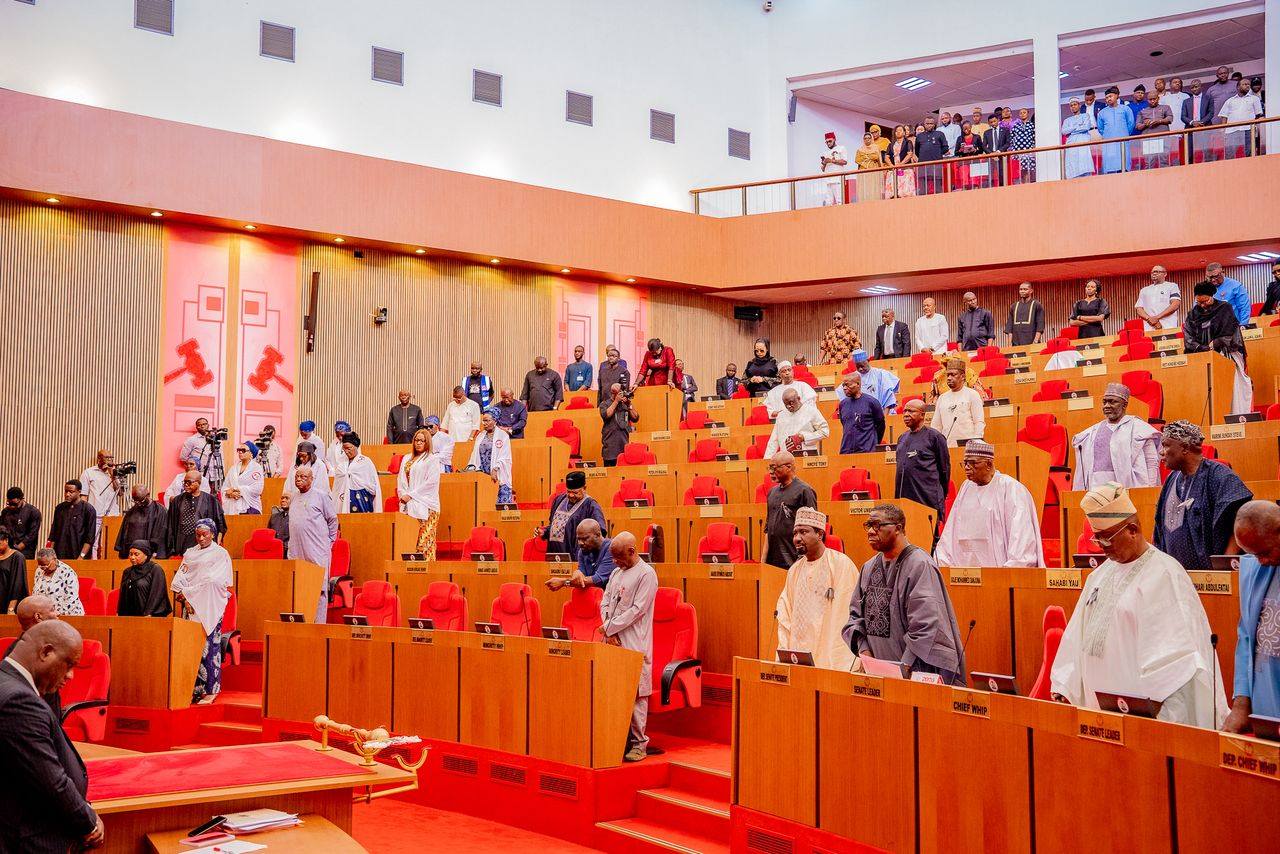

The Senate on Thursday passed the 2026 budget of the Federal Capital Territory Administration (FCTA), authorising the expenditure of N2.3 trillion for the year.
The upper chamber increased the budget by N84 billion from the initial N2.2 trillion proposed by President Bola Tinubu in March.
The lawmakers approved the budget without disclosing the sources of revenue to fund. It is expected to run from 1 January to 31 December 2026. Some senators, however, raised concerns over the omission during deliberations.
The budget was approved at the Committee of Supply, where most senators endorsed it through voice votes.
The Senate President, Godswill Akpabio, announced the passage of the budget after a majority of lawmakers supported it.

The Senate approved the budget after considering a report presented by the senator representing Abia Central, Austin Akobondu, on behalf of the Senate Committee on the FCT.
Mr Akobondu, a member of the African Democratic Congress (ADC), said the committee held meetings with the FCT Minister, Nyesom Wike, and other relevant officials, during which they agreed on the modalities for the budget.
He recommended the sum of N2.285 trillion as the total budget, with N165.775 billion allocated for personnel costs, N378.231 billion for overhead costs, and N1.741 trillion for capital projects.
The breakdown shows that the capital expenditure accounts for the largest share of the budget at 76.19 per cent, followed by overhead costs at 16.55 per cent, while personnel costs account for 7.25 per cent.
Revenue sources
Budgets proposed by the executive are usually accompanied by details of how they will be financed, including projected revenues from internally generated revenue, loans, bonds, or other funding sources.
Both the federal and state governments frequently rely on borrowing from international financial institutions to finance annual budgets despite the country’s growing debt profile.
The FCT Administration currently operates its budget independently following the Tinubu administration’s removal of the FCT from Nigeria’s Treasury Single Account (TSA), a move that gives the minister direct access to the territory’s funds.
However, the 2026 FCT budget passed by the Senate was not accompanied by details of its revenue sources, prompting some lawmakers to raise concerns during debate on the report.
If revenue sources are not stated, the government may later rely on loans, overdrafts, or other debts to finance the budget. This could increase public debt obligations without prior legislative scrutiny.
Budgets are expected to show both projected expenditure and expected income. Without a revenue profile, lawmakers and the public cannot properly assess whether the spending plan is realistic or sustainable.
The senator representing Lagos East, Adetokunbo Abiru, queried the absence of the revenue profile in the budget. Mr Abiru, who chairs the Senate Committee on Banking, Insurance and Other Financial Institutions, however, later commended the FCT minister for his performance.
Similarly, Niger East Senator, Sani Musa said the budget would be incomplete without disclosing its revenue sources. Mr Musa chairs the Senate Committee on Finance.
Mr Akpabio agreed with the concerns raised by the senators and directed the committee to ensure that the Senate receives the FCT’s revenue profile, regardless of whether the budget had already been approved.
READ ALSO: Senate minority whip defects to NDC amid ADC crises
Senators praise Wike
Some senators, however, praised Mr Wike for ongoing infrastructural development in the FCT.
The Deputy Senate President, Barau Jibrin, commended the minister for infrastructure projects across Abuja, saying the budget reflected Mr Wike’s determination to continue developing the nation’s capital.
Bauchi Central Senator, Abdul Ningi, also described the budget as balanced.
The Senate Minority Leader, Abba Moro, similarly praised the minister, saying the budget would further support the development of the FCT.