

Médecins Sans Frontières (MSF) has raised concerns over worsening malnutrition, recurring disease outbreaks and persistent maternal health challenges in Nigeria, warning that weak healthcare access and deepening humanitarian pressures are leaving vulnerable communities at greater risk.
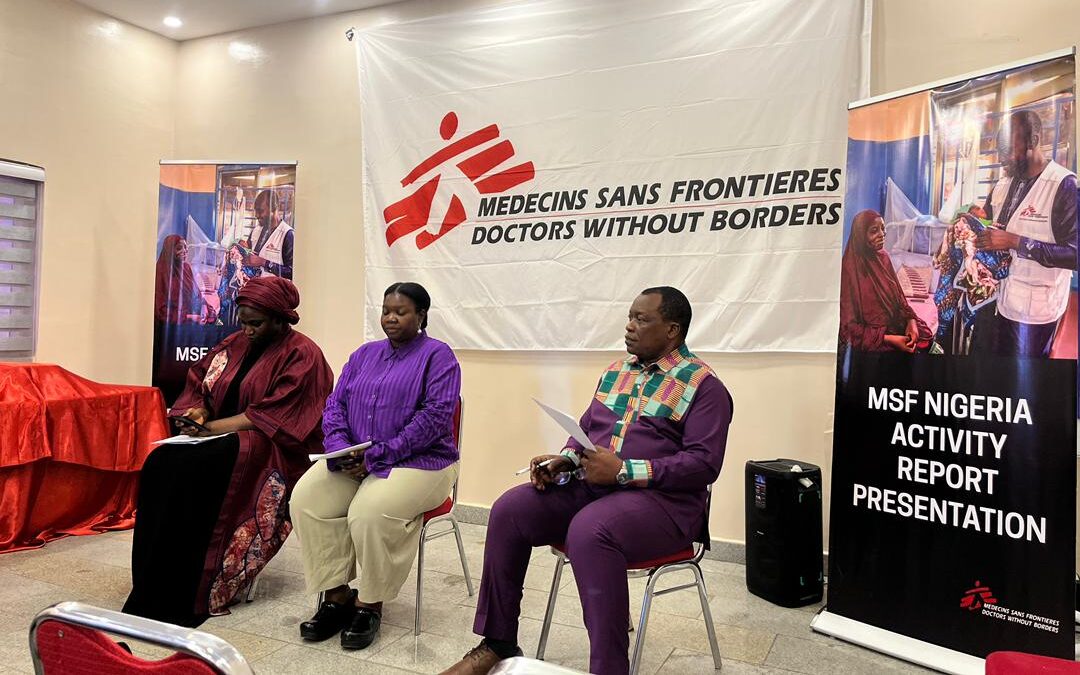
The humanitarian organisation disclosed this on Wednesday in Abuja during the launch of its 2025 Country Activity Report, which documents trends observed across its medical operations in several states.
According to the report, MSF in collaboration with health authorities, treated more than 440,000 children for malnutrition in 2025, the highest number recorded by the organisation in Nigeria in recent years.
The figure includes 353,989 children treated through outpatient nutrition programmes and 90,723 others admitted into inpatient stabilisation centres for severe acute malnutrition with complications.
MSF said the steady rise in admissions since 2022 reflects worsening living conditions in many parts of the country, particularly in conflict-affected communities where displacement, flooding, inflation and food insecurity continue to disrupt access to food and healthcare.

Giving his remarks, the organisation’s Country Representative, Ahmed Aldikhari, said the crisis is increasingly driven by a cycle in which disease outbreaks and malnutrition reinforce each other, especially among children with limited access to timely medical care.
Mr Aldikhari noted that many of the illnesses affecting communities are preventable, adding that strengthening vaccination coverage, improving water and sanitation systems, enhancing disease surveillance and ensuring timely access to treatment remain critical to reducing the burden.
“We are seeing a vicious cycle where malnutrition is both a cause and a consequence of diseases such as measles, malaria, and diphtheria among others, which continue to affect vulnerable communities, especially when healthcare is delayed or inaccessible,” he said.
Compounding pressure
The report noted that outbreaks of malaria, measles, cholera, meningitis, diphtheria and other infectious diseases continued to place pressure on fragile health systems during the year.
MSF said it treated 341,239 malaria patients, 38,753 measles cases, 6,123 diphtheria patients and 985 meningitis cases across facilities it operates or supports.
The Medical Coordinator of the Organisation, Bukola Oluyide, said many children admitted for malnutrition were also battling illnesses such as measles and malaria, which weaken the body and reduce the ability to absorb nutrients.
She explained that beyond food shortages, factors such as insecurity, displacement and poor vaccination coverage continue to increase children’s vulnerability to both disease and malnutrition.
According to her, MSF combines inpatient and outpatient nutrition programmes with community-based screening and awareness campaigns aimed at helping families identify malnutrition early and sustain recovery after treatment.
The report also highlighted wider concerns around disease prevention and outbreak response.
The Medical Activity Manager with the Nigeria Medical Emergency Response Team, Shafa’atu Abdulkadir, said recurring outbreaks in Nigeria are often driven by overlapping challenges including insecurity, delayed detection, poor sanitation, poverty and gaps in immunisation coverage.
She noted that some communities remain difficult to access during vaccination campaigns due to insecurity, leaving many residents unvaccinated and vulnerable during outbreaks.
Ms Abdulkadir also stressed the importance of community engagement during emergency responses, noting that interventions are often more effective when local leaders and residents are actively involved.
Maternal deaths
Beyond disease outbreaks, the report drew attention to Nigeria’s continuing maternal and newborn health crisis.
MSF said it assisted 33,590 deliveries, conducted 119,469 antenatal consultations and carried out 224 fistula surgeries in 2025.
The organisation noted that many women, especially those in rural and conflict-affected communities, still face serious barriers to accessing maternal healthcare, including poor roads, transportation costs, insecurity, overstretched hospitals and weak referral systems.
Another Medical Coordinator with MSF, Louis Vala, linked many maternal deaths to delays in seeking, reaching and receiving care, factors commonly described in public health as the “three delays.”
According to him, some women arrive at health facilities only to face shortages of qualified health workers, medical supplies or essential equipment needed for emergency obstetric care.
MSF said its teams frequently manage severe complications associated with delayed treatment, including obstructed labour, infections, severe bleeding and eclampsia.
The organisation called for stronger investment in primary healthcare, emergency obstetric services, staffing and referral systems, particularly in underserved communities where preventable deaths remain common.
About MSF
MSF, also known as Doctors Without Borders, is an international medical humanitarian organisation that provides emergency healthcare to people affected by conflict, disease outbreaks, disasters and limited access to medical care.
The organisation, which has operated in Nigeria since 1996, said it ran regular medical projects across 10 states in 2025, including Bauchi, Borno, Cross River, Ebonyi, Jigawa, Kano, Katsina, Kebbi, Sokoto and Zamfara.
They also established a new presence in Kaduna State and carried out emergency interventions in other states such as Niger and Adamawa.