


By injecting this creative “elixir” into the city, we are doing more than hosting an event; we are rallying a generation to reinvent their crafts for the public good. Abuja remains a critical part of my lived experience, and this initiative ensures that the city continues to evolve — not merely as a seat of administrative power, but as the soul of Nigeria’s creative resistance and democratic hope.
Contextualising the Abuja Creative Landscape
Abuja, the Federal Capital Territory (FCT), represents a critical frontier in Nigeria’s creative economy. For decades, the city has been dismissed as an “artificially constructed” administrative zone, a perception rooted in its origin as a neutral territory carved out of the North-Central region. This state-led formation necessitated the displacement of indigenous communities into resettlement towns, a historical trauma that left many viewing the FCT as a city without an original cultural core.
However, having lived and worked in Abuja for over ten years, I have observed a profound transformation. The city is no longer a sterile bureaucratic enclave; it has matured into a diverse cultural centre where a potent mix of local and international influences provide a unique competitive advantage over the more saturated Lagos market.
Today, a burgeoning sub-culture of young creators is leveraging expressive art-forms to challenge the “soulless” narrative. They are bringing human-angle stories into the mainstream and heightening awareness of socio-political deficits. Recognising the strategic necessity of grounding this energy, CivicHive identified Abuja as a primary site for intervention.

At CivicHive, we duly recognised this, and thus our second national Creators Mixer under our Creative Change Makers Initiative targeted the ‘soulless’ Abuja as our next hub to infuse a new dose of creative injection into the core of young creatives.
This strategic injection aims to reorganise the creative pulse of the city, transitioning it from a seat of government power to a powerhouse of civic innovation. This pulse is catalysed within the physical environments where these creators converge.
The Architecture of Collaboration: CivicHive and Sync-Hub
To scale the impact of individual creators into a cohesive movement, specialised hubs are non-negotiable infrastructure. These spaces act as the “nexus points” where isolated talent is orchestrated into collective action. The Abuja Creators’ Mixer flourished through a strategic partnership with Sync-Hub, a bustling centre for FCT-based talent that mirrors the design philosophy of our CivicHive office in Lagos.
The aesthetic alignment between these two hubs — vibrant murals, dedicated “arts-making corners,” and a shared colour palette — facilitates an immediate “sense of home.” This psychological safety is essential for cross-regional collaboration, allowing creators to move seamlessly between Lagos and Abuja. Within this environment, Sensei Ipo, Head of Sync-Hub, underscored a vital strategic lever: the incremental development of public-speaking prowess. For the creative sector to influence governance, artists must possess the skills to push their art-forms out of private studios and into the public sphere. While the architecture provides the container, the strategic narratives of the creators provide the substance that fills it.
Sustainable creative movements are built on “human-angle stories” and shared vulnerability. The mixer highlighted how collective experiences serve as the “essential reality” for human reconnection. A poignant moment occurred during a karaoke session where I joined a group of vibrant young attendees – Angel, Vania and Nonye – to sing “Say Something” by A Great Big World and Christiana Aguilera.
Strategic Narratives: Insights from the Creative Frontline
In the pursuit of advancing human dignity and transparency, “resilience” and “clarity of mind” serve as the professional bedrock for the modern creator. The insights shared at the mixer demonstrate how art forms are being strategically deployed as tools for accountability of governance.
- Daniel Okechukwu Nunu: An alumnus of the 2023 Creative Change Makers Fellowship, he is a testament to the fellowship’s capacity to launch impactful careers. The “So What?”: His mastery of short-form video and satirical skits — informed by the “wiseacres and complex thoughts” we debated during his cohort — proves that humour can bridge the gap between complex governance data and public engagement, making civic duty palatable for the digital generation.
- Harmony Oghenefegor Akporero (Feg Art): As the CEO of Feg Art Business Hub, he detailed the “inception hindrances” of familial pressure to abandon the arts for traditional paths. The “So What?”: For the creative economy to be resilient, creators must strategically navigate social traditionalism; failure to do so results in a workforce that is professionally misaligned and personally unfulfilled, stifling the sector’s economic potential.
- Rodney Omeokachie (The Young God) : Host of the award-winning The Young God podcast, he represents the typical “urban creative” navigating the intersection of culture and personal development. The “So What?”: He argues that clarity of mind and understanding one’s “inner child” are prerequisites for professional maturity. In a strategic sense, self-discovery is the engine of creative resilience, enabling artists to tackle deep-seated societal challenges without losing their vision.
- Gloria M. Tor: Operating at the intersection of Public Health and Strategic Communication, the founder of Resilient Pulse Media and Aids for Street Adolescent Education Initiative demonstrated the translation of complex policy into grassroots movements. The “So What?”: Her work illustrates that creators can offer philanthropic support while simultaneously driving governance accountability, proving that social service and political advocacy are mutually reinforcing.
- Kofoworola Odozi: As editor at gst, Odozi provided a masterclass in civic reporting and digital storytelling. The “So What?”: Her experience leading editorial strategies confirms that investigative research, when combined with engaging multimedia content, is the most effective way to mobilise youth-focused campaigns in an information-saturated environment.
There is an undeniable strategic demand for physical interactive platforms in regions like the FCT, where such opportunities have historically been scarce. The overwhelming response to the Abuja Creators’ Mixer has signalled a need for firmer collaborative partnerships and the potential for a permanent “CivicHive light-touch” presence in Abuja to satisfy the local appetite for civic-creative engagement.
While these professional insights provide the strategic framework for change, the movement’s long-term sustainability relies on the strength of personal connection and shared human expression.
The Human Element: Music, Memory, and Connection
Sustainable creative movements are built on “human-angle stories” and shared vulnerability. The mixer highlighted how collective experiences serve as the “essential reality” for human reconnection. A poignant moment occurred during a karaoke session where I joined a group of vibrant young attendees – Angel, Vania and Nonye – to sing “Say Something” by A Great Big World and Christiana Aguilera.
This moment was more than entertainment; it was a bridge to the historical legacy of our work. It evoked memories of performing the same song at an Open Society Foundations event (then OSIWA) with the former Executive Director, Ayisha Osori. This thread of continuity reminds the new generation that they are part of a long-standing lineage of advocates. To maintain this high level of engagement, we integrated “civic-education interludes” — including quizzes and games — transforming the event from a passive seminar into a vibrant, participatory laboratory for civic discourse. This atmosphere of active engagement serves as the foundation for our future roadmap.
Future Projections: Scaling the Creative Change Makers Initiative
There is an undeniable strategic demand for physical interactive platforms in regions like the FCT, where such opportunities have historically been scarce. The overwhelming response to the Abuja Creators’ Mixer has signalled a need for firmer collaborative partnerships and the potential for a permanent “CivicHive light-touch” presence in Abuja to satisfy the local appetite for civic-creative engagement.
Looking toward 2026, the Creative Change Makers Fellowship (CCMF) stands as a central pillar of our growth strategy. This fellowship is integrated into the broader “Reinforcing Youth Power for Transformative Action Project,” a high-impact initiative supported by the Open Society Foundations (OSF). The ultimate goal is the reorganisation of art forms toward governance concerns to promote just and inclusive democratic futures across Africa.
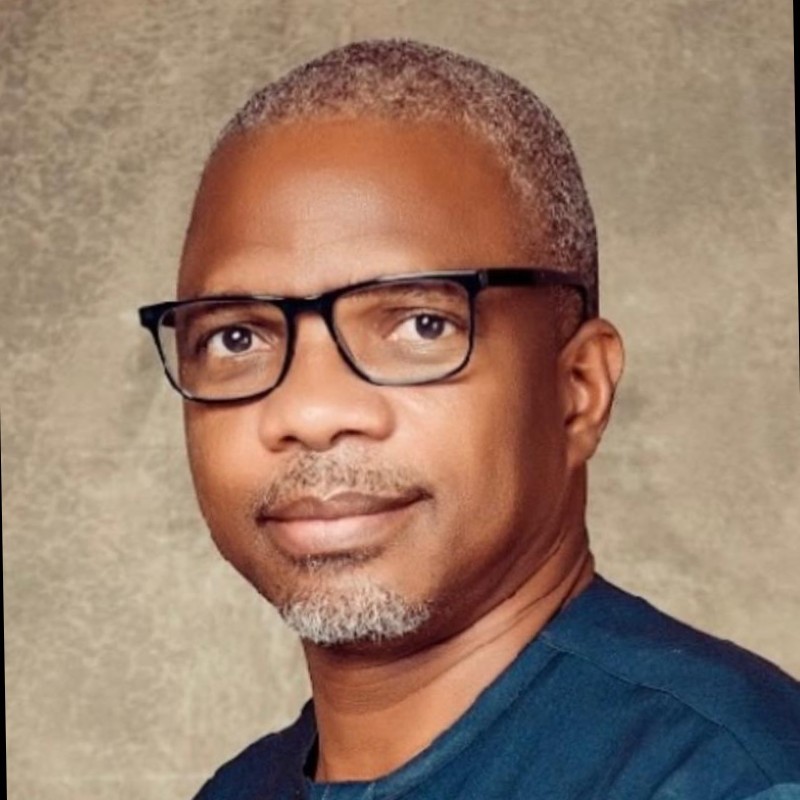
By injecting this creative “elixir” into the city, we are doing more than hosting an event; we are rallying a generation to reinvent their crafts for the public good. Abuja remains a critical part of my lived experience, and this initiative ensures that the city continues to evolve — not merely as a seat of administrative power, but as the soul of Nigeria’s creative resistance and democratic hope.
Joseph Amenaghawon is the Head of CivicHive.