
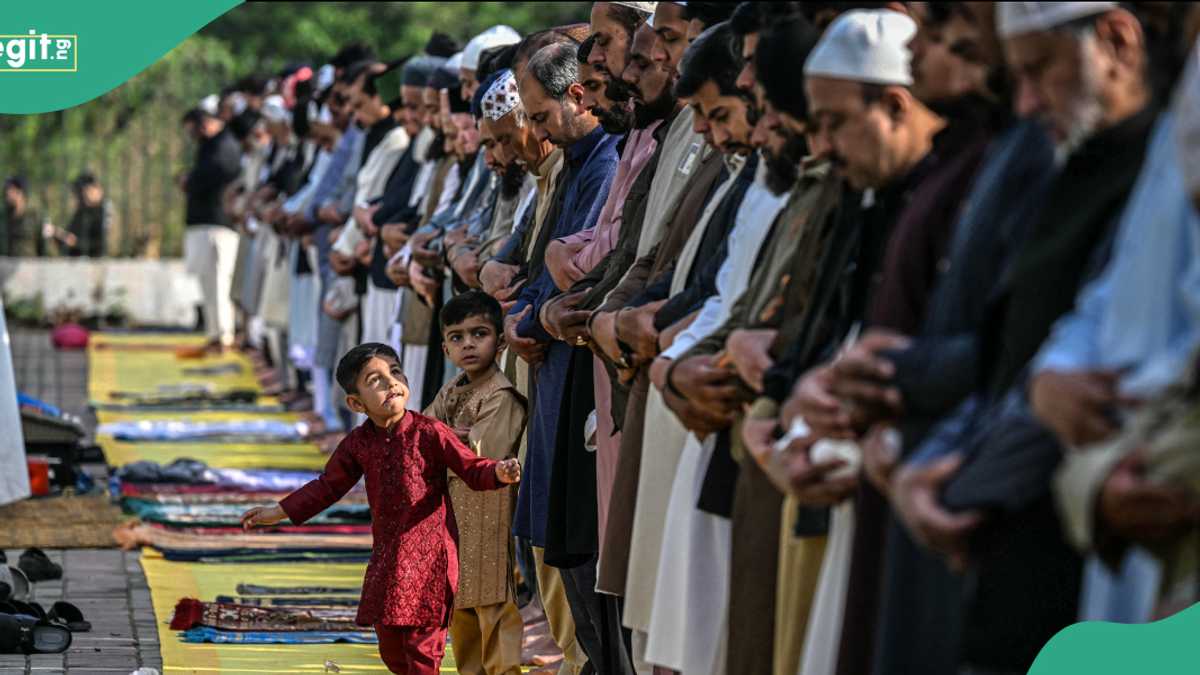

- Pakistan’s federal government has approved a three-day public holiday from May 26 to May 28 for Eid Al-Adha celebrations nationwide
- Authorities confirmed that offices, educational institutions and businesses observing public holidays remained closed during the notified period
- Rising inflation pushed up the prices of sacrificial animals, transportation and food items ahead of Eid Al-Adha celebrations across Pakistan
Pakistan’s federal government has announced a three-day public holiday for Eid Al-Dha, with offices, schools and businesses set to close from May 26 to May 28 across the country.
Prime Minister Shehbaz Sharif approved the holiday schedule on Wednesday, May 20, according to a notification issued by the Cabinet Division.

Source: Getty Images
The directive follows the government’s earlier circular on public and optional holidays for 2026, Express Tribune reported.
The notification stated: “All offices, educational institutions, and businesses observing public holidays will remain closed on the notified dates.”

Pakistan declares Eid Al-Adha public holidays
The announcement came days after Pakistan’s Central Ruet-e-Hilal Committee confirmed the sighting of the Zilhajj moon. The committee declared that Eidul Azha would be observed on May 27.
Officials said moon sighting reports were received from Karachi, parts of Sindh, Rawalpindi, Peshawar, Mardan and several other regions. The first day of Zilhajj 1447 AH began on May 18.
Pakistan’s Ministry of Religious Affairs said the moon sighting meeting took place at the Meteorological Department in Karachi on May 17.
Earlier this month, the Space and Upper Atmosphere Research Commission, commonly known as SUPARCO, had forecast that Eid Al-Adha would likely fall on May 27.

Source: Getty Images
Inflation pressures ahead of Eid
The holiday announcement arrives as consumers across Pakistan face rising costs ahead of the religious festival. Prices of sacrificial animals, food items and transportation have increased sharply compared to last year.
In major cattle markets across Punjab and Sindh, traders say transportation and fodder expenses have pushed prices upward. Buyers are also reporting difficulty keeping up with the rising cost of goats, cows and sheep.

“This year, even middle-income families are struggling to arrange money for sacrificial animals,” said Shayan Baig, who was searching for livestock ahead of Eid.
“No matter whether it’s a goat, lamb, or a cow, at least Rs100,000 has been added, if we compare prices with the previous year’s rates, which were also higher. I now have to adopt a wait-and-see policy, and will try again close to the Eid in the hope of getting an animal at a lower price.”
Retailers in shopping centres have also reported cautious spending patterns, with many families limiting purchases to essential Eid items as inflation continues to affect household budgets.
Sultan announces Dhul Hijjah 1, Sallah dates
Earlier, Legit.ng reported that Muhammadu Sa’ad Abubakar, the Sultan of Sokoto, has officially confirmed the sighting of the Dhul-Hijjah crescent moon, marking Monday, May 18, as the 1st of Dhul-Hijjah 1447 in the Islamic calendar.
The declaration by Abubakar, who is the president-general of the Nigeria Supreme Council for Islamic Affairs (NSCIA), was conveyed in a statement issued by Professor Sambo Wali Junaidu, the Wazirin Sokoto and çhairman of the Advisory Committee on Religious Affairs of the Sokoto Sultanate Council.
Source: Legit.ng