
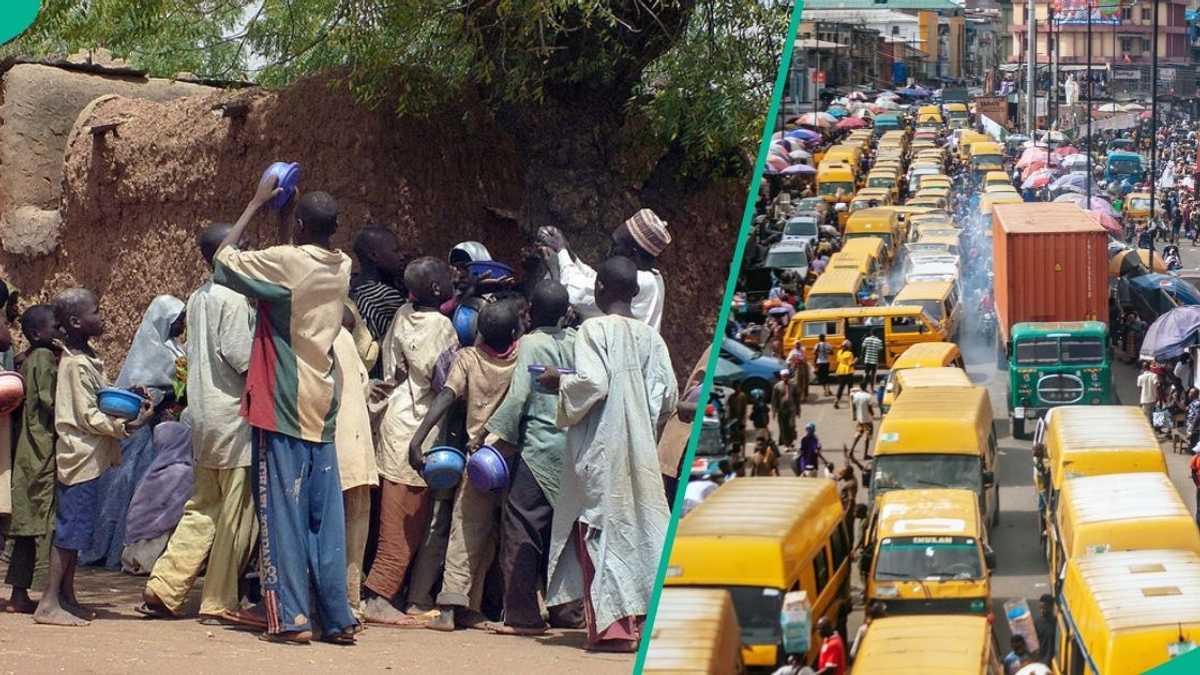

- Nigeria’s Finance Minister Taiwo Oyedele pushed back on the World Bank’s position that poverty worsened because the reforms failed
- Oyedele said the removal of fuel subsidies and other policy changes were designed to reset Nigeria’s fiscal position after years of distortions
- The minister pointed to nearly 10% real per capita income growth in dollar terms in 2025 as evidence the reforms are working
Legit.ng journalist Dave Ibemere has over a decade of experience in business journalism, with in-depth knowledge of the Nigerian economy, stocks, and general market trends.
Nigeria’s Minister of Finance and Coordinating Minister of the Economy, Taiwo Oyedele, has defended the government’s economic reform programme, saying the rise in poverty that followed the policy changes was an unavoidable part of correcting long-standing fiscal imbalances rather than a sign that the reforms had failed.
Oyedele made the remarks while responding to concerns about the human cost of the reforms, particularly the removal of fuel subsidies introduced under President Bola Tinubu’s administration.


Photo: Bloomberg
Source: Getty Images
Why the Minister Disagrees with the World Bank
In a short video clip shared by Special Adviser to the President on Information and Strategy, Bayo Onanuga, Oyedele took direct issue with assessments by institutions such as the World Bank, which have argued that poverty levels rose despite the reforms.
Oyedele said:
“The World Bank would say that poverty has gone up despite the reforms. And I said, yes, poverty has gone up because you cannot remove subsidy and people become richer.”
He described the reform process as a necessary reset after years of what he called “fiscal illusions,” in which the government had been masking the true state of the economy through subsidies and other unsustainable measures.
He added:
“The reform itself was a reset. We were living in fiscal illusions. So we needed to stop deceiving ourselves so the country can move forward.”

Oyedele acknowledged that the policy changes reduced real household incomes in the short term, which pushed more Nigerians below the poverty line.
He framed this not as a policy failure but as an expected transitional cost of putting the economy on a more sustainable footing.

Photo: Presidency
Source: Facebook
Signs of Recovery in 2025
Despite the initial hardship, the minister said recent data pointed to a turnaround.
He said Nigeria recorded close to 10% real per capita income growth in dollar terms in 2025, which he described as among the strongest performances globally.
Oyedele said:
“That makes Nigeria one of the fastest countries in lifting people out of poverty. We intend to sustain that.”
He added that the government’s priority is to maintain the reform programme over the long term to support stronger economic growth and improve living standards for Nigerian households.
GDP grows by 3.89% in Q1 2026
Earlier, Legit.ng reported that the National Bureau of Statistics (NBS) has released the latest GDP data, which showed that Nigeria’s economy grew at its quickest pace in 10 years.

According to the NBS report, real GDP growth in Nigeria increased to 3.89% year-on-year in Q1 2026, from 3.13% recorded in Q1 2025.
The growth was supported by the expansion of the service sector, agriculture, and most key non-oil sectors of the economy.
Source: Legit.ng