
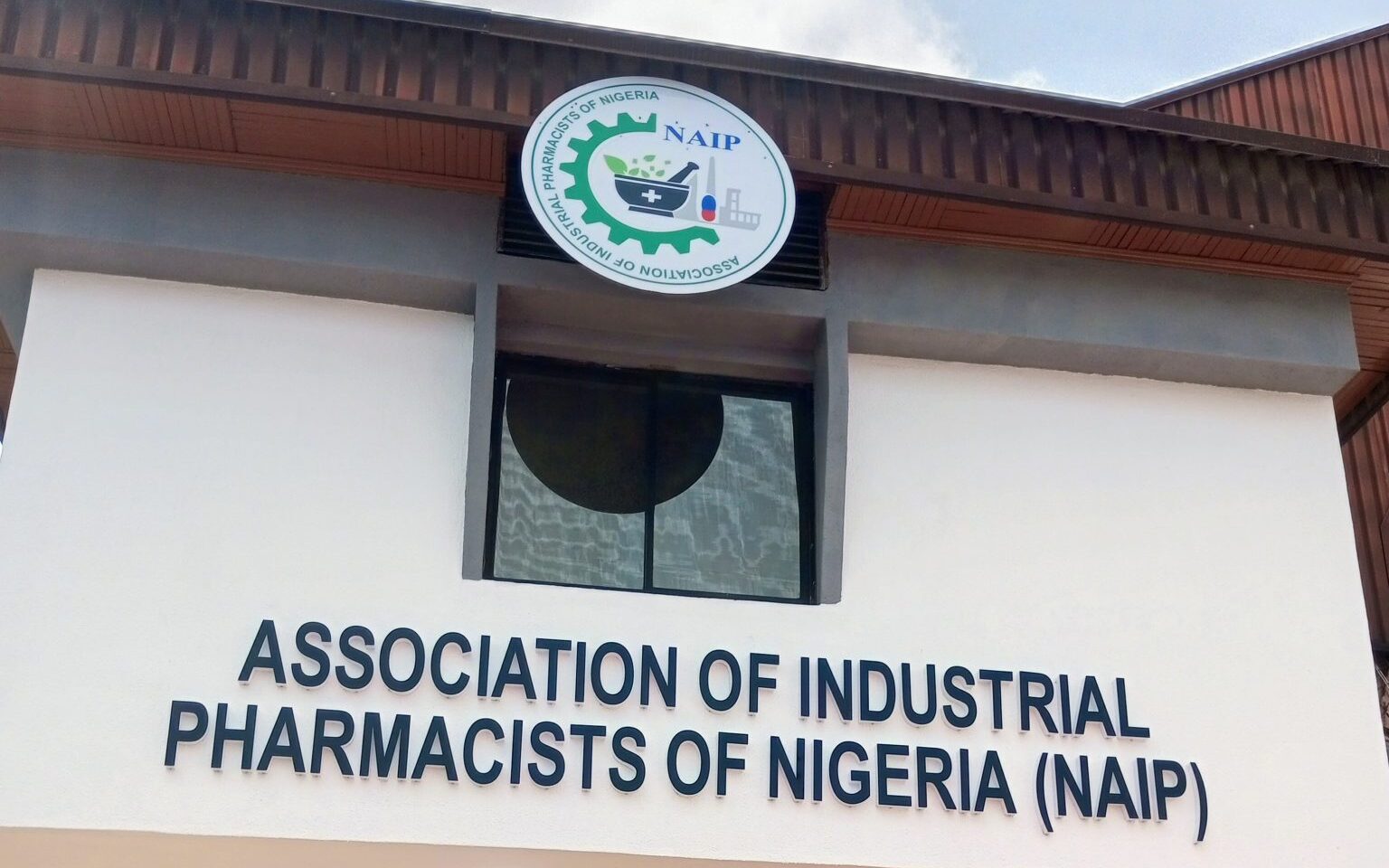

The National Association of Industrial Pharmacists (NAIP) has said Nigeria still depends heavily on imported medicines despite years of government promises to strengthen local pharmaceutical production.
The association’s National Chairman, Bankole Ezebuilo, disclosed this in a statement issued at the end of the 29th Annual National Conference and Training of NAIP held in Ilorin, Kwara State, on Friday.
Mr Ezebuilo said the country imports more than 70 per cent of its medicines, warning that the situation threatens national healthcare stability, economic sustainability, and exposes Nigerians to drug shortages during global crises.
The conference, themed “Collaboration and Innovation to Build Local Solutions for the Future of Nigeria’s Pharmaceutical Industry,” brought together pharmaceutical manufacturers, stakeholders, regulators, healthcare professionals and policymakers.
‘No nation can outsource its health security’
Speaking at the event, Mr Ezebuilo said Nigeria must urgently reduce its dependence on imported medicines and build local manufacturing capacity.

According to him, Nigeria is at a “critical crossroads” where it must choose between continued dependence on imported medicines and pharmaceutical sovereignty through aggressive local production.
“A nation that cannot produce its own medicines is a nation negotiating with its health, and negotiation is not where you want to be when lives are at stake,” he added.
To reverse this, he called on the Nigerian government to declare a national emergency in pharmaceutical manufacturing and implement policies to position Nigeria as Africa’s pharmaceutical production hub.
He said the country’s dependence on imported drugs has continued despite recurring foreign exchange crises, rising inflation and repeated global supply chain disruptions that have affected access to medicines.
Nigeria’s dependence on imported medicine
Nigeria’s pharmaceutical sector has for decades relied heavily on imported medicines, vaccines, medical devices and raw materials, a situation experts say continues to threaten medicine security and increase healthcare costs.
In 2021, the National Agency for Food and Drug Administration and Control (NAFDAC) announced plans to reduce Nigeria’s dependence on imported medicines from 70 per cent to 30 per cent by 2025 through increased local production.
However, in late 2025, the agency disclosed that import dependence had only declined to about 60 per cent, indicating that the country remains far from its target.
The Nigerian Academy of Pharmacy has repeatedly blamed poor infrastructure, weak financing, high energy costs, foreign exchange instability and policy inconsistencies for slowing the growth of local pharmaceutical manufacturing.
The agency warned that many local pharmaceutical firms struggle to meet international standards because of inadequate infrastructure and limited investment in research and innovation.
It criticised government procurement policies that allegedly favour imported medicines over locally produced alternatives.
The high dependence on imports has also worsened the impact of naira depreciation and foreign exchange shortages on medicine prices.
Despite the challenges, NAFDAC said initiatives such as the “5plus5” regulatory scheme and restrictions on the importation of certain medicines that can be produced locally have encouraged some pharmaceutical companies to establish factories or partner with Nigerian manufacturers.
The “5plus5” initiative grants companies a final five-year renewal to import medicines that can be produced locally.
At the end of that period, they must either establish local factories or partner with existing Nigerian producers.
Concerns over weak local production
Although Nigeria produces some finished pharmaceutical products locally, Mr Ezebuilo said most Active Pharmaceutical Ingredients (APIs) used by manufacturers are still imported.
He warned that the continued reliance on foreign raw materials weakens the country’s healthcare system and economy.
READ ALSO: NAFDAC committed to safe, sustainable herbal products – DG
He said strengthening local pharmaceutical manufacturing would improve the supply of medicines, create jobs, conserve foreign exchange, and enhance quality control.
“To build local solutions, we must stop importing not just medicines, but also ideas,” he said.
He also criticised what he described as endless discussions without concrete industrial progress in the pharmaceutical sector.
He urged government agencies, investors, academic institutions, and industry players to collaborate to build a sustainable pharmaceutical industry.
Calls for action
Mr Ezebuilo said the government must create enabling policies to support local manufacturers, while investors should commit more resources to pharmaceutical production and innovation.
He also urged universities and research institutions to align research with industrial and healthcare needs.
He said the association has trained its members and is ready to partner with the Nigerian government to drive Nigeria’s pharmaceutical industrialisation agenda.
“If we get it right, we will transform this industry, create jobs, reduce dependency, compete globally, and deliver healthcare locally,” he said.
As part of the conference activities, NAIP said it renovated healthcare centres at the palace of the Emir of Ilorin and conducted a free medical outreach programme for residents.
The outreach, led by the Kwara State Ministry of Health, provided free consultations and drugs to more than 1,000 residents from communities including Oke-Oyi, Iponrin, Apado and Egbejila.