
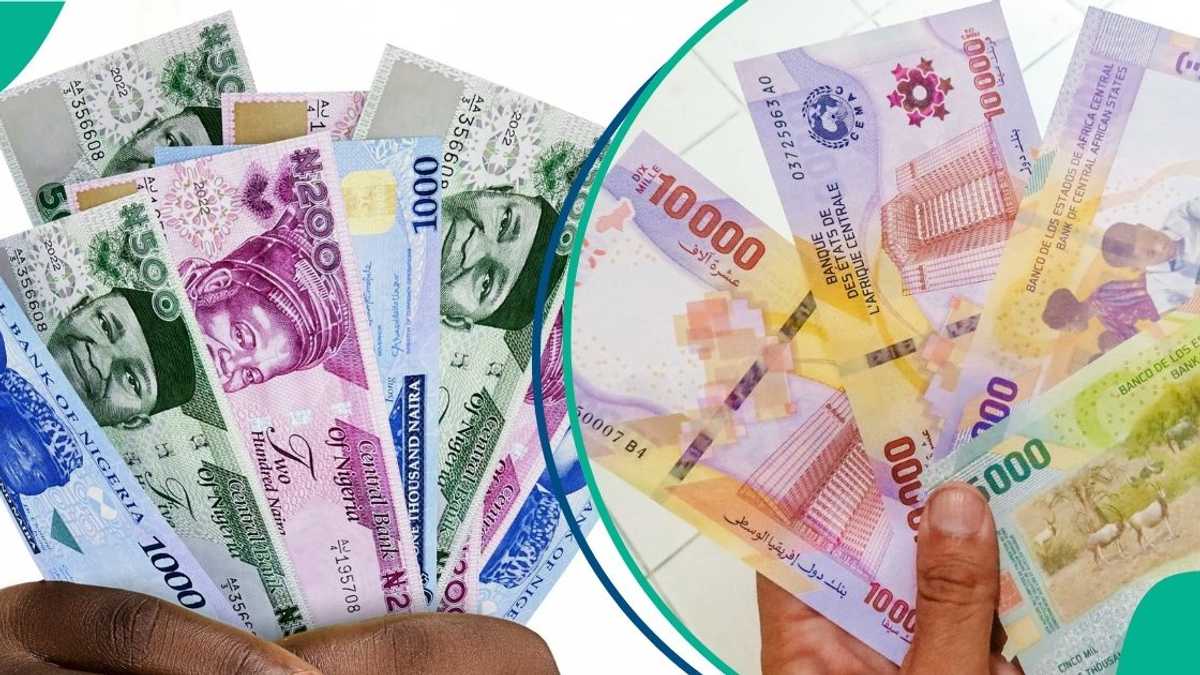

- ECOWAS plans a phased rollout of the ECO single currency by 2027, contingent on economic stability
- Member states must meet strict conditions, including single-digit inflation and fiscal discipline
- ECO adoption process allows gradual participation, supporting regional trade without immediately replacing the naira
Pascal Oparada is a journalist with Legit.ng, covering technology, energy, stocks, investment, and the economy for over a decade.
The long-awaited ECO single currency project is back in focus as the Economic Community of West African States (ECOWAS) moves towards a proposed phased rollout in 2027, with member states expected to meet strict economic conditions before joining.
The plan is designed to create a common currency for the region, potentially transforming cross-border trade, payments and economic integration among ECOWAS countries.

Credit: Picture Alliance/Contributor
Source: Getty Images
However, the proposed introduction of the ECO does not mean the naira will automatically disappear in 2027. Countries are expected to demonstrate sufficient economic stability and meet agreed convergence requirements before becoming part of the monetary union.

Inflation must remain under control
One of the major conditions is inflation. Countries seeking to qualify for the ECO are expected to maintain single-digit inflation, with the preferred benchmark around 5% or lower.
The requirement is aimed at ensuring that participating economies have relatively stable prices and that major differences in inflation do not undermine the new currency.
For Nigeria, where inflation has remained a major economic concern, meeting the benchmark could represent one of the most significant hurdles.
Strict limits on budget deficits
ECOWAS also requires participating countries to maintain fiscal discipline.
Under the convergence framework, a country’s budget deficit should not exceed 4% of its Gross Domestic Product (GDP). Governments are therefore expected to keep spending and borrowing under control while maintaining sustainable public finances.
Another requirement concerns central bank financing of government deficits. Such financing is expected to remain within strict limits linked to previous-year tax revenue, reducing the risk of excessive monetary financing.

Countries must have strong foreign reserves
Foreign exchange reserves are another critical part of the requirements.
Member states are expected to maintain adequate gross external reserves capable of covering a minimum period of imports of goods and services. The condition is intended to provide a financial buffer and strengthen confidence in the proposed regional currency.
Countries with weak external positions could therefore face difficulties qualifying for the initial phase of the ECO.
ECO adoption could be phased
The proposed system is not expected to force every ECOWAS country into the currency at the same time.
Countries that satisfy the convergence requirements could participate in the initial phase, while those that fall short may receive technical and institutional support to improve their economies before joining later.
This means the 2027 target should not necessarily be interpreted as a fixed date for the naira to disappear.
What it could mean for Nigeria
If Nigeria eventually qualifies and adopts the ECO, the move could make regional trade and payments easier by reducing currency-conversion barriers among participating countries.

However, the transition would depend heavily on Nigeria meeting the agreed economic benchmarks and maintaining stability over time.

Credit: NurPhoto/Contributor
Source: Getty Images
The ECO project therefore remains less about simply replacing the naira and more about ensuring that participating economies are sufficiently aligned to support a stable common currency.
ECOWAS ramps up efforts to launch ECO
Legit.ng earlier reported that the Economic Community of West African States (ECOWAS) has renewed its push for the implementation of the regional single currency, ECO, following key agreements reached during its 66th Ordinary Session in Abuja on Sunday.
The bloc, which comprises 15 member states, reaffirmed its commitment to launch the currency by 2027 after earlier delays caused by the COVID-19 pandemic.
In a communiqué released at the end of the session, the Authority of Heads of State and Government adopted the criteria proposed by the High-Level Committee for selecting candidate member states for the ECO launch.
Source: Legit.ng