
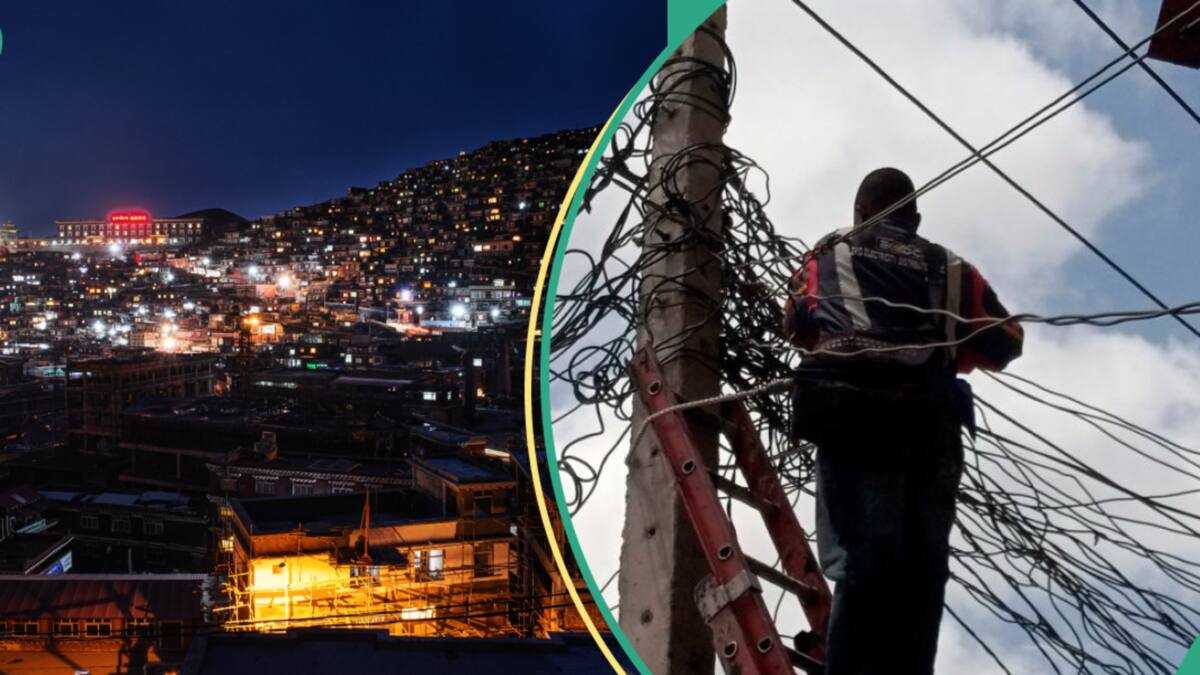

- Niger Delta Holding Company (NDPHC0 unveiled plans to inject 1,500MW of electricity into Lagos to enhance supply stability
- Nigeria is moving to tackle ‘stranded capacity’ as Lagos faces electricity supply challenges
- Collaboration between NDPHC and LASERC aims for improved power delivery and reforms in Lagos
Pascal Oparada is a journalist with Legit.ng, covering technology, energy, stocks, investment, and the economy for over a decade.
Millions of residents and businesses in Lagos may soon witness a major turnaround in electricity supply as the Niger Delta Power Holding Company (NDPHC) unveiled plans aimed at delivering stable and near-constant power across the state.
The development comes amid ongoing reforms in Nigeria’s electricity sector and growing efforts by Lagos State to create a more reliable and competitive power market capable of supporting its rapidly expanding population and economy.

Credit: Novatis
Source: Getty Images
Speaking during a strategic engagement with the Lagos State Electricity Regulatory Commission (LASERC), the Managing Director and Chief Executive Officer of NDPHC, Jennifer Adighije, disclosed that the company is prepared to play a leading role in closing Lagos’ widening electricity gap.

NDPHC targets 1,500MW boost for Lagos
According to a report by Daily Sun, Adighije revealed that NDPHC is positioned to inject up to 1,500 megawatts of additional electricity into Lagos within the short to medium term.
According to her, the company’s intervention will not only focus on power generation but will also include investments in transmission and distribution infrastructure to ensure electricity reaches consumers efficiently.
“Our mandate is fundamentally to scale up power generation with the associated transmission and distribution networks,” she said.
She explained that NDPHC operates across the entire electricity value chain, from gas supply to generation, transmission and distribution, giving the company a strategic advantage in tackling Nigeria’s long-standing power challenges.
Stranded power capacity remains major challenge
Despite having an installed generation capacity of about 4,000 megawatts, Adighije lamented that NDPHC currently dispatches only between 400 and 500 megawatts daily due to gas shortages, transmission limitations and distribution bottlenecks.

She described the situation as evidence of “stranded capacity” that must be urgently unlocked to improve the electricity supply nationwide.
The NDPHC boss stressed that Lagos represents one of the most commercially attractive electricity markets in Nigeria due to its huge energy demand and strong investment potential.
“The Lagos electricity market is a very lucrative and vibrant one,” she said. “This is a market where we are willing to make huge investments.”
Massive investments planned in distribution infrastructure
Adighije further disclosed that the company is willing to invest directly in transmission and distribution assets within Lagos to improve last-mile electricity delivery, reduce system losses and strengthen reliability.
She noted that previous interventions by NDPHC in the power sector have already helped close several infrastructure gaps across the country.
The company also expressed readiness to work closely with LASERC as Lagos transitions toward a more decentralised electricity market under the new regulatory framework.
Lagos government pushes for round-the-clock power
Responding, the Managing Director of LASERC, Mr Temitope George, welcomed NDPHC’s interest in deeper collaboration with Lagos State.

He described the company as one of Nigeria’s biggest power generation firms with significant investments already existing within Lagos.
George reaffirmed the state government’s commitment to ensuring that selected franchise areas begin to enjoy a near-constant electricity supply under ongoing electricity reforms.
“Part of our regulatory agenda is to ensure some franchise areas within Lagos enjoy 24/7 power supply,” he said.
He added that the partnership between LASERC and NDPHC could accelerate efforts to transform electricity access in the state and improve service delivery for households and businesses.

Credit: Picture Alliance/Contributor
Source: Getty Images
New hope for Africa’s largest commercial hub
As Nigeria’s commercial capital and biggest energy consumer, Lagos has long struggled with inadequate and unstable electricity supply despite huge demand from industries, businesses and residents.
However, with increased private-sector participation, new state-level electricity reforms and fresh infrastructure investments, expectations are rising that the city could finally move closer to an uninterrupted power supply.
Industry observers believe that successful collaboration between NDPHC and LASERC may mark a significant turning point in Lagos’ electricity future and set a model for other states across Nigeria.

Read also
Lagos unveils 19 winners for N10bn MSME fund as cooperative businesses set for major boost
Lagos community to enjoy 24/7 power supply
Legit.ng earlier reported that residents and businesses in Isolo and surrounding communities in Lagos State are set to enjoy improved electricity supply as Isolo Power Gen Limited secured approval to develop a 9-megawatt embedded power generation facility under the Lagos State Electricity Regulatory Commission (LASERC).
The company is the only operator granted an embedded generation licence in the current batch of 14 approved companies.
An embedded generation licence is permission for a private operator to build, own and operate a power plant that is physically attached to the distribution network, not the national high-voltage system.
Source: Legit.ng