
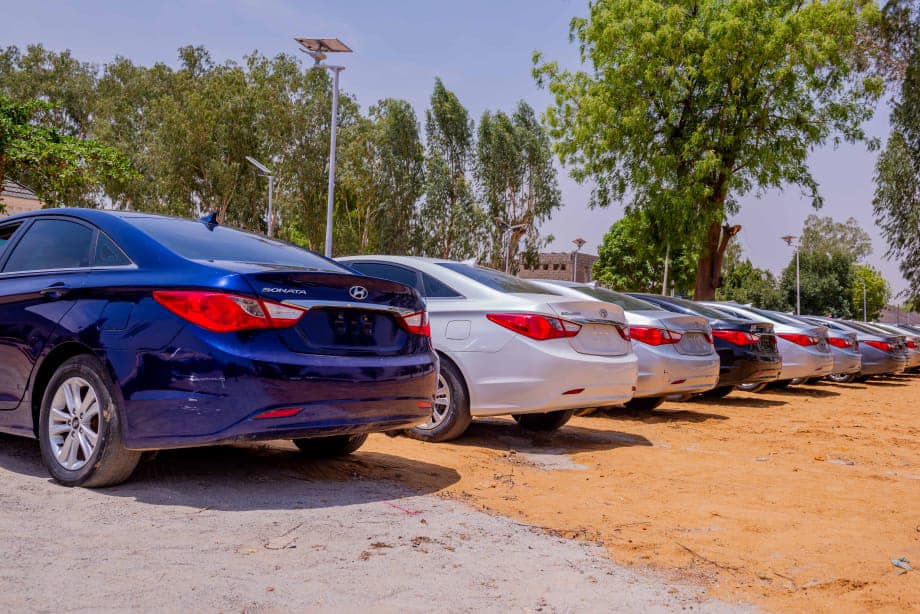

The Lagos State Government will begin charging motorists for parking on designated streets before the end of 2026, as part of a broader effort to curb chronic traffic congestion and improve mobility across the city.
The General Manager of the Lagos State Parking Authority (LASPA), Adebisi Adelabu, disclosed this during a stakeholder engagement with the Chairman of Ikeja Local Government Area, Akeem Dauda, and his management team.
The development was announced in a statement shared on Wednesday by LASPA’s Head of Public Affairs, Dunkwu Divine, who said the initiative, known as the On-Street Parking Scheme, will commence with a pilot phase in selected local government areas, including Ikeja.
Ms Adelabu said the scheme is designed to regulate indiscriminate roadside parking, improve traffic flow and create employment opportunities for residents.
“The On-Street Parking Scheme will improve parking management, enhance traffic flow and generate employment opportunities, particularly for residents within the selected areas,” she stated.

The latest move follows an earlier indication by the state government that it would roll out a regulated parking system in 2026 as part of measures to restore order on Lagos roads and address worsening congestion.
Ms Adelabu explained that the responsibility for parking management, previously handled by local government authorities, was formally transferred to LASPA by the Conference of the 57 Local Government Areas and Local Council Development Areas.
She added that councils would benefit from the initiative depending on their level of cooperation, urging them to support its implementation.
She also noted that LASPA remains open to stakeholder input to ensure a smooth rollout.
In his remarks, Mr Dauda welcomed the initiative and pledged the support of the Ikeja Local Government, stressing the need for widespread public sensitisation ahead of its implementation.
‘Legal backing’
The planned rollout is backed by the Lagos State Parking Authority Law, 2018, which empowers LASPA to regulate parking activities, designate parking zones and fix applicable charges across the state.
Policy documents indicate that regulated on-street parking is intended to improve traffic flow, enhance road safety and better manage the growing demand for limited urban road space.
With more than two million vehicles estimated to be on Lagos roads, and a significant proportion requiring daily parking, pressure on road infrastructure has intensified in recent years.
Chaotic roadside parking has long been identified as a major contributor to congestion, particularly in commercial hubs such as Ikeja, Lagos Island, Surulere and Apapa, where vehicles frequently encroach on carriageways and obstruct traffic flow.
The economic consequences are substantial. Traffic congestion in Lagos is estimated to cost the state about N1 trillion annually in lost productivity and fuel wastage, underscoring the urgency of reforms in traffic and parking management.
Urban planning experts say regulated on-street parking, where sections of roads are designated for controlled, often time-bound parking, can significantly reduce disorder and improve traffic circulation if effectively enforced.
However, many say the government has not done enough in building transportation infrastructure network robust enough for a mega city like Lagos to discourage driving.
READ ALSO: Lagos hits N807bn revenue in early 2026, surpasses Nigeria’s subnational peers
Many residents would give up driving if there is sufficient infrastructure and like a metro system that conveniently connects all parts of the state.
Implementation
The agency said the pilot phase will allow the government to test the framework, address operational challenges and refine enforcement strategies before a wider rollout across the state.
For many residents and commuters, however, the success of the initiative will depend on transparency in pricing, effective enforcement and sustained public engagement.
If implemented as planned, officials stated the scheme could mark a significant shift towards a more structured and sustainable traffic management system in Nigeria’s commercial capital.