
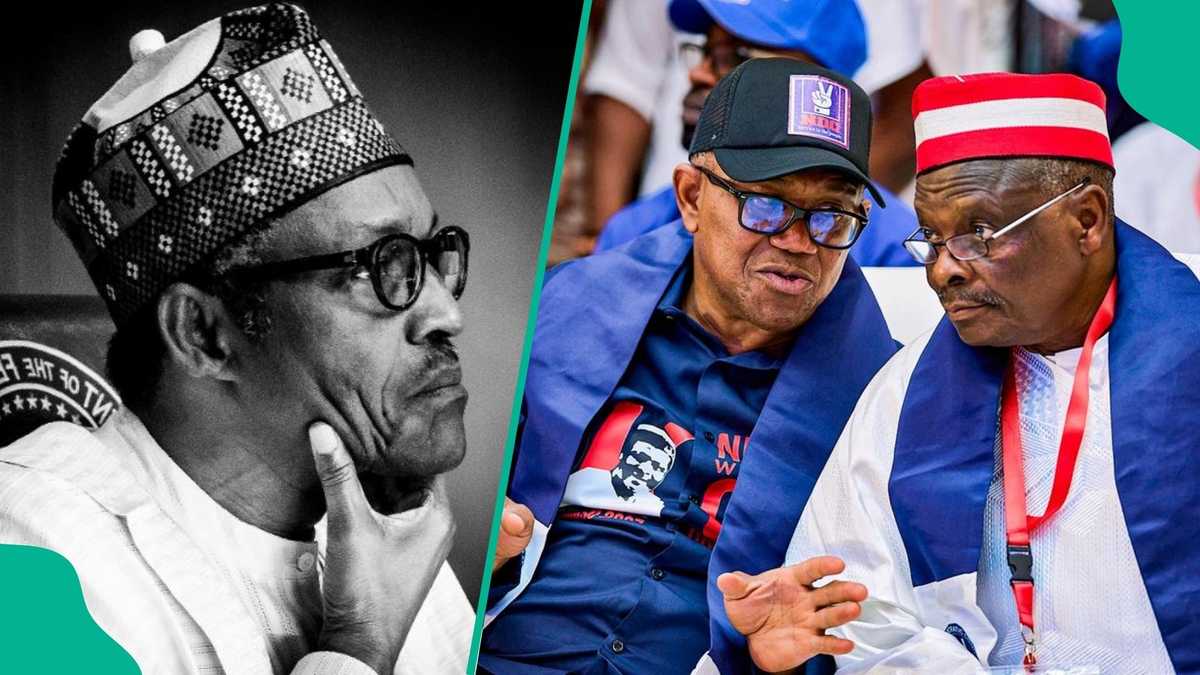

- Senator Rabiu Kwankwaso said his choice to run with Peter Obi rests on national balance, equity and the need for democratic change
- Kwankwaso revealed that consultations with the Kwankwasiyya Movement, NNPP supporters and the Obidient Movement shaped the decision
- The former Kano governor said the North-South arrangement includes a one-term understanding before power returns to the North
Senator Rabiu Kwankwaso, the vice-presidential candidate of the National Democratic Congress (NDC), has explained that his choice to join Peter Obi on the 2027 presidential ticket was driven by the principles of national balance, equity and the desire for democratic change.
Kwankwaso explained that his decision was influenced by the need to allow the South to retain the presidency and complete its term following the eight-year tenure of the late former President Muhammadu Buhari.
According to The Punch, the former Kano State governor said lessons from the 2023 general election gave him a clearer understanding of Obi’s character and convinced him that both men could govern effectively together.

He said consultations with members of the Kwankwasiyya Movement, New Nigeria Peoples Party (NNPP) supporters and the Obidient Movement all pointed to the need for a ticket capable of drawing support from both the North and the South.
Why Kwankwaso backed the alliance
Kwankwaso, who has also served as deputy speaker of the House of Representatives, Defence Minister and senator, said agreeing to serve as vice-president was not a personal retreat. He cited the example of Sir Ahmadu Bello, who chose to remain Premier of Northern Nigeria rather than pursue the office of Prime Minister, arguing that genuine leaders serve wherever they are most needed.
He said the worsening security situation, declining farm output, particularly in Northern Nigeria where agriculture has become increasingly difficult and unprofitable, and crumbling infrastructure across much of the country reinforced his conviction that the current administration needed to be replaced. He acknowledged that some states, such as Lagos, were exceptions to the infrastructure decline but said the broader national picture demanded urgent change.
Kwankwaso said the scale of hardship Nigerians now face made the case for change even more compelling than it was in 2015.

The north-south power arrangement
On the question of regional power-sharing, Kwankwaso said the agreement with Obi provides for the South to hold the presidency for one term. After that, the political arrangement would rotate back to the North. He said this understanding was central to securing the confidence of his supporters and ensuring that the North would not be sidelined under the alliance.
He also dismissed suggestions that his previous discussions with President Bola Tinubu after the 2023 election were tied to any condition involving a presidential or vice-presidential slot. He said those talks were purely about working together and were never about leaving the NNPP or negotiating a specific office.
Kwankwaso said the Obi-Kwankwaso ticket offered Nigerians a combination of regional balance, competence and credibility, and that public office should always be treated as an opportunity to serve rather than a prize to be pursued.
Source: Legit.ng