
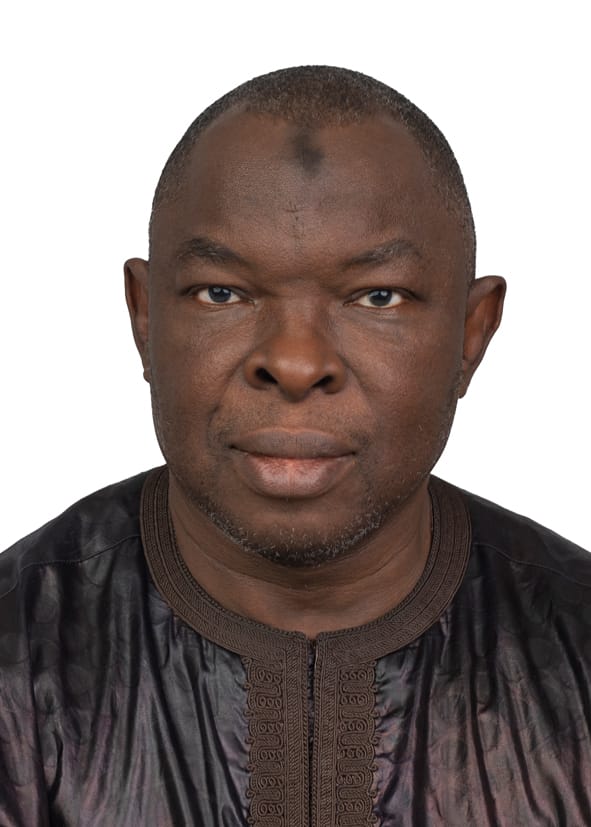


I did not know or ever met Walter Rodney until after his demise. I never even heard of him. Nor did I ever read any of his writings as a secondary school student, until in August 1980, when I was admitted into the School of Basic Studies (SBS), Ahmadu Bello University (ABU), Zaria.
From ABU Main Gate to the University to the Senate Building, SBS Administrative Building, students’ hostels, cafeterias, faculty and departmental buildings, and even on tree trunks of the campus, I kept seeing and meeting Rodney. I mean his posters.
On top of the poster was his picture. Then his name – Walter Rodney – plus the day, month and year of his birth and death. After that, was a bold quotation, which read: “This Act In Itself Will Not Delay Their Day of Judgment.”
All these aroused my curiosity. Who is this man – Walter Rodney? What happened to him to warrant his posters being placed all over the campus? Was he killed? Which “Act”, by the way, “will not delay their Day of Judgment”? Who are the “their”? Which “Day of Judgment”? Is there any “Day of Judgment” besides that of ALMIGHTY GOD? That “Day” is only known to HIM? So what “Day of Judgment” is the quotation referring to?
These questions kept reoccurring in me during and after the registration of my SBS programme. I didn’t sleep on the campus that day. I proceeded to Kaduna, where my family lived. It was on a Friday. I couldn’t sleep as Rodney was on my mind. No one to ask about Rodney? Mark you, then, no internet.

When school began, I took history as a course. All our history and political science lecturers made reference to Rodney in their lectures. One Zimbabwean lecturer, we fondly called Dzimbo, and whose country had just attained independence through armed struggle, constantly referred to Rodney as if the course was on Rodney.
Dzimbo and other lecturers in SBS introduced us to Rodney’s How Europe Underdeveloped Africa (HEUA). The book, they said, is a must read, for any student interested in knowing the history of Africa, and its underdevelopment. Basically, that Western Europeans, and before them, the Arabs, laid the concrete foundation for the underdevelopment of Africa.
This, they did, by their invasion of Africa; the plundering and looting of it’s agricultural and natural resources; and the kidnapping, enslavement, exportation and utilization of African slave labour to develop Western Europe, US, and Canada. The implications of all these were the disarticulation of African societies; the imposition of colonialism, the unequal and unfair trade, and expulsion of Africans in the making of their own history.
Rodney’s HEUA, Dzimbo and the other lecturers added, is a condensation of African History, which shattered and demystified the “imperialist”, “neo-colonial” and “bourgeois” history of Africa we were taught in secondary schools and the mass media. They said HEUA is a critical, thought-provoking, scientific, and revolutionary history.
I was indeed mesmerised. Yes, I knew history can be “critical” and “radical” as a secondary school student. JB. Webster and A.A. Bohen with HO Idowu’s ‘The Growth of African Civilization: The Revolutionary Years – West Africa since 1800’ and particularly KBC Nwubiko’s ‘School Certificate History of West Africa, AD 1000-1800’ made me to be an “infantile radical”.
But, how can history be “scientific”, when it is not biology, chemistry, physics or mathematics? Why would a Historian, without arms and army, be gruesomely bombed by the United States (US) Central Intelligence Agency in alliance with the Guyanese government for writing an ordinary book?
These questions agitated my mind when first resumed in my SBS days. I told myself I could only have inner peace when I personally get known to Rodney. So I bought HEUA in ABU Bookshop. I read it with pain, but also with inquisitiveness.
In ABU ‘Gossip Centre’, where lots of male students’ seat to watch female students walk to their faculties, and gossip about the happenings on Campus, Rodney was unwrapped as an extremely intelligent African-Caribbean historian, unrepentant Pan-Africanist, a thoroughly-bred “comrade”, and uncompromising radical political activist.
In the Movement for a Progressive Nigeria (MPN), and the Youth Solidarity on Southern Africa (YUSSA), which I joined, Rodney was, in addition, portrayed as a scholar, who passionately believed, like Karl Marx, Fredrick Engels, Vladimir Lenin and Mao Tse Tung that: “philosophers have only interpreted the world. The point, however, is to change it”.
As a Pan-Africanist, Rodney was said to have contributed immensely to national liberation struggles in Mozambique, Angola, Zimbabwe and South Africa, when he was teaching in Tanzania – the headquarters of the national liberation movements. This, he did through the teaching of history, revolutionary discourses, and political education of Southern African liberation fighters.
As a Marxist-Leninist, Rodney was said to be a “professional socialist revolutionary”, who believed and preached Lenin’s dictum that: “without a revolutionary theory, there can be no revolutionary movement”; and “In the struggle for power, the proletariat has no other weapon but organisation”.
In 1974, Rodney left Tanzania for Guyana to become a fully “professional revolutionary”. There, he focused on politically educating, uniting, organising, and leading various socialist and radical forces under the Working People’s Alliance to takeover state-power for the socialist transformation of Guyana.
In the Faculty of Arts & Social Sciences (FASS) – where we saw ourselves as students of the “Science of Humanity and Society” – we were made to review and critique HEUA in our first year History course. Professor Okello Oculi of Political Science even made us to create an imaginary dialogue between Lord Lugard and Rodney.
But how can we, ordinary undergraduates critique a whole Rodney? Indeed, we felt it was unfair, unjust, and even wicked to asked us to critique HEUA. It was in one of the MPN Alex-Ribadu cell meetings, that I got to know that to “critique”, does not necessary means to “criticise” and “debunk.”
Rather, it means, first, to summarise the book; secondly, highlight its relevance to understanding contemporary Africa; thirdly, identify “what is to be done” to arrest, reverse, and transcend African underdevelopment; and fourthly, which social forces are to do “what is to be done”?
By the time we submitted our essays on HEUA, many of us had come to know Rodney. How would we not, when we dialogued on one-one-basis with him, and concurred with him on virtually everything, including that “colonialism had only one hand, it was a one-armed bandit”?
Rodney’s position that there were “African accomplices inside the imperialist system” that underdeveloped Africa, led us to concur with him that Africa’s development is only possible through a radical break with the exploitative imperialist system.
Rodney who was murdered on 13 July, 1980, was born on 23 March, 1942. Yes, he lived for only 38 years. But those were years of theoretical, ideological and political struggles for the liberation of Africans in Africa and Africans in the Americas.
Continue to rest in power, Brother Walter Rodney.
Ahmed Aminu-Ramatu Yusuf worked as deputy director, Cabinet Affairs Office, The Presidency, and retired as General Manager (Administration), Nigerian Meteorological Agency, (NiMet). Email: [email protected]