
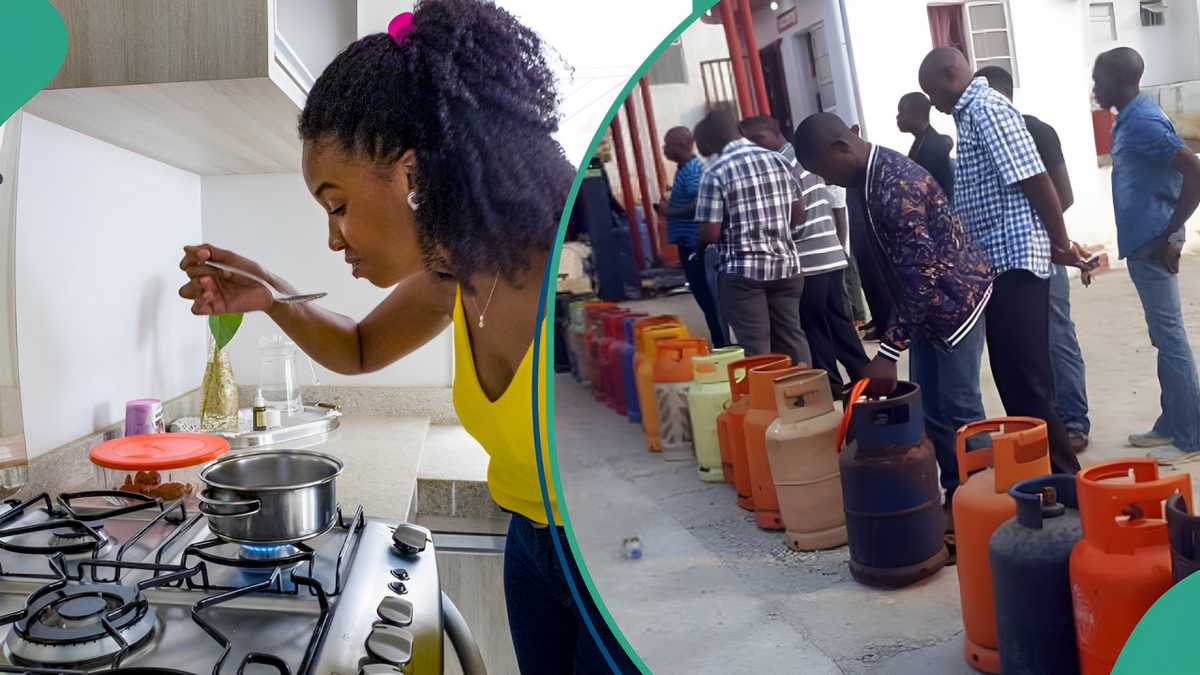

- NLNG has dedicated 100% of its LPG production to the domestic market, ending exports to boost access to cooking gas
- Nigerians experience significant dip in cooking gas prices, now around N1,075 per kilogram
- NLNG reports record supply, contributing over $150 billion to Nigeria’s economy since 2005
Pascal Oparada is a journalist with Legit.ng, covering technology, energy, stocks, investment, and the economy for over a decade.
Nigerians could see further relief in cooking gas costs after the Nigeria LNG Limited (NLNG) announced that it has dedicated 100 per cent of its liquefied petroleum gas (LPG), popularly known as cooking gas, to the domestic market, ending exports in a major push to improve access to cleaner and more affordable energy.
The announcement comes as cooking gas prices continue to decline across the country, offering much-needed respite to households battling the rising cost of living.

Credit: Novatis
Source: Getty Images
Speaking during his maiden media briefing, tagged Presentation of NLNG Facts and Figures 2026, the Managing Director and Chief Executive Officer of NLNG, Adeleye Falade, said the company supplied a record 500,000 metric tonnes of LPG to the Nigerian market in 2025, the highest annual volume since local distribution began in 2005.

Read also
FG removes import taxes on cooking gas, CNG, electric vehicles as dealers slash LPG prices
Record domestic supply signals major shift
Falade explained that NLNG started supplying just 70,000 metric tonnes of LPG to the local market in 2005 but has increased that figure more than sevenfold over the years.
According to him, the company now accounts for roughly one-third of Nigeria’s total cooking gas demand.
“Last year was the highest volume we have ever supplied in a single year when we supplied 500,000 tonnes of LPG. Today, that’s about 33 per cent of what the country demands,” he said.
He revealed that the decision to dedicate all LPG production to the Nigerian market was influenced by concerns over the health risks associated with the continued use of firewood, charcoal and other biomass fuels by millions of households.
The company said the move aligns with efforts to encourage cleaner cooking solutions, reduce environmental pollution and improve public health, particularly among women and children who are most exposed to harmful smoke from traditional cooking methods.

NLNG highlights economic contributions
Beyond domestic gas supply, NLNG also highlighted its significant contribution to Nigeria’s economy since commencing operations.
The company disclosed that it has generated more than $150 billion in revenue and exported over 6,000 LNG cargoes worldwide.
It also revealed that it has paid over $47.2 billion in dividends to shareholders, remitted more than $10 billion in taxes to the Federal Government and built an asset base valued at approximately $23 billion, making it one of Nigeria’s largest corporate contributors to government revenue.
NLNG further reaffirmed its expansion plans, stating that work on Train 7 is progressing while preliminary discussions have begun on the proposed Trains 8, 9 and 10, which are expected to strengthen Nigeria’s position in the global liquefied natural gas market.
Cooking gas prices continue to decline
The announcement coincides with a sustained decline in cooking gas prices across Nigeria.
Recent market data show that depot prices have fallen sharply following a surge in LPG imports and declining international crude oil prices, factors that have reduced the cost of petroleum products nationwide.

Cooking gas, which sold for around N2,500 per kilogram in May, is now available in many locations for nearly N1,075 per kilogram, representing a significant drop in prices.
Data from PetroleumPriceNG indicate that the average depot price has fallen to about N1,050 per kilogram.

Credit: Novatis
Source: Getty Images
Among depots offering some of the lowest prices are Rainoil Lagos at N1,035 per kilogram, PPMC at about N1,050, Matrix Warri at N1,065, while 11Plc also recorded one of the country’s most competitive LPG prices.
With NLNG committing its entire LPG production to the domestic market and supply improving steadily, industry observers believe Nigerians could continue to benefit from lower cooking gas prices in the months ahead, provided global energy prices remain stable and distribution challenges are effectively managed.
FG removes import taxes on cooking gas
Legit.ng earlier reported that Nigeria’s push towards cleaner and cheaper energy has received a major boost after the Federal Government removed import duty and Value Added Tax (VAT) on cooking gas, compressed natural gas (CNG) and electric vehicles, a move that is already reflecting in lower LPG prices announced by dealers.

The Nigeria Customs Service (NCS) unveiled the tax incentives on Thursday, July 30, 2026, under the Presidential Gas for Growth Initiative, describing the policy as part of efforts to reduce transport and energy costs while accelerating the country’s transition away from petrol.
The removal of import duty and VAT is expected to reduce the cost of bringing cooking gas and related equipment into Nigeria, easing pressure on prices for households and businesses.
Source: Legit.ng