
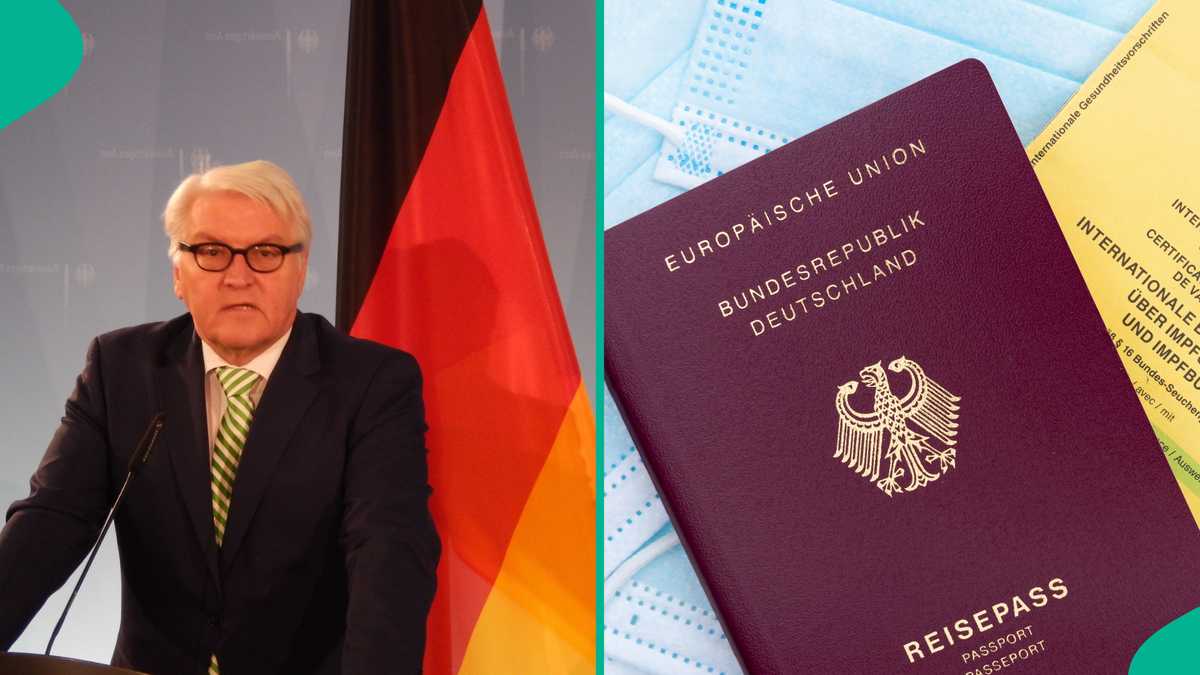

- Germany’s embassy has published detailed requirements for German citizens applying for a passport, covering documents, appointments, and payment methods
- Applicants must prove German citizenship with specific documents before a passport can be issued, and the rules differ depending on where they or their parents were born
- Only complete applications will be accepted at the consulate, meaning missing a single document could force applicants to rebook their appointment
Germany has released updated guidelines outlining exactly what German citizens need to do to obtain a German passport, with the information published through the country’s diplomatic mission in the Netherlands.
The first thing the guidelines make clear is that only confirmed German citizens are eligible to apply. Anyone unsure of their citizenship status is required to resolve that question before booking an appointment, as a passport cannot be issued without confirmed citizenship.

Source: Getty Images
Documents required for a German passport
Applicants must bring an application form that has been printed, signed, and completed in advance. A biometric passport photo measuring 3.5 by 4.5 centimetres is also required and must not be older than six months. The guidelines specifically warn that biometric photos taken for Dutch passports do not meet German requirements due to differences in facial height dimensions.

A birth certificate is mandatory without exception. Where the certificate is issued in a language other than German, Dutch, or English, a certified translation must accompany it. Holding a German birth certificate does not, on its own, serve as proof of German citizenship.
Proof of citizenship varies depending on personal circumstances. Those born in Germany typically present a German birth certificate alongside a naturalisation certificate if applicable. Those born abroad must provide their own naturalisation or citizenship certificate. Where citizenship was inherited through a German parent or grandparent, additional documents tracing that lineage, including marriage certificates and birth certificates from previous generations, are required.
All documents must be originals or certified copies. Simple photocopies are not accepted under any circumstances.
German passport: Appointments and payment rules
Every applicant must attend in person, as the process includes identification checks and fingerprinting. Appointments must be booked in advance, with one appointment allocated per person, though multiple documents for the same individual, such as a passport and an identity card, can be handled at a single visit.

Applications that arrive incomplete will not be processed, and the applicant will need to schedule a new appointment.
Payment is due at the time of application and must be made either in cash in euros, ideally in the exact amount, or by Mastercard or Visa credit card in euros. If paying by card, the cardholder must be physically present at the consulate.
For those who cannot collect their documents personally, the consulate allows a third party to collect on their behalf. This requires a completed authorisation form submitted at the time of the original appointment. If the decision to use a third-party collector is made after the appointment, the applicant’s signature must be certified by either a German authority or a Dutch municipality.
Legit.ng has also published residency years for foreigners who want to become Qatari citizens.
Citizenship: Australia mentions residency years for foreigners
Meanwhile, Legit.ng previously reported that Australia’s Department of Home Affairs has outlined the residence requirement foreigners must meet before applying for citizenship.

Read also
Canada announces 3 documents that can be used as proof of one’s citizenship, gives details
Applicants must have lived in Australia on a valid visa for a number of years before the date they apply for citizenship.
The rules also specify how much time applicants are allowed to have spent outside Australia during that period.
Source: Legit.ng