
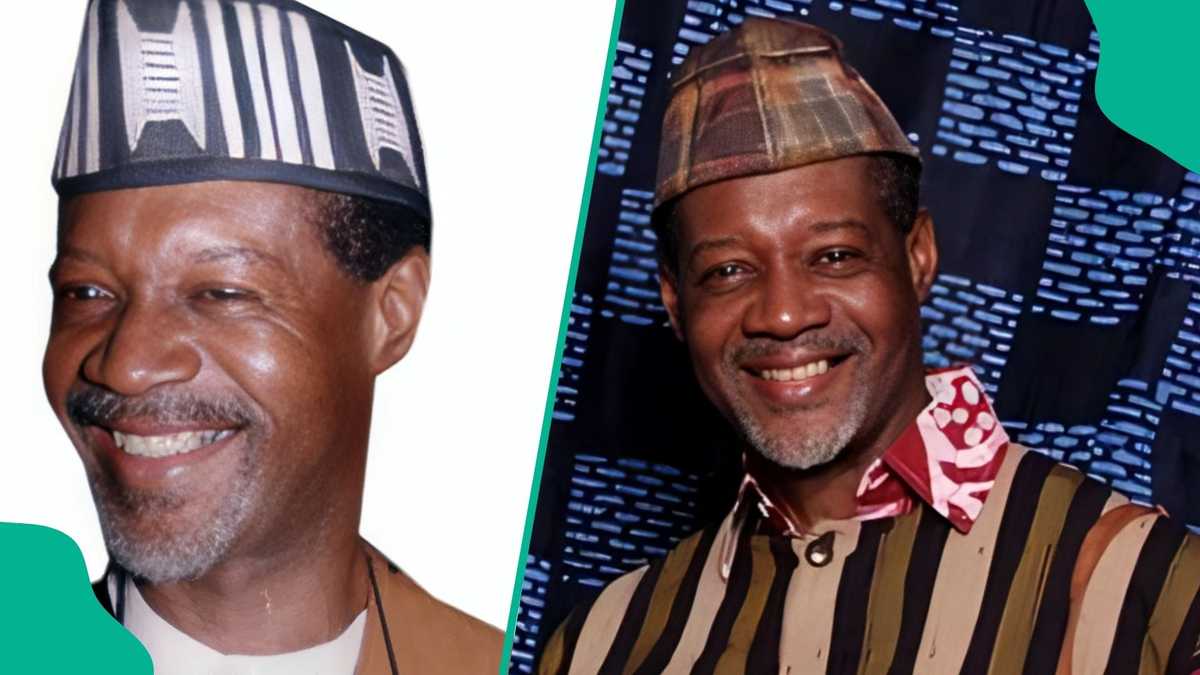

- Veteran Nigerian filmmaker Ola Balogun issued a public will after a fresh illness struck him just days after his 81st birthday
- Balogun, currently receiving treatment in Lagos, cited Chief Obafemi Awolowo as inspiration for preparing his final wishes
- The pioneer filmmaker directed that his viable organs be extracted for donation, with the rest of his body handed to medical institutions
Pioneering Nigerian filmmaker Ola Balogun has made his final wishes public, directing that his organs be donated and his body surrendered to medical institutions upon his death.
The 81-year-old shared the document, titled “Public Rendition of My Last Will and Testament,” with TheCable Lifestyle on Wednesday.

Source: Instagram
Balogun explained that the decision followed a fresh health scare, as he was diagnosed with a new illness barely a week after marking his 81st birthday on 1 August. He is currently receiving treatment at the Josek Medical Centre in Ogba, Ikeja, Lagos State.

Read also
Nigerian man bags job sponsorship to New Zealand, shares how he secured it in TiKTok video
Without access to a legal practitioner at the time, Balogun opted for a public declaration to ensure his wishes were on record.
He wrote:
“Barely a week after I was privileged to celebrate my 81st birthday on August 1st, a fresh medical alert has obliged me to once more seek treatment at the Josek medical centre in Ogba, Ikeja.”
Adding that he was:
“Hastily writing these few lines, not knowing whether or not I am destined to emerge alive from my latest confrontation with illness.”
Balogun Cites Awolowo as His Inspiration
The filmmaker drew on the example of the late Chief Obafemi Awolowo, who prepared his will weeks before his death, describing departure from life as something requiring orderly preparation, “rather akin to preparation for a long journey.”
In the document, Balogun specified that once his death is medically certified, his remains should be “speedily dissected” to harvest any viable organs, such as kidneys or eyes, for transplantation to those in need.
Whatever remains is to be transferred promptly to medical institutions for use in training doctors studying morbid anatomy.

He stated:
“The above decisions concerning the disposal of my corpse are rooted in the firm conviction that my physical remains should, if possible, be useful to the living.”

Source: Instagram
A Career That Shaped Nigerian Cinema
Balogun is widely regarded as one of the founding figures of the Nigerian film industry, with a career stretching across several decades and multiple languages, including English, Yoruba, Pidgin and Igbo. He directed his first feature-length film, “Alpha,” in 1972, marking his shift from documentary filmmaking into narrative cinema.
His body of work includes titles such as “Ija Ominira,” “Amadi,” “Nigersteel,” “Ajani Ogun,” “Musik Man” and “Oorun Moru.” He belongs to the first generation of Nigerian filmmakers alongside the late Hubert Ogunde, Jab Adu, the late Ade Afolayan and Moses Olaiya, popularly known as Baba Sala.
Actress Tope Osoba Passes Away
Legit.ng reported that the life and struggles of Nollywood actress Tope Osoba, who passed away after a prolonged battle with illness, leaving her fans and colleagues in mourning.

Osoba’s journey with breast cancer, marked by her determination to raise awareness and funds for her treatment, showcases not only her resilience but also the support of her peers during a critical time.
Source: Legit.ng