
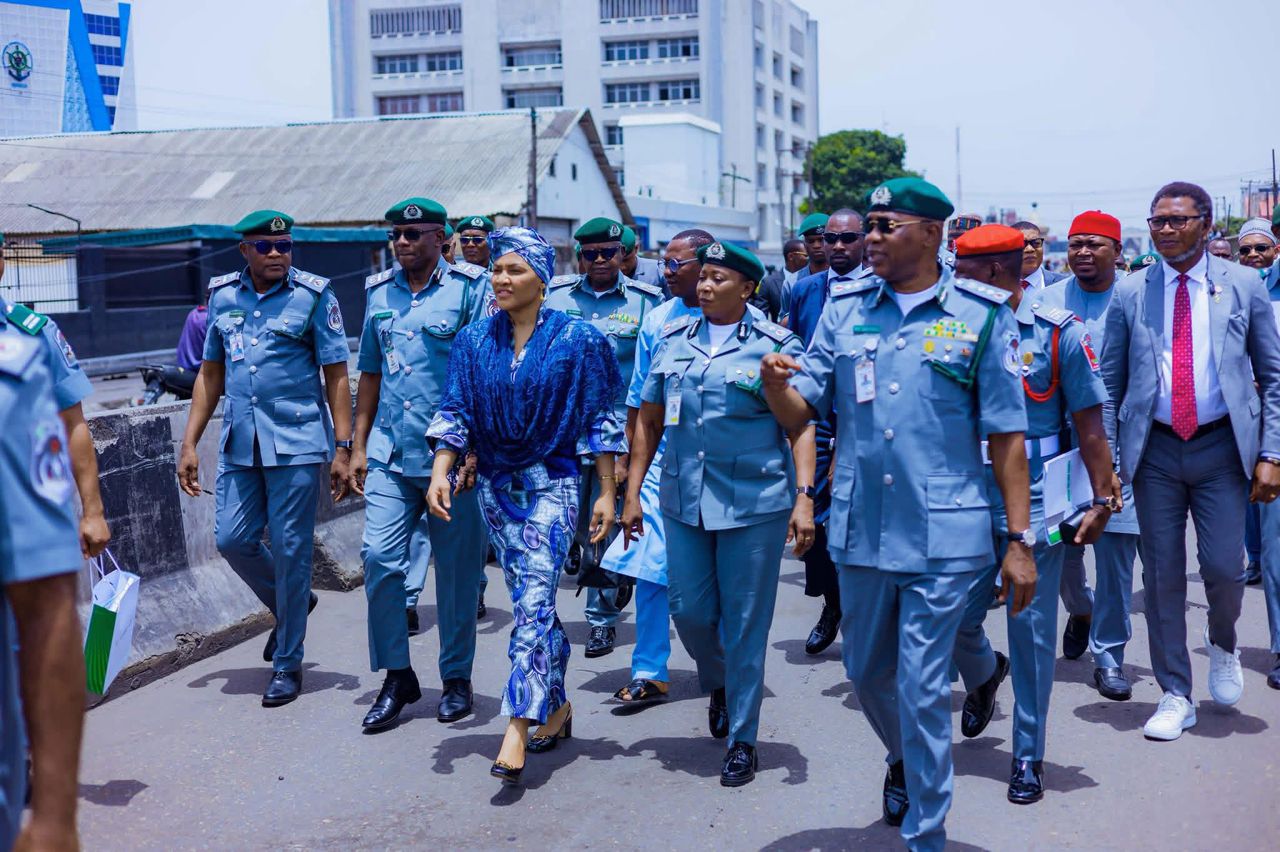

The Presidential Enabling Business Environment Council (PEBEC), an agency promoting digital transparency in Nigerian government parastatals, will embark on a two-day clean-up operation to clear congestion, unauthorised checkpoints and environmental degradation along the Lagos port corridor.
The agency will commence the enforcement exercise from 14 to 15 May as part of the government’s efforts to improve trade, enhance port efficiency and strengthen Nigeria’s business environment.
Director-General of PEBEC, Zahrah Audu, disclosed this in a statement on Friday, adding that the exercise would be carried out through the agency’s Customs Efficiency Committee (PCEC).
Mrs Audu explained that the exercise is aimed at restoring order, improving traffic flow, eliminating bottlenecks and enhancing regulatory compliance along the Apapa and Tin Can Port corridors, Nigeria’s most critical maritime and logistics gateways.
“The exercise represents a strategic intervention aimed at restoring order, improving traffic flow, eliminating operational bottlenecks, and enhancing regulatory compliance along the Apapa and Tin Can Port corridors — Nigeria’s most critical maritime and logistics gateways,” she said.

She noted that the exercise was not intended to disrupt business activities but to create a more organised, efficient and predictable operating environment that would benefit port users, transport operators, businesses, investors and the Nigerian economy at large.
The director-general therefore urged stakeholders, including freight forwarders, clearing agents, transport operators, traders and other port users, to cooperate fully with enforcement officials and comply with all lawful directives throughout the exercise.
For years, congestion, unauthorised checkpoints, indiscriminate parking, environmental degradation and uncoordinated activities along the port access routes have negatively affected cargo movement, increased the cost of doing business, delayed trade operations and weakened efficiency across the logistics value chain.
The Apapa and Tin Can Island port corridors in Lagos have been plagued by chronic gridlock caused by indiscriminate parking of trucks, poor road infrastructure, illegal checkpoints and uncoordinated activities by transport operators and security agencies.
The corridors, which serve as the major access routes to Nigeria’s busiest seaports, are often characterised by long queues of articulated vehicles stretching several kilometres, environmental pollution, delays in cargo evacuation and disruption of commercial activities within surrounding communities.
Motorists, residents and businesses operating around the ports have repeatedly complained about severe traffic congestion, extortion and the deteriorating condition of roads in the area.
The persistent congestion has significantly affected cargo operations and the country’s logistics chain. Importers, exporters and freight forwarders have continued to face delays in the movement and clearance of goods, leading to increased haulage costs, higher demurrage charges and loss of man-hours.
The situation has also weakened the efficiency of port operations, reduced turnaround time for trucks and cargo, and discouraged investment in the maritime sector.
PEBEC said the exercise is designed to address these longstanding challenges through coordinated enforcement and inter-agency collaboration.
The initiative aligns with the federal government’s reform agenda under the Renewed Hope Agenda to create a more efficient, transparent, secure and investor-friendly business environment capable of supporting economic growth, trade competitiveness and private sector productivity.

Benefits
Mrs Audu said the clean-up exercise is expected to improve traffic management and facilitate faster cargo movement within the port corridors.
She added that it would reduce delays and inefficiencies affecting businesses and port users, while also enhancing safety, environmental sanitation and public order.
ALSO READ: 22 ships arrive Lagos port with petrol, frozen fish, other items
She stated that the exercise would also eliminate illegal structures, unauthorised checkpoints and operational obstructions, strengthen coordination among relevant regulatory and security agencies, and boost investor confidence in Nigeria’s ports and logistics ecosystem.
The director-general noted that the exercise would involve security and government agencies, including the Nigerian Ports Authority (NPA), Nigeria Customs Service (NCS), Nigeria Police Force (NPF) and Marine Police.
Others involved are the Lagos State Government, port terminal operators, relevant port unions and other regulatory agencies operating within the port corridor.