

Some residents of Agu-Awka, Awka South Local Government Area, Anambra State, have decried the absence of public primary and secondary schools in the area.
They said this situation has denied them access to the state government’s free education policy.
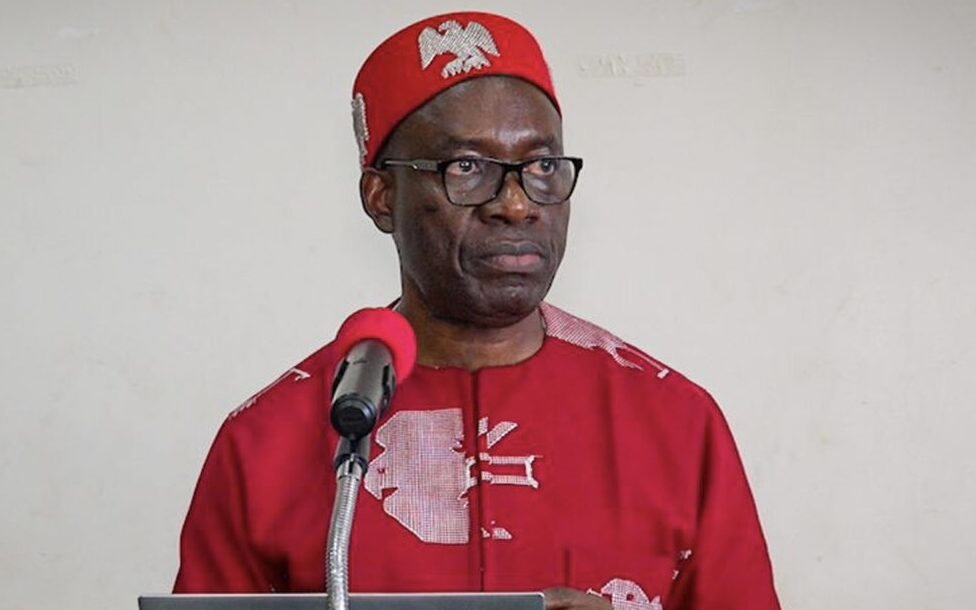
Speaking with the News Agency of Nigeria (NAN) in Awka on Monday, the residents appealed to Governor Charles Soludo to establish public schools in the densely populated area in the heart of the capital town.
NAN reports that on 28 April, parents and guardians of a Catholic Church-owned nursery and primary school protested a 43 per cent fee increase arbitrarily imposed by the management just before the third term began.
The protesters said the management was exploiting them because there were no government substitutes.

The residents told NAN that Agu-Awka, which hosts the old Government House, estates, Commissioners’ Quarters, Nwakpadolu Estate and the stretch from Immigration Junction to Book Foundation along Esther Obiakor Road, had no government-owned schools.
According to them, the affected area also extends to parts of Ifite Road from Aroma Junction to the back gate of Nnamdi Azikiwe University.
‘We do not know what free education means’
Chinedu Okeke, a resident, stated that despite the state government’s free education programme for primary and secondary school students, families in Agu-Awka were compelled to patronise private and mission schools because of the absence of public schools.
Mr Okeke noted that only a few institutions existed in the area, including Igwebueze Primary School, located within a Catholic Church’s premises and Nwafor Orizu Primary and Secondary Schools, used mainly for training student teachers.
The resident added that the Nnamdi Azikiwe University Demonstration Primary and Secondary Schools were privately run by the institution.
He said students seeking access to public schools had to travel long distances to neighbouring communities such as Okpuno, Amansea and Nawfia, spending an average of N1,500 daily on transportation.
Mr Okeke, who has lived in the area for over 10 years, said his children attended private schools because he had no alternative.
“It is sad that the entire Agu-Awka area, which is a political ward and has been the seat of government since 1991, does not have a public school.
“We do not know what free education means because we only read about it in newspapers and social media. We pay school fees out of compulsion because there are no public schools here,” he said.
Another resident, Emeka Nwosu, told NAN that the population and land mass of the area justified the establishment of at least six public primary schools and three secondary schools.
He alleged that available open spaces that could have been used for schools were being taken over by private developers.
“The point is that there are no public primary or secondary schools on the Onitsha-bound lane of the expressway between Aroma Junction and UNIZIK.
“Private schools should be alternatives, not replacements for government schools.
“It is disturbing that private developers have taken over places that should have been used for schools, including the open space at Ukwu Orji behind the old Government House,” he said.
READ ALSO: FCT schools reopen as teachers suspend strike amid learning loss, enrolment concerns
Mr Nwosu described the situation as unacceptable, noting that the area had more than 20 private secondary schools and over 30 private primary schools, without a single government-owned school.
An educationist, Ngozi Ezeani, told NAN that although there were no rigid rules guiding the siting of schools, factors such as population, travel time, transportation cost and accessibility should be considered.
She urged the government to address the educational needs of rapidly growing urban settlements to ensure equitable access to public education.