

The rainbow nation of South Africa has been in a xenophobic eruption since April, in a renewed wave of the assault, which has claimed the lives of two Nigerians, ironically killed by operatives of that country’s National Defence Force. Nigeria is demanding an explanation for this unfair targeting of its nationals. And, in pursuit of this, it has activated the diplomatic protocols required.
In viral footage, foreigners – essentially blacks from other African countries – can be seen being chased by motley crowds with cudgels, with some of them clobbered to stupor, kicked and marched on the ground. This violation and indignity are against all that the African Union (AU) Charter stands for in its guarantees on economic integration and individual and collective rights.
Masterminded by a mélange of political parties and groups, such as Inkatha Freedom Party, MK Party, March and March Movement, and Operation Dudula, the misguided crusaders of this vicious campaign say it is aimed at a “clean up” of their country of foreign elements, who contribute nothing to the economy except to traffic in crime, drugs and prostitution. They also accused them of taking their jobs and eloping with their women.
Therefore, foreigners have been asked to go back to their countries and fix the rot bedevilling them. From Durban in KwaZulu-Natal, the hurricane has spread to Cape Town, East London, Pretoria and KuGompo. Nigerians are scared-stiff of the volcanic proportions of this xenophobia, such that no fewer than 130 of them have volunteered to return home as soon as possible.
The mayhem is mirroring the US Immigration and Customs Enforcement (ICE) raids, with South African schools and hospitals being invaded to fish out their targets. Two Ghanaians have also been killed by mobs so far.

The situation is extremely alarming, a fact that compelled President Bola Tinubu to issue a directive last Thursday that Nigeria’s High Commission in South Africa should set up a Distress Desk Unit immediately for our citizens. Nigerians have been told to close their businesses and prioritise personal safety, as shops are being looted and properties torched.
Nigeria is incensed by all of this, given the swiftness with which the Minister of Foreign Affairs, Bianca Odumegwu-Ojukwu, summoned the South African Acting High Commissioner to Nigeria, Losoli Machele, last week. The government condemned the “extrajudicial action and violence against foreign nationals.” Specifically, Nigeria demands a transparent investigation into the killing of Ekpenyong Andrew and Amaramiro Emmanuel, their autopsy reports, and legal access of their families to the South African authorities.
The unfortunate insularity being advocated by South Africans misses the essential point of a globalising world in which immigrant flows are from and across every country of the world, in the quest for trade, greater opportunities, and the pursuit of knowledge. It is for this reason that Elon Musk – the world’s richest man and originally South African – equally migrated to the US in 1994.
There may have been cases of irregular travel documents, visa overstays, or crimes involving immigrants. But Nigeria does not condone such vices in foreign lands, as observed by the chairperson of the Diaspora Commission (NiDCOM), Abike Dabiri-Erewa, in a recent statement. “Any individual, regardless of origin, who commits an offence, should be made to face the full penalty of South African law”, she pointed out. Yet, for the Nigerian government, “we reject the profiling and generalisation of Nigerians”, Mrs Dabiri-Erewa emphasised.
Confronted by a similar situation in September 2019, some 900 Nigerians had registered for evacuation. Air Peace airline came to their aid and flew 186 people home, free of charge, in a single flight.
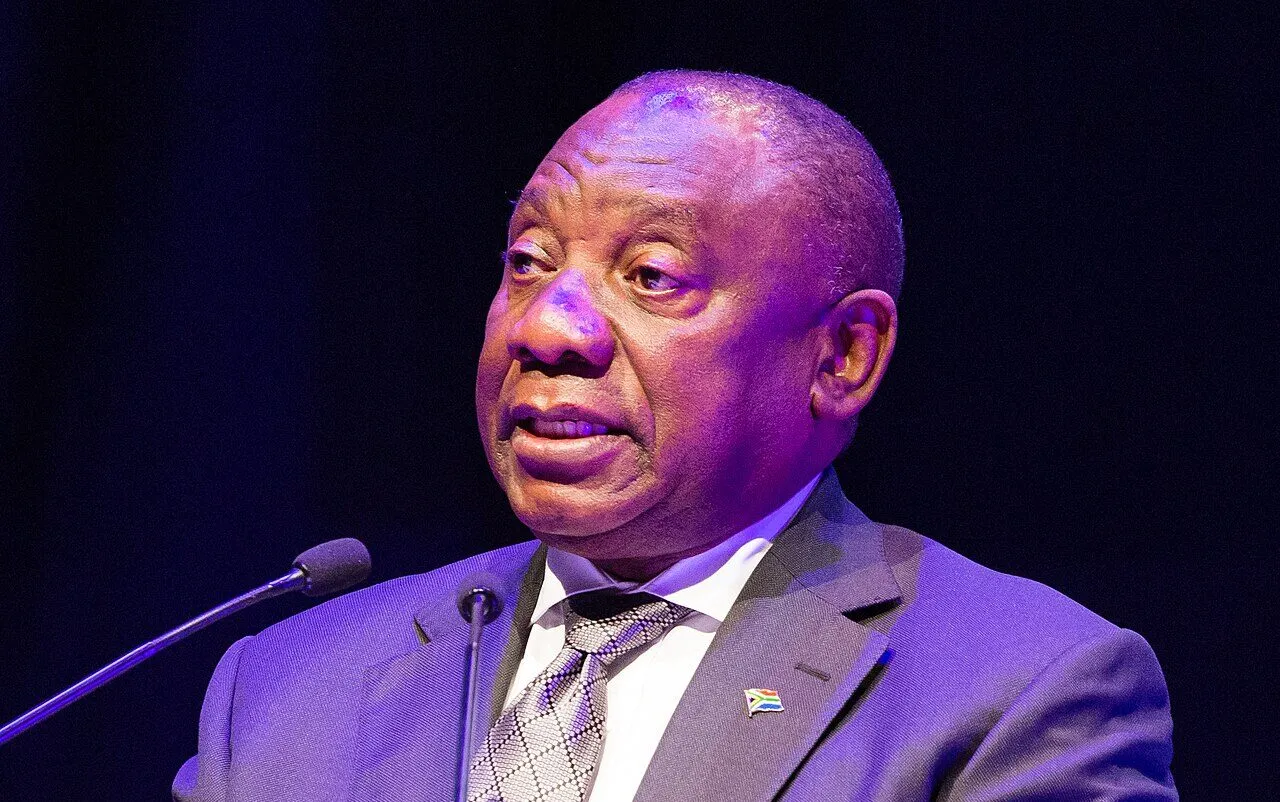
This disorder cannot continue to be a staple in South Africa’s social relations with other Africans in its territory. President Cyril Ramaphosa has reportedly condemned the attacks. This routine diplomatic gesture means nothing with the frequency of these criminal assaults. The security operatives who acted outside the framework of the law by killing harmless Nigerians must be identified and prosecuted. The ringleaders of the xenophobic campaign should not be spared either. This should be the starting point of any meaningful mitigation of the situation.
Undoubtedly, the socio-economic disjoints in South Africa, evident in high unemployment, drug trafficking/addiction and vices of armed robbery and gangsterism afflicting thousands of youths, could not be the result of the presence of black immigrants, but the failure of post-apartheid dreams, accentuated by economic mismanagement, corruption and poor leadership.
The bestial cycles that target Nigerians demand that we now drum our sacrifices in ending apartheid into the ears of the new generation of South Africans, who are bereft of a basic sense of their history. It is nauseating that Ramaphosa, one of the surviving freedom fighters, who knows better, has been negligent here, in invoking it to stem these barbaric convulsions of xenophobia, and absolve his administration from any suspicion of official connivance.
Nobody could have put it better than the inimitable Nelson Mandela, who said, “The support we have received from Nigeria has been second to none,” during his thank-you visit in 1990, shortly after he was released from jail. Nigeria was Mandela’s sanctuary for six months in 1963, and Thabo Mbeki was in asylum here, where he served as the African National Congress (ANC) representative from 1977 to 1984.
Prime Minister Tafawa Balewa set up the National Committee Against Apartheid in 1960, a few months after Nigeria’s independence. It became an instant instrument of pressure on the United Nations system and other international organisations for sustained action against the evil apartheid regime. Besides, the ANC received $5 million annually from Nigeria for its operations, just as Nigeria sacrificed $41 million worth of rejected sales of oil to the apartheid government.
READ ALSO: Xenophobia: Nigerian lawmakers condemn killings, call for evacuation of citizens from South Africa
In 1976, Nigeria set up the South Africa Relief Fund, with a $3.7 million seed grant. By 1977, $10.7 million had been accumulated, from 2 per cent of the emoluments of our civil servants and public officers, while Nigerian students equally sacrificed part of their allowances for this purpose, informally known then as the “Mandela tax.” Some estimate that Nigeria’s commitment to the apartheid fight gulped as much as $61 billion in all.
With Dangote and Oando as players in the Johannesburg Stock Exchange through South Africa’s investment appeal, many in legitimate businesses, and our valued eggheads in the academia and medical fields, epitomised by the Nobel Laureate, Professor Wole Soyinka, whose towering scholarship is courted by Johannesburg, Stellenbosch, and Cape Town universities, it smacks of irrationality for any South African to denigrate Nigerians living there as dregs, who only milk the country.
What Nigeria deserves in return for its unparalleled show of brotherhood to South Africa during its hour of greatest need is not harassment, intimidation and the indefensible killing of its citizens. MTN, MultiChoice and Standard Bank are South Africa’s corporate giants in Nigeria, whose interests remain unmolested or harmed, unlike the fate of our countrymen and women in their country. It is more than due to remind Ramaphosa to lead his country’s folks right!