
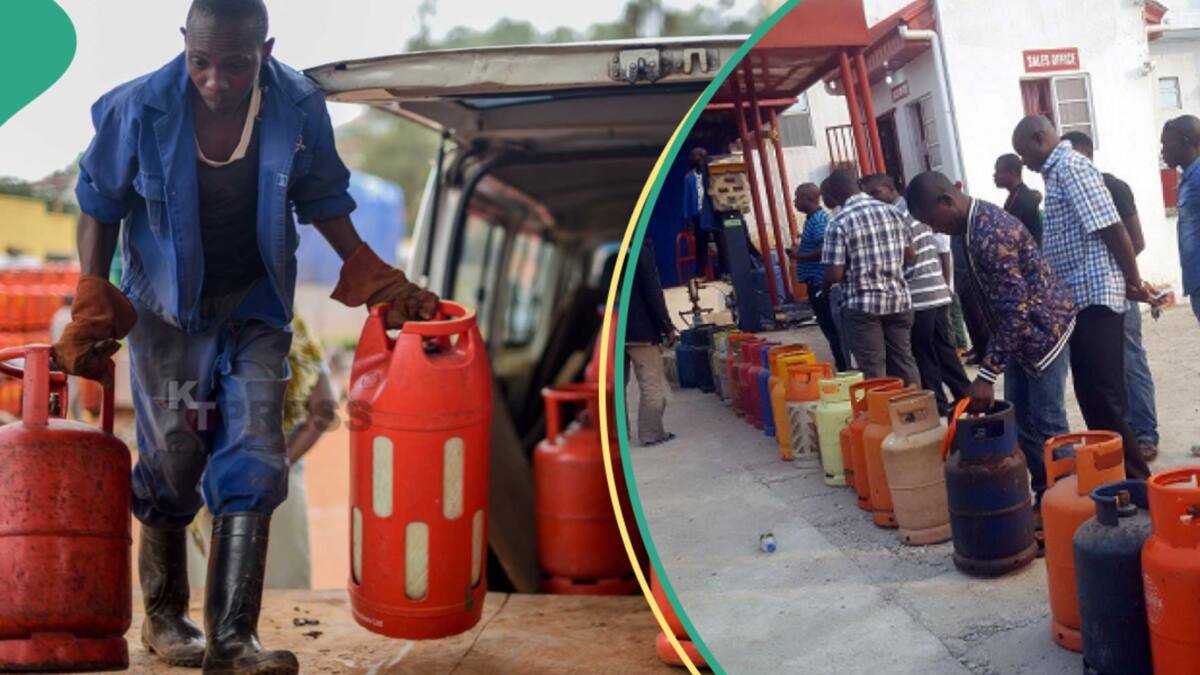

- LPG prices have risen by up to 7.3% across major Nigerian depots, adding pressure on households
- The federal government has launched a free LPG cylinder programme, targeting one million households for cleaner cooking fuels
- Increasing demand is also clashing with declining supply, raising concerns over future LPG prices and shortages
Pascal Oparada is a journalist with Legit.ng, covering technology, energy, stocks, investment, and the economy for over a decade.
The price of liquefied petroleum gas (LPG), popularly known as cooking gas, is rising again across major Nigerian depots, adding to the pressure on households already struggling with higher energy costs.
The latest increase has seen some major depots in Lagos, Calabar, Port Harcourt and Warri raise their LPG prices by as much as 7.3%, according to industry data.

Credit: Novatis
Source: UGC
The development comes at a time when the Federal Government is expanding efforts to make cooking gas more accessible to Nigerians through a nationwide programme targeting at least one million households with free LPG cylinders and refills.

Major depots adjust LPG prices
Among the depots recording price increases is 11Plc, which raised its LPG price by N70 per kilogramme to N1,020, representing a 7.3% increase.
NAGAS also increased its price by N30 to N980 per kilogramme, while Ardova Plc, also known as AP, added N45 to sell at N985 per kilogramme.
NIPCO Lagos increased its price by N70 to N1,020 per kilogramme.
Despite the latest increases, Dangote Refinery continues to record the lowest depot price among the facilities tracked, with LPG selling at N935 per kilogramme, according to PetroleumPriceNG data.
The price differences highlight the continued volatility in Nigeria’s downstream petroleum market, where supply conditions, logistics costs and changing demand continue to influence the price consumers ultimately pay.
FG expands free LPG cylinder programme
The price increases come alongside a major government intervention aimed at encouraging more Nigerian households to adopt cleaner cooking fuels.
The Federal Government’s LPG programme is targeting at least one million households with free cylinders, while beneficiaries are also expected to receive free refills under the initiative.

Read also
FG targets 10 million Nigerian homes with cooking gas, promises free refills for thousands
The programme was launched in Uyo, Akwa Ibom State, where about 27,000 LPG cylinders were distributed as part of the initial rollout.
The initiative is expected to help reduce the financial barrier facing low-income households that want to switch from firewood, kerosene and other traditional cooking fuels to LPG.
Industry stakeholders believe that expanding the programme across the country could provide relief to households while supporting the government’s clean cooking objectives.
Rising demand meets falling supply
The latest price movement is also coming as demand for LPG increases across Nigeria.
A recent fact sheet from the Nigerian Midstream and Downstream Petroleum Regulatory Authority (NMDPRA) showed that LPG consumption increased in July.
However, the agency also reported a decline in supply during the same period, raising concerns that continued supply constraints could trigger further price increases or shortages if not addressed.
The combination of stronger demand and weaker supply could put additional pressure on the market in the coming weeks.
What it means for Nigerian households
For consumers, the latest depot increases could eventually translate into higher retail prices, particularly if distributors pass additional costs down the supply chain.


Credit: Novatis
Source: Getty Images
While the Federal Government’s free cylinder and refill programme could offer relief to selected households, millions of other Nigerian families remain exposed to movements in LPG prices.
The latest developments therefore present a mixed picture: government intervention is expanding access to cooking gas, but rising depot prices and supply concerns continue to threaten affordability for households nationwide.
Marketers explain high cooking gas prices
Legit.ng earlier reported that Nigerian consumers continue to pay high prices for cooking gas even as the product’s depot price has dropped significantly, and the Nigeria Association of Liquefied Petroleum Gas Marketers (NALPGAM) has now explained why the gap between gantry and retail prices persists.
Bassey Essien, executive secretary and CEO of NALPGAM, said that cooking gas is a logistics-heavy commodity, and the cost structure between the supply point and the end consumer is far more complex than most buyers realise.
Source: Legit.ng