
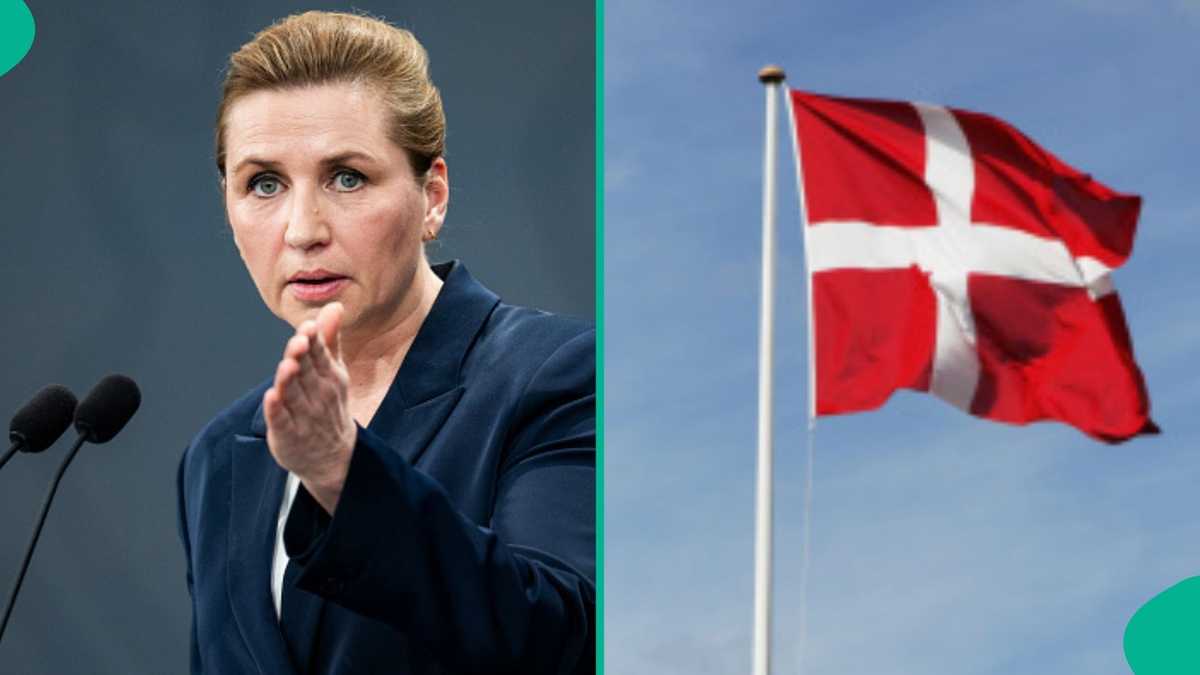

- The Danish government has published the four supplementary requirements foreigners must satisfy to qualify for permanent residence in just four years
- Applicants who meet all 4 conditions can cut the standard 8-year waiting period in half, according to the official guidance
- The requirements cover language ability, employment history, active citizenship, and minimum annual income thresholds
Denmark’s government has published the four supplementary requirements that foreigners must meet to qualify for a permanent residence permit in as little as four years, cutting the standard eight-year waiting period in half.
Under the rules published by the Danish Immigration Service, applicants must satisfy at least two of the four requirements to be eligible for permanent residence at all.

Photo Credit: Martin Sylveste Andersen, Missen
Source: Getty Images
Meeting all four unlocks the accelerated four-year pathway. According to the government, the requirements are as follows:
Denmark’s 4 supplementary requirements for permanent residence
1. Passing the Danish Language Test 3 (Prøve i Dansk 3), or an equivalent or higher-level Danish language exam. Candidates who clear this bar automatically satisfy the basic language requirement of passing Prøve i Dansk 2 at the same time.

2. Holding regular, full-time employment or running a business in Denmark for at least four years within the four years and six months before the Immigration Service decides on the application. The four years of work do not need to be continuous.
3. Passing the active citizen exam, which is a written test held twice a year at language schools across Denmark, or demonstrating at least one year of active citizenship through participation in a board, organisation, or similar body that supports Denmark’s democratic values. The current version of the exam has been administered since 2016, meaning older citizenship test results do not count.
4. Earning a taxable annual income of at least DKK 346,155.57 (roughly ₦79.7 million at current exchange rates) on average for the two years before the Immigration Service reaches a decision. Acceptable income types include salary, self-employment earnings, labour-market pension contributions, and wages earned abroad that would have been taxable in Denmark.

Danish PR: What applicants need to know
For the employment requirement, the four years of full-time work can be accumulated across different jobs and interrupted periods. For example, a person who worked full-time for two years, took six months off, and then returned to full-time work for another two years would still qualify.
On active citizenship, participation does not need to be with the same organisation throughout the year, and membership does not have to be ongoing once the permit is granted.
For the income requirement, applicants must attach supporting documents such as tax assessment notices and payslips. Self-employed individuals can submit a balance sheet, which must be signed by an accountant if one prepared it.
In a related story, Legit.ng reported that Denmark had explained how foreigners can qualify for permanent residence after four years instead of eight.
Residency requirement for Danish permanent residence
Meanwhile, Legit.ng previously reported how many years foreigners must live in Denmark to qualify for its permanent residency.

According to the Danish Immigration Service, applicants must have held a valid residence permit throughout that entire period, covering categories such as family reunification, asylum, studies, or employment.
Permits issued under the temporary protection laws for displaced Ukrainians or those who assisted Danish authorities in Afghanistan do not count towards the eight-year calculation.
Source: Legit.ng