
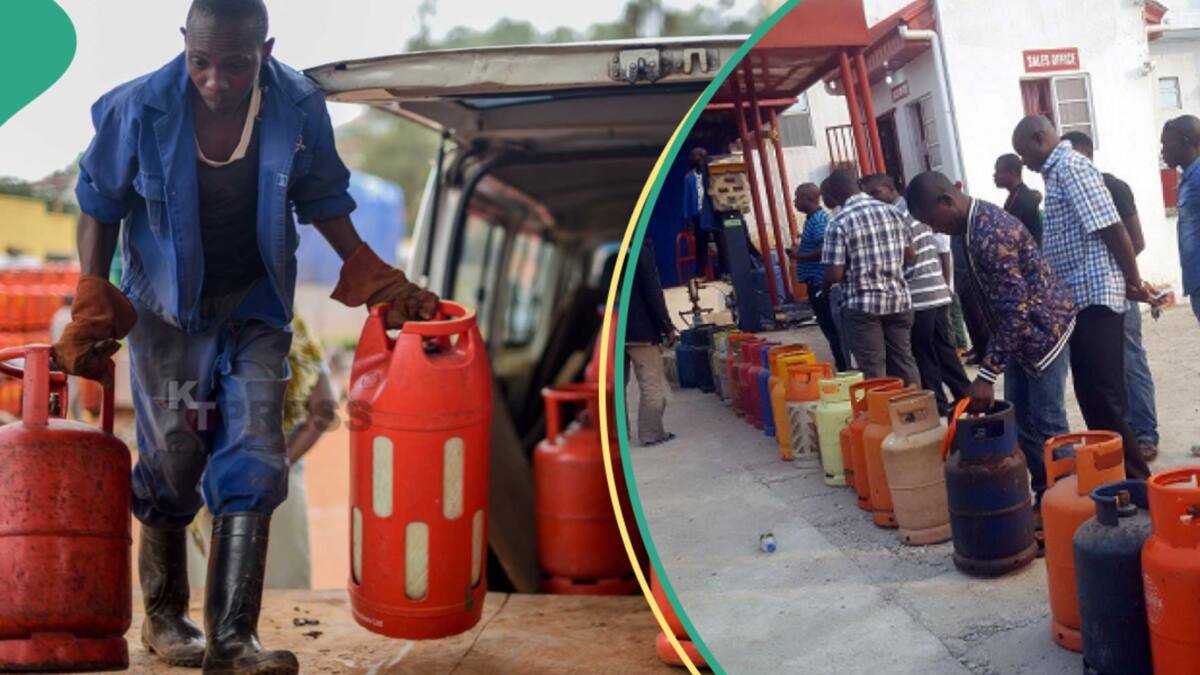

- Cooking gas prices drop nearly 39%, easing pressure on Nigerian households’ budgets
- Families across Nigeria save thousands with reduced LPG retail prices amid inflation concerns
- Industry experts urge increased domestic gas production to sustain lower cooking gas prices
Pascal Oparada is a journalist with Legit.ng, covering technology, energy, stocks, investment, and the economy for over a decade.
Millions of Nigerian households are finally getting a break from soaring cooking gas costs as the retail price of Liquefied Petroleum Gas (LPG) has dropped sharply across Lagos, Enugu and several other states.
After climbing to record highs of over N2,000 per kilogramme in June, with some locations charging as much as N2,300/kg, cooking gas now sells for around N1,400/kg in many retail outlets, representing a price decline of nearly 39 per cent in less than two months.

Credit: Novatis
Source: UGC
The reduction follows increased product availability at depots and lower wholesale prices, allowing marketers to slash pump prices nationwide.

Families save thousands on gas refills
For many Nigerians struggling with the rising cost of living, the latest price cut is already making a noticeable difference.
One Lagos resident, Juliet Onyinyechi, expected to spend N13,800 to refill her 6kg gas cylinder at a filling station in Ojo Local Government Area.
Instead, she was charged N8,400, saving N5,400 in a single purchase, according to a report by BusinessDay.
Across the country, similar stories are emerging as lower prices ease pressure on household budgets.
Depot prices drive retail reductions
Industry checks show depot prices have fallen significantly due to stronger supply in July.
Current loading prices include:
- 11 Plc – N1,025/kg
- Ardova – N1,020/kg
- Navgas – N1,005/kg
- NIPCO – N1,025/kg
- PPMC – N1,005/kg
- Rain Oil – N1,030/kg
The lower wholesale costs have enabled retailers to reduce pump prices by more than 30 per cent, bringing relief to consumers who had struggled with months of soaring LPG prices.

Enugu, other states record similar decline
The downward trend is not limited to Lagos.
In Enugu, retail prices have also dropped to around N1,400 per kilogramme, down from about N1,900/kg in June, although prices still vary by location and retailer.
Obiora Ani, a gas dealer in Uwani, Enugu, said stronger nationwide supply has helped stabilise the market.
He noted that lower prices are encouraging more customers to refill their cylinders rather than delay purchases due to high costs.
Relief comes amid high food costs
The decline comes at a crucial time for households facing persistent inflation.
Although Nigeria’s headline inflation eased to 15.91 per cent in June, food inflation remained elevated at 17.52 per cent, driven by insecurity, transportation costs and other supply constraints.
Many families had resorted to using charcoal and firewood during the recent LPG price spike.
A Lagos mother of five, identified as Mama D, said the latest reduction has brought much-needed relief after her family temporarily abandoned cooking gas because it had become unaffordable.

Domestic supply remains key
Despite holding one of Africa’s largest natural gas reserves of about 215 trillion cubic feet, Nigeria still depends on imported LPG to meet local demand.

Credit: Novatis
Source: Getty Images
Industry data indicates that national cooking gas consumption has risen from 1.5 million metric tonnes in 2023 to an estimated 1.8 million metric tonnes in 2026, while domestic supply averages only about 1.6 million metric tonnes, leaving a supply gap that continues to influence prices.
Energy experts say sustaining the recent price decline will require increased domestic gas production, stable foreign exchange rates and greater investment in gas infrastructure.
They warn that any disruption in supply could quickly push cooking gas prices higher again.
FG removes taxes on cooking gas
Legit.ng earlier reported that Nigeria’s recent decision to remove import duties and VAT on cooking gas, compressed natural gas (CNG), and electric vehicles aimed at promoting cleaner energy solutions across the country.
This bold step is set to significantly lower cooking gas prices, offering relief to households while pushing Nigeria closer to a sustainable energy future.
Source: Legit.ng