
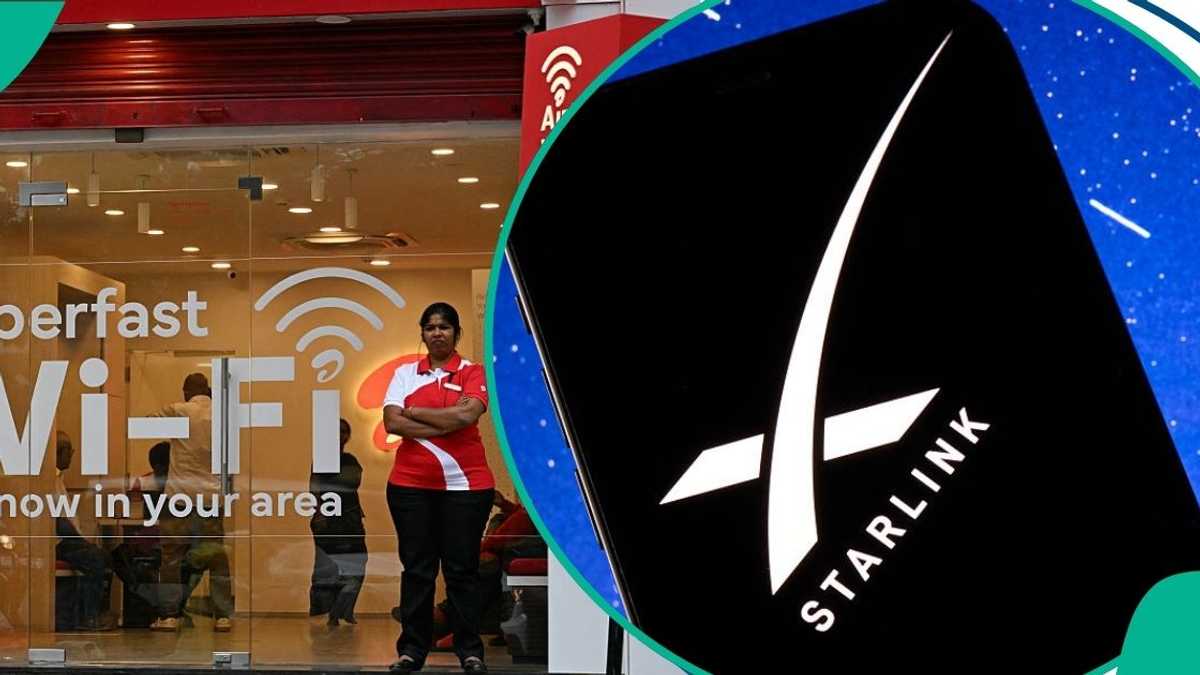

- Airtel Africa and Starlink launch satellite-to-phone service in the DRC, transforming mobile connectivity
- Customers can now connect directly to satellites without needing a dish, using compatible smartphones
- This landmark service aims to extend connectivity in Africa’s challenging telecommunications landscape
Pascal Oparada is a journalist with Legit.ng, covering technology, energy, stocks, investment, and the economy for over a decade.
DRC becomes launchpad for a new era of mobile connectivity as Airtel customers begin connecting directly to satellites without a dish
Airtel Africa and Elon Musk’s SpaceX-owned Starlink have launched a satellite-to-phone service in the Democratic Republic of Congo (DRC), marking what the companies describe as the first commercial deployment of Starlink’s direct-to-phone technology in Africa.
Commercially launched on August 14, 2026, the service allows eligible Airtel customers with compatible smartphones to connect directly to Starlink satellites in locations where conventional mobile network coverage is unavailable.


Credit: IDREES MOHAMMED / Contributor
Source: Getty Images
Unlike traditional Starlink broadband, the new service does not require customers to buy or install a satellite dish. Instead, specially equipped satellites act like mobile towers in space, communicating directly with compatible phones.
What can Airtel customers do with Starlink?
The service is initially focused on basic connectivity rather than full-speed satellite internet. Customers can send SMS messages and access selected light-data applications, including WhatsApp messaging.
It does not yet offer unrestricted high-speed internet, video streaming or the full range of services available through conventional mobile networks.
Airtel Africa CEO Sunil Taldar described the launch as a major milestone for the company and its partnership with SpaceX, saying the combination of Airtel’s terrestrial network and Starlink’s satellite technology would extend connectivity beyond the reach of conventional infrastructure.
The service is initially available on compatible LTE Android smartphones, while support for Apple devices is expected later.
Customers must have an active Airtel DRC data bundle or enable data roaming. Eligible users can register through the MyAirtel application and receive free access during an introductory 30-day period.

Airtel has not disclosed the eventual pricing of satellite connectivity or whether dedicated Starlink bundles will be introduced after the trial.
Why the DRC launch matters
The development could be particularly significant in the DRC, one of Africa’s largest and most challenging telecommunications markets.
The country’s enormous landmass, forests, difficult terrain and security challenges have made it expensive to build and maintain conventional mobile infrastructure. Only about 30% of the population used the internet in 2023, according to International Telecommunication Union data.
Airtel DRC CEO Thierry Diasonama said the new service would provide an additional layer of connectivity for people living and working beyond the reach of terrestrial networks.
The technology could prove useful for mining companies, farmers, transport operators, health workers and humanitarian organisations operating in remote locations. It could also provide basic communications during disasters, conflicts or temporary disruptions to terrestrial networks.
However, access will still depend on customers owning compatible smartphones, meaning device affordability, data costs and digital skills could limit adoption among poorer rural communities.
From regulatory concerns to commercial breakthrough
Starlink’s journey in the DRC has been far from straightforward.
Congolese authorities previously prohibited Starlink terminals over concerns that the technology could be exploited by armed groups, including the Rwanda-backed M23 movement in the country’s east.
The position changed on May 2, 2025, when the Congolese Post and Telecommunications Regulatory Authority granted Starlink DRC SA a licence to operate as a telecommunications network and service provider.
Traditional Starlink broadband subsequently became available in the country, but users needed dedicated equipment. The Airtel partnership represents a major shift because mobile phones can now connect directly to satellites.
Airtel targets 14 African markets
Airtel Africa and SpaceX announced their Direct-to-Cell partnership in December 2025, with plans to introduce the technology across Airtel’s 14 African markets.
The operator serves customers in Nigeria, Kenya, Uganda, Tanzania, Zambia, Malawi, Rwanda, Niger, Chad, Gabon, Seychelles, Madagascar, the Republic of Congo and the DRC.
The companies tested Starlink Mobile’s messaging and data capabilities in Kenya in March 2026, including areas outside Airtel’s terrestrial coverage.

The DRC has now become the first market where the technology has moved from testing into commercial service.
Airtel says Starlink has about 650 satellites capable of supporting direct connections with mobile phones, while newer-generation satellites are expected to deliver faster data services.
Expansion into other African countries will depend on regulatory and spectrum approvals.

Credit: Novatis
Source: UGC
The development could intensify competition among African telecom operators as companies explore satellite technology to close coverage gaps.
For now, the DRC has become the continent’s first commercial proving ground for whether satellite-to-phone connectivity can evolve from an ambitious technology demonstration into an everyday mobile service.
Satellite internet is coming for your phone
Legit.ng earlier reported that Nigeria is on the brink of a major connectivity shift as the Nigerian Communications Commission (NCC) moves to roll out satellite-to-phone internet services aimed at reaching an estimated 23.3 million Nigerians who remain unserved by traditional mobile networks.
In a consultation paper published on its website, the telecoms regulator said it plans to leverage satellite technology to close long-standing coverage gaps, particularly in rural and hard-to-reach areas where deploying base stations is either too costly or operationally difficult.
Source: Legit.ng