
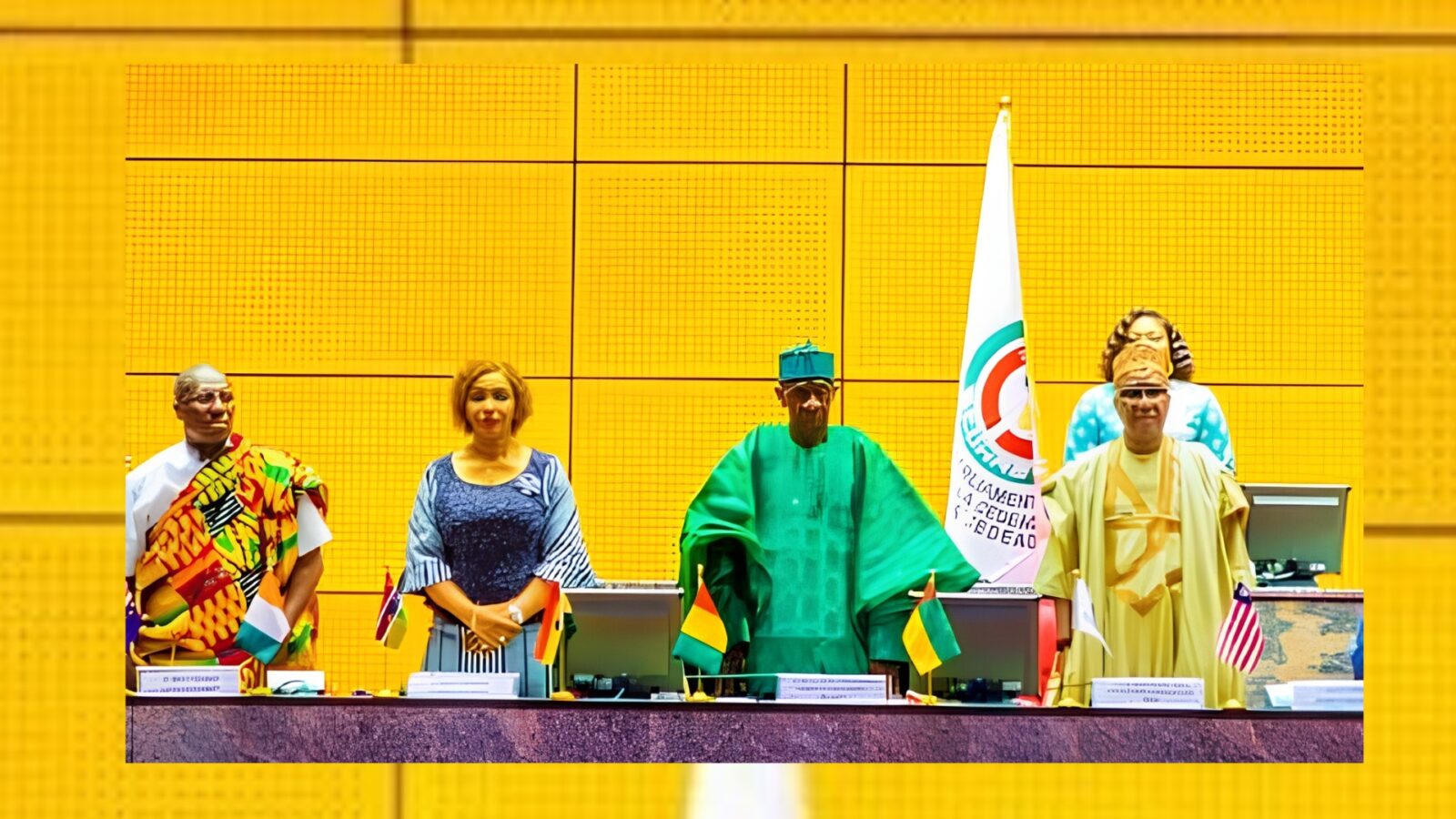

The ECOWAS Parliament has adopted a resolution directing member states to take immediate action toward protecting street children, ending child exploitation, and banishing them from the streets in the sub-region.
The lawmakers adopted the landmark resolution during the parliament’s ongoing 2026 First Ordinary Session on Thursday in Abuja.
They also mandated the parliament’s speaker to transmit the resolution and the joint committee report to the ECOWAS Commission’s President for onward submission to the Chairman, ECOWAS Council of Ministers.
The members of parliaments noted that ”street children, who are usually exposed to the gravest human rights abuses, are among the most neglected groups in the society.”
The parliamentarian’s decision follows the recommendations from a delocalised meeting of its Joint Committee, which held earlier in Freetown, Sierra Leone, in April.

The committee is that of Social Affairs, Gender, Women Empowerment, People with Disabilities, Legal Affairs and Human Rights, Trade, Customs and Free Movement.
“ECOWAS member states are to adopt and implement comprehensive domestic strategies for street children, with clear objectives, timelines, and dedicated budgetary allocations in line with international child rights standards.
“Member states are also urged to strengthen the enforcement of child protection laws and ensuring that street children have access to free, inclusive education, healthcare, birth registration, identity documents, and child-friendly justice systems,” the resolution said.
The parliament also urged the ECOWAS Commission to develop a harmonised regional framework on street children to guide member states and ensure a coordinated response across the subregion.
“The ECOWAS Commission should expand its Child Rights Information Management System to support data-driven policy-making and accountability, and strengthen regional coordination through collaboration with governments, civil society organisations and development partners,” it further said.
The lawmakers stressed the need to tackle the root causes of street children crisis by expanding social protection programmes for vulnerable families, particularly single-parent households affected by poverty, displacement, and family breakdown.
“The parliament recommends preventive measures, such as community child protection mechanisms, parental support services, psychosocial assistance, and public awareness campaigns to combat discrimination and social exclusion.
“Recognising the cross-border nature of child trafficking and exploitation, the parliament calls for referral systems, safe repatriation protocols, and information-sharing mechanisms among member states to better protect children on the move,” the resolution stated.
It also stressed the need to scale up capacity-building support for national institutions in child protection, child-friendly justice, and law enforcement.
The News Agency of Nigeria (NAN) reports that Thursday’s sitting focused on the theme: “Parliamentary Approach to the Protection of Street Children and the Fight Against the Exploitation of Children in the ECOWAS Region.”
The push to address the social menace of out-of-school and street children comes amid broader efforts to reconfigure ECOWAS founded in 1975 to better meet the needs of the people of the region.
Earlier this week, during the ongoing First 2026 Ordinary Session of the ECOWAS Parliament in Abuja, the ECOWAS Commissioner for Political Affairs, Peace and Security, Abdel-Fatau Musah, unveiled the “ECOWAS Compact of the Future of Regional Integration.”
READ ALSO: ECOWAS parliamentarians interrogate 6-pillar strategy on regional integration
Mr Musah said ECOWAS had proposed a new six-pillar strategic initiative aimed at reshaping the bloc’s political and economic direction.
He said ECOWAS was at its “most fragile point since its establishment in 1975, due largely to governance failures, democratic setbacks and the emergence of alternative alliances such as the Alliance of Sahel States (AES), comprising Burkina Faso, Mali and Niger.”
He said the framework was a survival strategy aimed at strengthening regional integration and repositioning ECOWAS to better respond to growing political, economic and security challenges.
He said the ultimate goal was to transform ECOWAS from an institution known for declarations into one that delivers concrete public goods such as security, economic mobility and digital connectivity to citizens.
The ECOWAS “Compact of the Future of Regional Integration” is a new six-pillar strategy designed to pivot from an elite-driven bloc to a “citizen-centered” community.
It focuses on sustainable economic transformation, security, technology, social inclusion, institutional reform, and improved geopolitical positioning to tackle regional crises.