
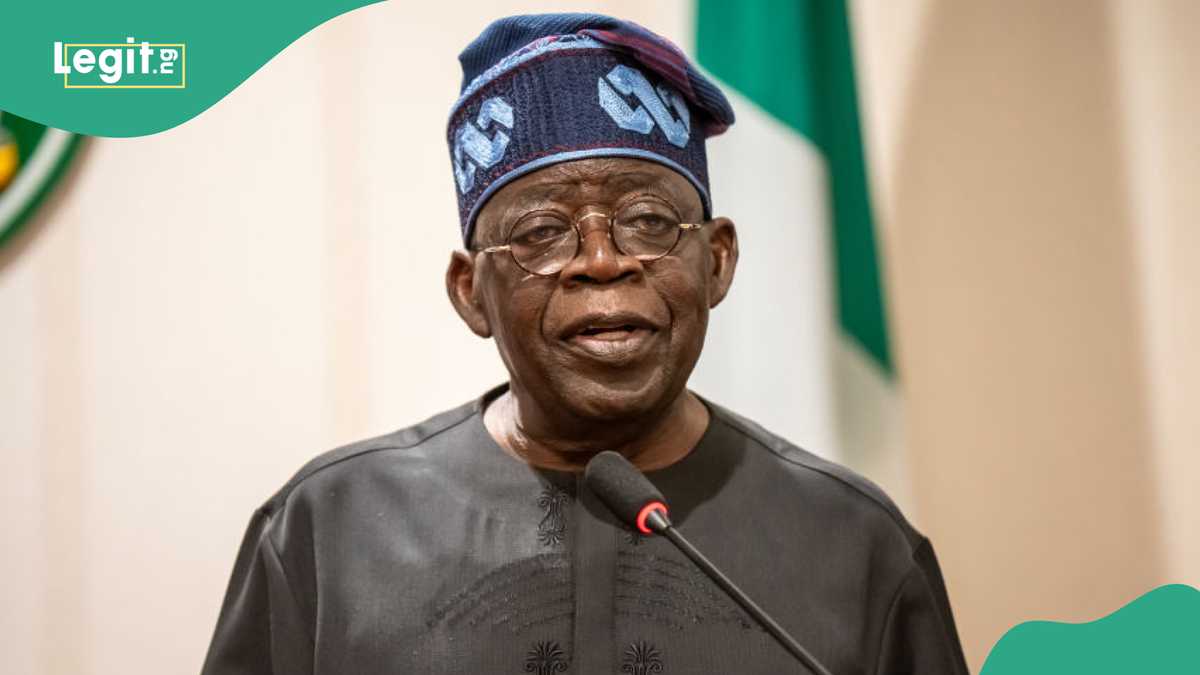

- President Tinubu is seeking a fresh $1.25 billion loan from the World Bank amid rising public debt
- Nigeria’s total public debt could exceed ₦160 trillion if the loan is approved, according to current data
- The Debt Management Office ensures transparency in Nigeria’s evolving debt portfolio
Pascal Oparada is a journalist with Legit.ng, covering technology, energy, stocks, investment, and the economy for over a decade.
President Bola Tinubu’s government is seeking a fresh loan from the World Bank.
According to data, the new loan request of $1.25 billion will be Nigeria’s second-largest World Bank loan under Tinubu, with the largest being the $1.5 billion in 2024.

Credit: State House.
Source: Twitter
Nigeria’s total public debt currently stands at about ₦159.28 trillion (approximately $94.2 billion), reflecting a complex mix of domestic and external obligations.
Nigeria’s growing debt burden
If the current request is approved, the country’s total public debt would also rise from N159.28 trillion to at least N160.98 trillion.

In dollar terms, Nigeria’s total public debt could rise from $110.97bn to about $112.22bn if the facility is eventually approved and fully disbursed, according to a Punch report.
Rather than a single loan record, the debt is made up of thousands of instruments spread across bilateral agreements, multilateral financing, commercial bonds, and domestic borrowing tools.
This structure is continuously updated as new funds are drawn and older obligations are serviced or refinanced.
Multilateral loans: Nigeria’s biggest institutional creditors
A large portion of Nigeria’s external debt comes from international financial institutions that provide development and budget support financing.
The World Bank remains the country’s largest multilateral lender. Its exposure includes several major facilities such as a $2.25 billion Economic Stabilisation loan, $1.57 billion for health and power projects, $800 million for social safety nets, and about $700 million allocated to education support.
Other key multilateral creditors include the International Monetary Fund (IMF), which has previously provided emergency funding under instruments like the Rapid Financing Instrument.
The African Development Bank (AfDB) finances infrastructure, climate adaptation, and entrepreneurship programs, while the Islamic Development Bank (IsDB) supports project-tied financing across sectors such as transport and energy.

Bilateral loans: Country-to-country borrowing arrangements
Nigeria also secures loans directly from foreign governments and their export credit agencies. These bilateral agreements are often tied to specific infrastructure or development projects.
China, through the Exim Bank of China, is a major partner, financing large-scale railway and infrastructure projects. France contributes through the Agence Française de Développement (AFD), supporting urban and public service development.
Japan’s JICA funds agriculture and power initiatives, while Germany’s KfW and India’s Exim Bank also play roles in project financing across key sectors.
Commercial loans and global capital market debt
Another significant portion of Nigeria’s debt comes from commercial sources. These include Eurobonds, which are sovereign bonds issued in international capital markets in multiple tranches.
These instruments are widely held by global investors and often come with market-driven interest rates.
The government also issues promissory notes to settle arrears owed to contractors and suppliers, helping to clear accumulated domestic obligations.

Domestic debt: Borrowing within Nigeria
Domestically, the Federal Government raises funds through several instruments targeted at institutional and retail investors.
These include FGN Bonds, which are long-term securities used to finance national spending. Short-term instruments such as Nigerian Treasury Bills (NTBs) and Treasury Bonds are used for liquidity management.
The government also issues Savings Bonds for retail investors and Sukuk bonds, which are structured to comply with Islamic finance principles.
State-level borrowing and federal guarantees
Beyond federal obligations, individual states also maintain their own debt profiles.
These include both external loans, often backed by federal guarantees, and domestic loans from commercial banks. These borrowings are typically directed toward infrastructure, urban development, and state-level projects.
Transparency and official debt records
Because Nigeria’s debt portfolio is constantly evolving, the Debt Management Office (DMO) maintains the official and legally updated database of all external and domestic obligations.

Credit: State House.
Source: Getty Images
It provides detailed breakdowns of loan amounts, repayment terms, and issuance records, ensuring transparency in public debt reporting.

The country’s debt structure remains dynamic, shaped by development financing needs, fiscal pressures, and ongoing borrowing across multiple channels.
IMF unveils Africa’s most debt-exposed nations in 2026
Legit.ng earlier reported that Nigeria is notably absent from the latest list of African countries with the highest exposure to the International Monetary Fund (IMF) in 2026, despite growing concerns about debt sustainability across the continent.
The IMF data, released in April 2026, highlights ten African nations with the largest outstanding obligations to the lender.
While several major economies appear on the list, Nigeria’s exclusion suggests a comparatively lower direct reliance on IMF financing, at least for now.
Source: Legit.ng