
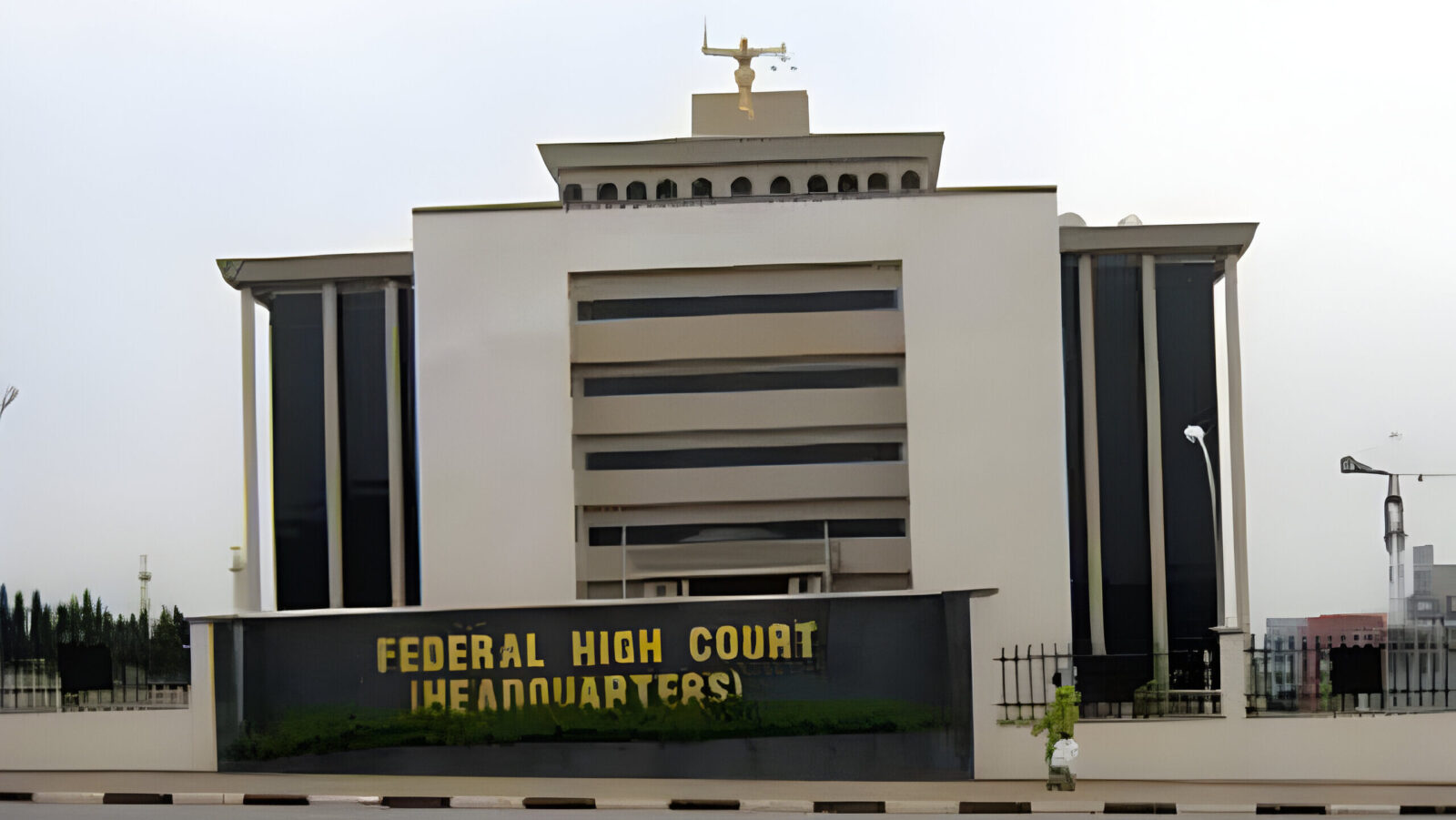

Political parties on Monday asked the Federal High Court in Abuja to suspend proceedings in suit seeking their deregistration by the Independent National Electoral Commission (INEC).
They urged the court to stay proceedings pending the outcome of an appeal on the same subject matter before the Court of Appeal.
Judge Peter Lifu fixed 18 May for ruling after hearing arguments on applications for stay of proceedings and joinder.
The suit was filed by the National Forum of Former Legislators against INEC, the Attorney-General of the Federation and some targeted opposition political parties.
The parties are the African Democratic Congress (ADC), the Accord, the Action Alliance, the Action Peoples Party (APP), and the Zenith Labour Party.

At Monday’s hearing, lawyer to Accord, Musibau Adetunbi, argued that the trial court should not continue with the case because related issues had already gone before the Court of Appeal.
Mr Adetunbi relied on Supreme Court authorities and argued that a lower court could not proceed on issues pending before a higher court.
The political parties’ lawyers, with S.E. Aruwa representing the ADC, Peter Abang for the Action Alliance backed the call for the suspension of proceedings. Their Zenith Labour Party and their APP Zenith Labour Party counterparts also supported the request.
The lawyers took turns to argue that allowing the case to continue while an appeal was pending could affect issues already before the appellate court.
APP’s lawyer, Mr Abang, also informed the court that parties had been served with processes filed at the Court of Appeal on 7 May. He added that no response had been filed against the application.
The lawyer also questioned the competence of the suit. He argued that Action Alliance had already challenged the court’s jurisdiction and urged the judge not to take steps that could undermine the appeal proceedings.
Mr Aruwa, ADC’s lawyer, also told the court that the appeal could be determined within a short time.
Opposing the applications, lawyer to the plaintiff, Yakubu Abdullahi Ruba, argued that the appeal was interlocutory and did not prevent the Federal High Court from continuing with the matter.
Mr Ruba argued that no order from either the Court of Appeal or the Supreme Court directed the lower court to suspend proceedings.
For his part, INEC’s lawyer, Haliru Mohammed, told the court that the commission had already responded to the substantive suit and would abide by the law.
Lawyer to the Attorney General of the Federation, O.A. Abdulraheem, refrained from taking a stance on the applications.
Applications for joinder
The court also heard applications by politicians seeking to join the suit as defendants.
Lawyer to a member of the House of Representatives, Sani Yakubu Noma, urged the court to join his client as the eighth defendant.
The lawyer, M.E. Sherriff, argued that Mr Noma, as a member of the ADC, would be affected if the party was deregistered.
Another applicant seeking to join the suit as the ninth defendant told the court through his lawyer that he planned to contest the Ogun governorship election on the ADC platform.
Accord also applied to join two of its governorship candidates in Osun and Ekiti states as the 10th and 11th defendants.
However, the plaintiff’s lawyer, Mr Ruba, opposed the applications. He argued that the applicants were not necessary parties because no prayers in the suit were against them.
He also told the court that one of the applicants admitted belonging to the Labour Party, which is not a defendant in the suit.
The plaintiff asked the court to dismiss the applications and award N50 million costs.
Lawyers to the applicants, however, argued that anyone likely to be affected by the outcome of a case had a right to join the proceedings under Section 36 of the Constitution.
After listening to their arguments, Judge Lifu adjourned the matter until 18 May for ruling and adoption of processes for final determination.
The suit
The plaintiff argued in the suit that it instituted the case because the affected parties no longer met constitutional requirements for continued existence as registered political parties.
Relying on Section 225 (a) of the Nigerian constitution and relevant provisions of the Electoral Act, the plaintiffs contended that the parties failed to win elective seats or secure the minimum constitutional threshold in elections.
The group urged the court to declare that INEC had a constitutional duty to deregister political parties that fail to meet the required electoral conditions.
The plaintiffs also asked the court to compel INEC to remove the affected parties from its register and restrain the electoral body from allowing them to participate in future elections.
AGF backs suit
The Attorney General of the Federation, Lateef Fagbemi who is joined as a defendant in the suit, has thrown the weight of his office behind the suit.
Tribune Online reported that the AGF, who is serving in the All Progressives Congress (APC)-led federal government, contened in his response to the substantive suit that unless the court intervened, INEC would “continue to act in breach of its constitutional duty” by retaining parties that had failed to meet the minimum requirements prescribed by law.
READ ALSO: Court dismisses suit challenging election of APC’s vice chairman
The filing stressed that the right to associate as a political party was not absolute and must be exercised within constitutional limits.
He maintained that, as the chief law officer of the federation, he is duty-bound to defend and uphold the Constitution, including ensuring compliance with the Electoral Act and other laws governing elections in Nigeria.
The filing emphasised that the Attorney General’s role extends beyond litigation to preventive oversight, ensuring that laws are faithfully implemented to maintain public confidence in the electoral process. It described the case as a public interest litigation aimed at safeguarding democratic integrity and promoting constitutional observance.
Also defending the filing of the suit, the AGF argued that citizens, including the plaintiff, had the right to challenge constitutional breaches, particularly where electoral processes are concerned.
He also said supporting such a suit aligned with his dual role as both a defender of the state and an advocate for citizens’ rights.
He said the suit would help bridge gaps faced by citizens seeking to enforce constitutional rights. He maintained that collaboration between government institutions and civic actors was essential to strengthening legal literacy, accountability, and democratic participation.