

- The APC holds a firm grip on the South-West, but the opposition’s Osun victory has raised fresh questions about the region’s political loyalty
- Peter Obi remains the dominant political force in the South-East, though converting his popularity into a national coalition remains his biggest test
- The North-West and North-East hold the largest share of voters, making them the ultimate prize for any party seeking the presidency in 2027
As Nigeria’s 2027 general elections draw closer, political analysts have begun assessing which regions are safe bets, which are battlegrounds, and which could ultimately decide who occupies Aso Rock.
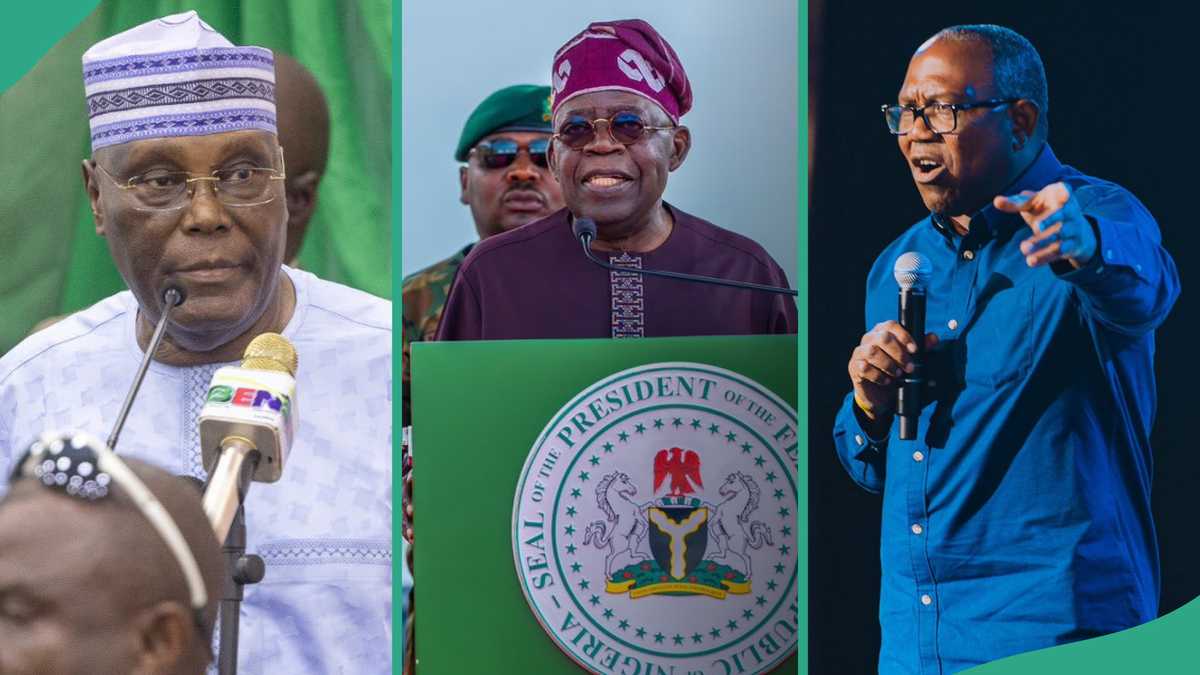
The analysis assessed President Bola Tinubu and his main challengers’ chances, Peter Obi and Atiku Abubakar, in each of the country’s six geopolitical zones.

Photo Credit: @atiku, @officialABAT, @PeterObi
Source: Twitter
South-West: Loyalty with a warning
The All Progressives Congress (APC) remains structurally dominant across the South-West, with deep organisational roots and a strong base of support. However, the region is not without risk. Governor Ademola Adeleke’s victory in Osun State showed that opposition parties can break through under the right conditions.
The central question now is whether that result reflected a broader regional shift or was simply driven by local factors unique to Osun.
South-East: Obi’s test of conversion
Peter Obi, who was ratified as the presidential candidate of the New Democratic Congress (NDC) on May 29, 2026, following his resignation from the African Democratic Congress, remains the single biggest political force in the South-East.
His support base continues to generate significant enthusiasm. But enthusiasm alone does not win elections. His ability to build a coalition that stretches beyond his immediate base into other parts of the country will determine how seriously his candidacy is taken on the national stage.
South-South: A region to watch
Few parts of Nigeria carry more intrigue heading into 2027 than the South-South. The influence of key political figures, particularly FCT Minister Nyesom Wike, and the real possibility of cross-party alliances mean the region could be far more fluid than its recent voting patterns suggest.

It may yet become one of the most consequential theatres of the entire election cycle.
North-Central: The bridge
The North-Central zone sits at a political crossroads. Positioned between the Northern and Southern blocs, it could serve as the bridge that connects competing coalitions.
Whichever presidential candidate can secure a strong showing here may well tip the balance in a close national contest.
North-West and North-East: The grand prize
In raw electoral terms, the North-West and North-East together represent the biggest prize available. Population size and voter turnout figures consistently make the North indispensable to any winning presidential formula. No candidate has ever secured the presidency without performing well in this part of the country.
For the opposition in particular, the ability or inability to stitch together Northern and Southern support into a single coherent coalition may prove to be the defining challenge of the 2027 race.
Shehu Sani lists campaign promises Nigerians should reject
Legit.ng earlier reported that former Kaduna Senator Shehu Sani has published a list of 16 campaign promises he believes Nigerians should treat with deep scepticism, warning citizens not to be swayed by politicians who make pledges they have no intention of honouring.
Sani, a rights activist and former legislator known for his outspoken commentary on Nigerian politics, shared the list publicly, opening with a direct challenge to voters to engage their critical thinking before accepting any such vow from what he called “bourgeoisie politicians.”
Source: Legit.ng