
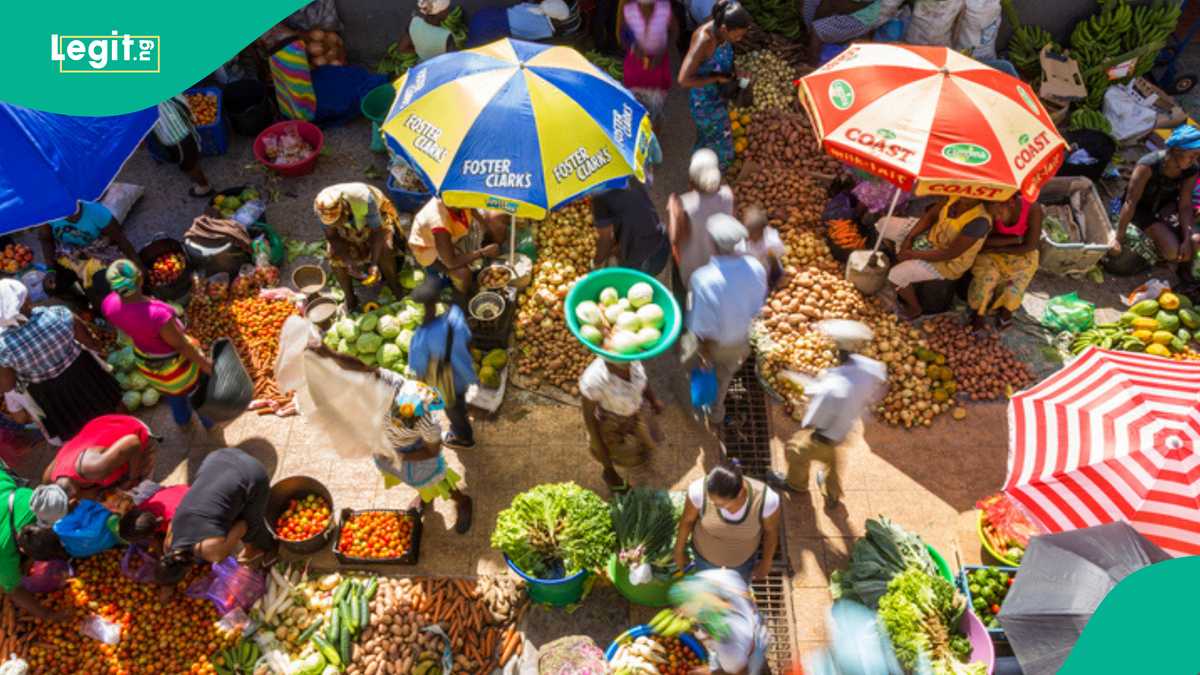

- Nigeria’s headline inflation rate rose to 15.69% in April 2026 from 15.38% in March, while the Consumer Price Index climbed to 138.3 points.
- Food inflation stood at 16.06% as prices of staples, including garri, beans, tomatoes, yam flour, and pepper, continued to rise nationwide.
- Muda Yusuf, the CEO of CPPE, has shared insight with Legit.ng into the latest inflation figures and what it means for businesses
Legit.ng journalist Dave Ibemere has over a decade of experience in business journalism, with in-depth knowledge of the Nigerian economy, stocks, and general market trends.
The National Bureau of Statistics has revealed that Nigeria’s inflation rose to 15.69% in April 2026 from 15.38% recorded in March 2026.
The latest rate is driven by the surge in food, transport, hospitality, and healthcare costs, which pushed up consumer prices nationwide.

Photo: Bloomberg
Source: UGC
NBS disclosed this in its latest Consumer Price Index (CPI) report released on Friday, May 15.

The bureau stated that the CPI increased to 138.3 in April 2026, representing a 2.9-point rise from the 135.4 recorded in March.
Below are 10 key takeaways from the April inflation report
1. Headline inflation increased to 15.69%
Headline inflation rate increased from 15.38% recorded in March 2026 to 15.69% in April, an increment of 0.31 percentage points, but below the April 2025 recorded level of 26.82%
2. Month on month inflation slowed down to 2.13%
For month-on-month, inflation dropped from 4.18% in March 2026 to 2.13% in April, signalling that prices still went up but at a slow pace compared to the previous month.
3. Food inflation stood at 16.06%
Food inflation in the country increased from 24.68% recorded in April 2025 to 16.06% in April 2026. The NBS stated that the increase in food prices was mostly in products such as Millet, Yam Flour, Pepper, Garri, Beef, Beans, Crayfish, Cassava, Tomatoes and Soybeans.

4. Food inflation was 24.68% lower in April 2026 than in April 2025
While still above the general inflation rate, the April 2026 figure of 16.06% was 8.62 percentage points below the 24.68% figure recorded in the corresponding month last year, Punch reports.

Photo: NBS
Source: Facebook
5. Core inflation was 15.86%
The month-on-month core inflation decreased to 1.03% in April from 4.03% in March. This shows that price pressure was less in non-food consumer prices. Core inflation stood at 15.86% compared to 26.05% recorded in April 2025.
6. Urban inflation was 15.40%
In April 2026, the inflation rate recorded in urban areas was 15.40% compared to 15.34% in March, while the month-on-month inflation recorded 1.86% as against 3.16% in March.
7. Rural inflation was 16.36%
Rural inflation rate was still higher than that of urban, it stood at 16.36% in April 2026 as compared to 16.78% in March. On a month-on-month basis, the rural inflation rate slowed to 2.80% as against 6.73% in March.
8. Sokoto state recorded the highest inflation at 25.74%

Headline inflation was highest in Sokoto (25.74%) compared to Bauchi (22.52%) and Zamfara (22.03%).
9. Enugu recorded the highest food inflation at 32.67%
Enugu and Kwara have the highest and 2nd highest food inflation rates, respectively; 32.67% and 30.77% against 30.14% recorded in Adamawa state. Borno recorded the lowest inflation rate of 1.67%.
10. Food inflation: Borno 1.67%, lowest
The state with the least food inflation was Borno, with 1.67% of inflation. This means that food prices within this state did not inflate at a faster rate compared to all other states.
Expert speaks
Reacting to the latest inflation, Muda Yusuf, the Chief Executive Officer of the Centre for the Promotion of Private Enterprise (CPPE), told Legit.ng that Nigeria’s inflation outlook in April 2026 reflects a fragile disinflation process amid mounting global and domestic cost pressures
He said:
“Government at both federal and state levels should intensify measures to reduce energy costs, improve transportation infrastructure, strengthen food supply systems, enhance trade facilitation and support domestic productivity.

“For businesses, the operating environment remains extremely challenging. Firms should prioritize energy efficiency, dynamic pricing models, consumer segmentation and affordability-driven product strategies, including smaller pack sizes, as consumers become increasingly price-sensitive and discretionary spending weakens.
Overall, the April inflation numbers suggest that while inflationary momentum may be moderating, the disinflation process remains highly vulnerable to external shocks, especially geopolitical developments in the global energy market. Sustained inflation moderation will depend largely on structural reforms and targeted interventions to reduce the cost of food, transportation and energy within the economy.”
Food item prices
In a related development, the NBS has revealed that the average retail prices of beans and rice across Nigeria continue to increase.
According to the data released recently, the South South and South West consistently recorded the highest prices for rice and beans, while the North East and North West remained the cheapest markets across most food items.
For Local Rice (Broken), the South South recorded the highest price at N145,927.
Source: Legit.ng