
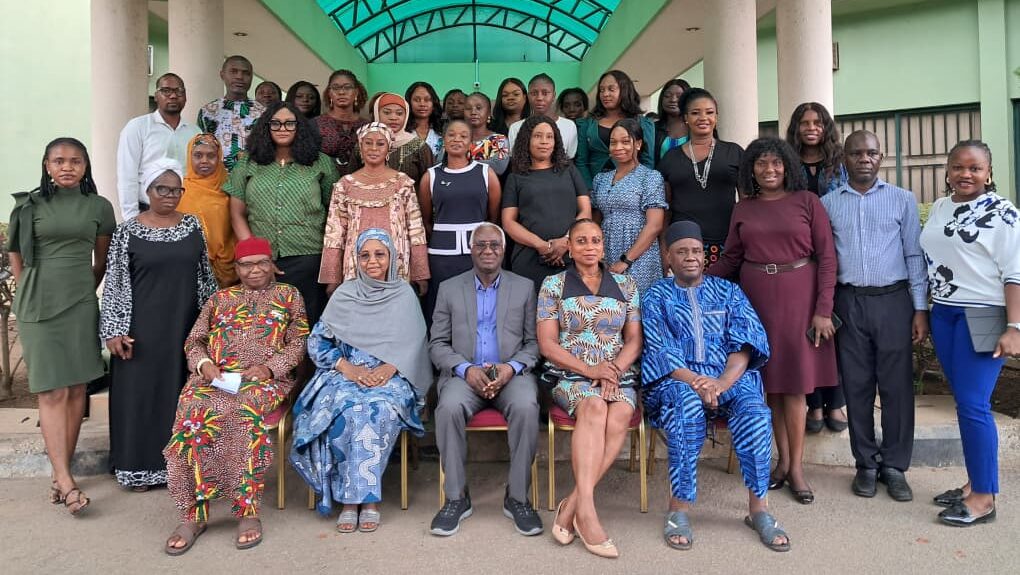

The National Human Rights Commission (NHRC) on Wednesday turned attention to the peculiar challenges of the elderly people, equipping its staff with the needed skills to protect them.
Speaking at the event which took place at the NHRC’s headquaters in Abuja, the Executive Secretary of the commission, Tony Ojukwu, a Senior Advocate of Nigeria, said the training aimed to enhance staff’s capacity to recognise and addresse violence caused by elder abuse.
He said the training also sought to strengthen advocacy skills for effective engagement with the government agencies, civil society and communities and promote a rights-based approach in all interventions concerning older persons.
The president of the Coalition of Societies for the Rights of Older Persons in Nigeria (COSROPIN), Eze Ajoku, who was among the resource persons at the training, said the challenges of older persons in Nigeria stem from systemic issues rather than old age itself.
Mr Ajoku, a former Nigerian senator, who represented Imo East Senatorial District in 2005, said, “Over the years, I’ve come to realise something very painful. Many older persons in Nigeria suffer, not because they are old.”

“Today, a good number of them live in loneliness, poverty, sickness, and neglect,” he said to the participants at the training comprising staff members of the Vulnerable Group Department (VGD) of the NHRC.
Mr Ajoku said there are an estimated 14 to 16 million older persons in Nigeria, adding that they include “older persons who once commanded honour now struggle quietly.”
“As a nation, we must understand that older persons are not a liability. They are the custodians of wisdom. They are the guardians of memory and sacrifice. They are those who have led us to a sure stream of leadership. And they are the ones who have helped us to develop whatever cultures we have,” he said.
These populations face extreme poverty, inability to continue physical work, no retirement income, poor healthcare access and dependence on children or charity, Mr Ajoku said.
Both Mr Ajoku and Dahiru Bobbo, director of the VGD, NHRC, acknowledged that these issues, while deeply seated, are just emerging.
Mr Bobbo said, “Before, we did not consider it as something important for us to delve into, but now realise that actually, this is also part of the human rights issues that are evolving.”
According to the 2015 Global AgeWatch Index, which measures the social and economic well-being of older citizens, Nigeria ranked near the bottom of the list at 86th out of 96 countries surveyed.
This mirrors the reality of older persons in Nigeria. Despite numerous plans for interventions, including health insurance schemes in 2020 and 2021, there has been no implementation.
In 2021, the Nigerian Older Persons Rights and Privileges Bill was passed by both chambers of the National Assembly; however, former President Muhammadu Buhari did not sign the bill.
In 2022, PREMIUM TIMES published a special report that highlighted how many Nigerian senior citizens are abandoned to suffer.
A new wave of momentum built in November 2025, as the Speaker of the House of Representatives, Abbas Tajudeen, declared support for a proposed law seeking to guarantee free medical services in government hospitals, tax reliefs, and stipends for senior citizens across the country.
Yet the bill remains unenacted.
Training and call to action
Part of the training includes the identification of elder abuse and the role of human rights defenders in protecting the elderly and highlighting the legal frameworks that protect the rights of the elderly.
To identify elder abuse, Mr Bobbo said human rights defenders should look out for physical injuries, sudden financial changes, withdrawal or depression, poor hygiene or neglect and fear of caregivers.
Josephine Onwudiwe named the legal frameworks that protect the rights of older persons to include the National Senior Citizens Centre Act, the Pension Reform Act, and the pending Older Persons (Rights and Privileges) Bill.
According to her, some of the policies aimed at addressing the plight of the elderly are the National Policy on Ageing, the National Social Protection Policy, the National Health Policy, the National Policy on Older Persons, and the National Disability Policy.
Mr Ajoku said the training and “Discussion today will be a call to conscience. Nigeria today is witnessing a silent but important demographic change.
“More people are now living longer because of improvements in medicine, healthcare, and lifestyle. Yet, while life expectancy is improving over the years, our systems of protection and care for older persons are not improving at all.”
Similarly, Mr Ojukwu stressed that the protection of elderly persons brings Nigeria to an environment where dignity and respect for all ages are guaranteed.