

Browse through a book on the development options available to countries on the African continent, and if you can navigate your way through the data undergrowth and the fancy arithmetic with which these numbers make sense, the other thing that underwhelms completely is the insistence that corruption on the continent is over-rated as a contributing factor to its continued underdevelopment. Without any doubt, substantial investment in both health and educational services, and the more competent labour forces that this results in, low taxes on agriculture, prudent fiscal management, and both predictable and moderate movements in domestic prices all bear on how much capital an economy may attract and what use it may put this to.
As the World Bank Group’s chief economist and senior vice-president for development economics, Indermit Gill, put it in a recent article in The Economist newspaper, explaining his institution’s reassessment of what developing countries may do in their pursuit of development, the fundamentals of economic policy include “a healthy and educated workforce, good business regulations, adequate infrastructure for transport and energy, and stable macroeconomics that encourage private savings and investment”.
If the levels of corruption prevalent in an economy do not function as a let to achieving these goals, then the argument that corruption does not matter as much as some commentators on the continent think it does is true. However, reality intrudes differently. At the most basic, the levels of corruption, at least in our local environment, make efficient allocation of scarce resources well nigh impossible. Take the process of establishing a greenfield business in Nigeria. The multiplicity of authorising agencies ranges from the “ọmọ onílé” (land matters), through the respective state land ministries, through to the agencies of the state that must sign off. All of these impose costs on doing business, especially of the off-balance sheet variant.
Additionally, anecdotal evidence suggests that in some areas, persons of influence (that is folks able to throw all manner of spanners in the works of a potential businessman’s application for license to commence a business) now demand equity in start-ups. You would think that such persons’ representation on the new business’ board would be welcome news. Not so. These influential blokes expect to be allocated these shares without paying for them. In one telling of this way of doing business, these persons of influence ended up claiming enough shares in the as-yet-to-be-established business to be able, at the first annual general meeting, to oust what we call here “the prime mover” of the business.
In the end, it is no surprise if efforts to set businesses up flounder. And where they are set up, their resulting cost structures mean that they can never be profitable in the popular acceptation of this term – at least without government forbearances. These forbearances, in turn, divert public funds away from productive investment (roads, power, schools). For an economy trying to industrialise and diversify beyond a single sector’s earning capacity, this means lower GDP growth than potential. Worse, by prioritising influence and access, corrupt methods favour local businessmen over foreigners, except when the latter have local friends in high places too. Either way, economies on the continent do not just face increasing uncertainty and higher transaction costs, they essentially discourage long-term planning.

Institutions like the World Bank often estimate that corruption can cost countries 2 per cent–5 per cent (or more) of GDP annually. However, there is clear evidence that over decades, the indirect growth losses from corrupt practices can be much larger. In our particular example, even a 3 per cent annual GDP loss to corrupt practices translates into massive long-term income loss. In fact, by defining corruption narrowly, i.e. in financial terms, we tend to pull its teeth. Governance fails. Industry operators hijack regulatory environments. In other words, institutions critical to the welfare of the people serve insiders. All of these because people with influence seek to reinforce their access to rent – whether as transfers from the public coffers to badly-run private businesses, or as transfers from the poor to the politically exposed.
Which of these is the bigger problem? The loss of government revenue that results from businesses being pushed into the informal sector, tax evasion facilitated by bribery, customs fraud and under-invoicing, and oil revenue leakages. Or the increased inequality and poverty that our society suffers from because corruption functions as a tax on the poor and small businesses and transfers the proceeds of this levy to politically connected elites.
I doubt that the answer to this question matters that much. For the jury is in. Corruption renders an economy more fragile. It worsens insecurity simply from the ease with which it undermines government’s legitimacy, fuels public angst, and encourages informal or criminal alternatives. And by making light of it, in the discussion around the growth and development of economies such as ours, we run the risk of turning corrupt practices into a cultural burden – if it isn’t already such.
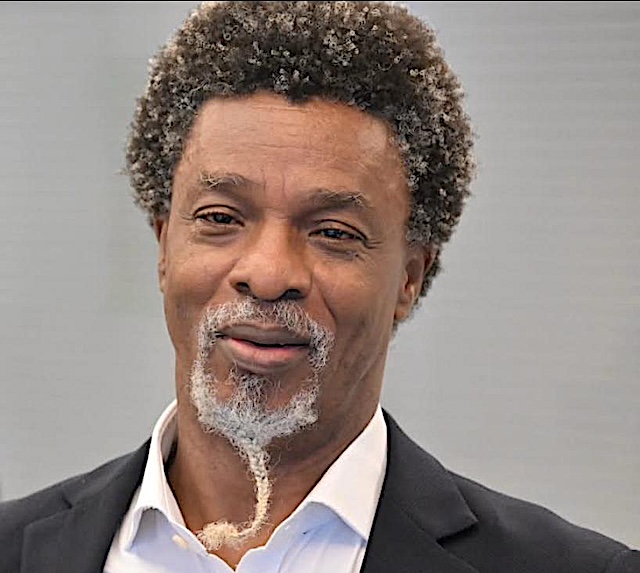
Uddin Ifeanyi, a journalist manqué and retired civil servant, can be reached @IfeanyiUddin.