
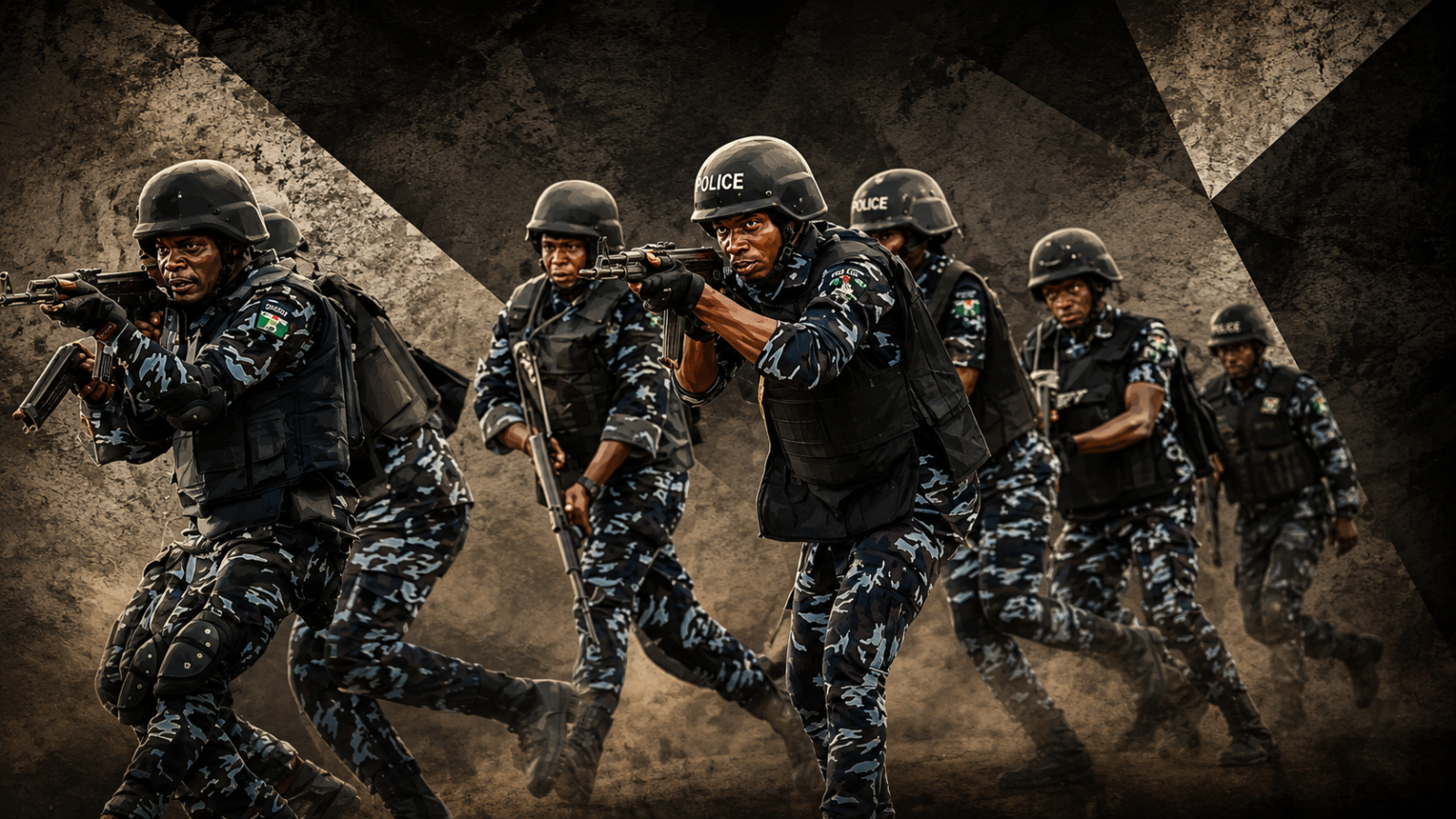

The extra-judicial killing of Mene Ogidi in Effurun by the police in Delta State on 26 April has once more exposed the rump of this arm of law enforcement. The impunity that characterises policing in Nigeria is so deep that citizens often revolt.
Barely two weeks ago, this tradition of regular police abuse of power led to the transfer of 1,332 police personnel out of Delta State at the behest of Inspector-General of Police, Olatunji Disu. Such episodic responses are not good enough. Nigeria needs a more structured response to this systemic dysfunction that creates so much pain and trauma in society.
The deceased, aged 28, had gone to Effurun Motor Park to receive a waybill from Yenagoa in Bayelsa State, according to the narrative in the media. Suspicious of the parcel, park operators had demanded that it be opened for its contents to be ascertained.
Mr Ogidi’s adamant posture, however, reinforced their apprehension. But as he eventually yielded to the pressure of his interlocutors, a Beretta pistol and four rounds of ammunition were found in the parcel.
As a result, the suspect came under “citizens’ arrest,” and the police were invited. This laudable civic response eventually turned into an odious scenario as a police team led by Assistant Superintendent of Police (ASP) Usman Nuhu took over the matter.

A video circulating on social media shows Mr Ogidi to have been effectively restrained. He had neither room to escape nor was he a threat to anyone. He was reported to have been heavily tortured by Mr Nuhu subsequently, and promised to fully cooperate by leading the team to the owner of the parcel, even as he claimed to be an innocent errand person, oblivious of the content of the parcel he was sent to pick.
All his pleas were rebuffed by his tormentor. Alas, between Effurun Motor Park and the police station, where he should have been taken to for questioning, Mr Nuhu shot Mr Ogidi point-blank, and his lifeless body was taken into the police station.
Interestingly, Mr Nuhu and his four other colleagues on the team have been dismissed from service and are now facing prosecution. According to IGP Disu, who ensured this swift dispensation of discipline, their actions were “criminal, unprofessional and completely unacceptable.” We expect the highest possible penalty to serve as a deterrent to others.

Operational supervision is a critical issue in policing in Nigeria. This, in part, explains the frequent gross violation of established procedures and Force Order 247 governing the use of firearms. The regulation underscores strict lethal deployment: other options must be exhausted first when exposed to a threat to life.
But Mr Nuhu never faced any danger. Therefore, his unprofessional act of killing a handcuffed suspect in broad daylight has sparked a lot of suspicion about whether he had something to cover up with the murder, especially his illicit acts in service, which may have been known to the deceased, for which he needed to silence him.
Sadly, this has effectively foreclosed whatever intelligence the police might have gathered from the owner of the Beretta pistol, whom Ogidi had promised to expose. A fellow who ordered such an illegal weapon, we reasonably suspect, must be a member of a criminal network in Delta State.
Dossiers on ex-judicial killings by the police and other security operatives are well kept by Amnesty International and the National Human Rights Commission (NHRC). “The organisation documented 52 unlawful killings and 62 cases of arbitrary arrest, ill-treatment and torture,” Amnesty International stated in a 5 August 2021 report on the illegalities of security operatives in the South-East. Also, it generally “documented at least 115 persons killed by security forces between March and June 2021.”
At roadblocks, the police have often been reported as killing motorists who refused to be extorted. In police detention and on the streets, extra-judicial killings are routine. Some brawls among their law enforcement colleagues have ended in fatal shootings, as many operate unashamedly under the influence of alcohol and hard drugs.
An undergraduate of Abia State University almost fell into this fatal trap while returning to school last week, due to three mobile phones he bought at Aba, as reported by PREMIUM TIMES. According to him, “Instead of listening, they dragged me, my brother and another passenger into a nearby bush…” from the travelling bus they were journeying in. And, “They said they could shoot us, and nothing will happen.”
This is a familiar morbid threat from police officers, who are paid from taxpayers’ funds to protect citizens. It is terrifying. Killing Nigerians without any consequence was central to the pervasive #EndSARS protests of October 2020 that shook the country. The notorious State Anti-robbery Squad (SARS) was disbanded then, but, unfortunately, the brutes who made up that police unit are still within the system. Mr Nuhu was reportedly one of them, until nemesis caught up with him on 26 April.

Reprobates like Mr Nuhu abound in the Nigeria Police Force to date. Some cowardly ones take their own lives, like Corporal Stephen James did, after he killed twin brothers – Taiwo and Kehinde – at a hotel in Ketu in 2016, for being told to stop shuffling from one end of the hotel to the other, begging for free booze.
However, the country cannot wait for only their atrocities to fish them out. Evolving modern policing in Europe and North America impels the routine mental tests of officers to ensure that only individuals with sound minds are entrusted with the heavy responsibility the job entails.
Way back in 1969 in the US, the Lyndon Johnson Commission on Law Enforcement and Administration of Justice recommended the psychological evaluation of people for recruitment into the police. But it was not until the 1991 Rodney King assault that its adoption became widespread, following public outrage. In essence, as stated by Candice Bernd in Truthout Report, “It is a determination that plays a substantial role in keeping trigger-happy cops off the streets and thus more people alive.”
ALSO READ: Police speak on alleged extrajudicial killings of citizens in their facility
Such a policy option is overdue in Nigeria. Testimonies of former IGPs make it even more compelling. One of them, Mike Okiro, once observed that the mental stability of 24 officers, including two deputy commissioners of police, was suspect, while another, the late Solomon Arase, equally pointed out that with the level of abuse of power on display, psychiatric tests of recruits had become imperative.
Mr Nuhu’s murderous saga recalls the 2005 extra-judicial killing of six youths returning from a night party at a checkpoint in Abuja, infamously referred to as the “Apo Six”. The police had labelled them as members of a robbery gang and had heinously planted weapons on their bodies. But a judicial panel set up by the Olusegun Obasanjo administration dismissed all that as a malicious setup.
Saving Nigerians from this scourge would require police officers who can make sound judgments during crisis situations. The quality of persons recruited into the Force needs to be improved urgently. And, very importantly, there is a need for better training and the hands-on operational supervision of police officers. Regrettably, there is little to hope for or cheer about in this regard!