
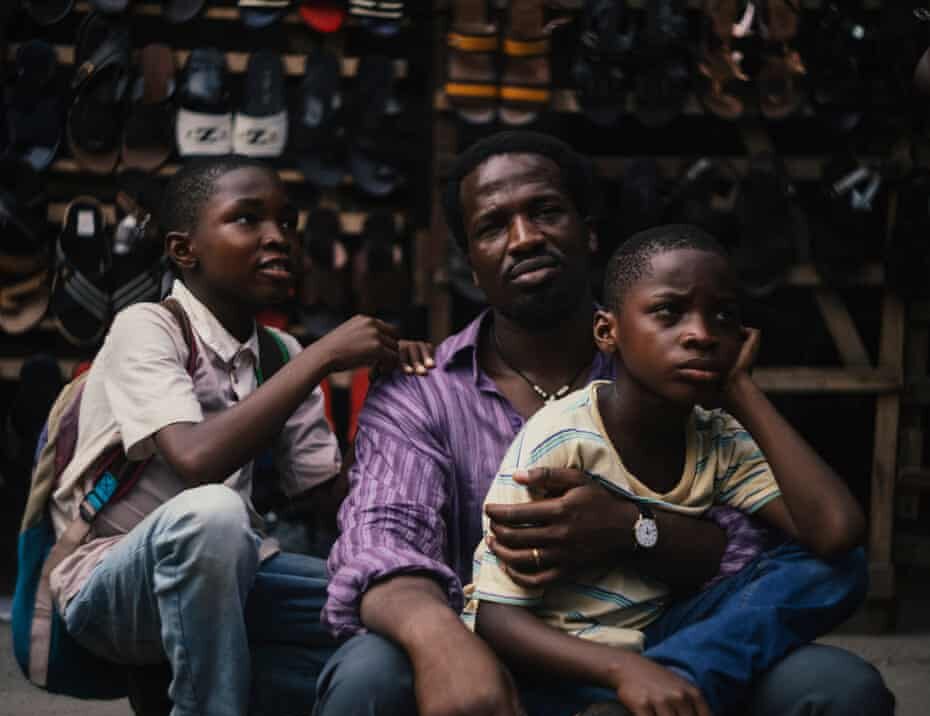

When My Father’s Shadow clinched the Best Movie award at the 12th edition of the Africa Magic Viewers’ Choice Awards, the reaction among many Nigerians was a mix of surprise, curiosity and debate.
For a film that had not yet enjoyed the widespread commercial visibility of some of its rivals, its victory over more popular titles sparked immediate questions: Did My Father’s Shadow truly deserve Nollywood’s biggest prize?
Directed by Akinola Davies Jr., the film is not merely another family drama. It transports its audiences back to the tense aftermath of the annulled 12 June 1993 presidential election, believed to have been won by Moshood Kashimawo Olawale Abiola.
While many films entertain, ‘My Father’s Shadow’ does something far more difficult: it makes history feel personal, but it still leaves the question in the mind of many: Is it worthy of the title of AMVCA Best Movie of the year?
Plot

Set in Nigeria during the tense days leading up to the annulment of the 12 June 1993, presidential election, My Father’s Shadow tells an emotional story through the eyes of two young brothers, Akin and Remi.

Living quietly in a rural village far from Lagos, the boys are shocked when their father, Fola, suddenly returns home after a long absence. Played by Ṣọpẹ́ Dìrísù, Fola arrives without explanation, apology or warning. Soon after arriving, Fola becomes angry over a missing wristwatch and questions the boys about touching his belongings. Before their mother even returns home, he announces that he must travel back to Lagos immediately to recover four months’ unpaid salary, before the country possibly descends into chaos. Then, unexpectedly, he asks the boys to come with him.
The journey to Lagos becomes more than a simple trip. It slowly turns into a rare moment of connection between a distant father and his curious sons. Travelling through fuel shortages and transport difficulties, they move from overcrowded buses to rough truck rides, witnessing the struggles of ordinary Nigerians living under uncertainty.
As they enter the noisy, restless city, the boys begin to see parts of their father they never knew existed. Everywhere they go, men greet Fola warmly, calling him “Kapo” or “Boss”, suggesting a life and reputation hidden from his children. Yet beneath his calm appearance, Fola is clearly troubled. He is stressed, exhausted and battling unexplained nosebleeds while desperately searching for the man who owes him his wages.
The delays, however, create space for father and son to know one another truly.
Fola takes the boys around Lagos, showing them places tied to family memories. At the National Theatre, he tells them stories about their mother’s love for the arts as a young woman, something the boys had never heard before.
Meanwhile, the political tension surrounding the 1993 election hangs heavily over the city. Soldiers patrol the streets with cold, intimidating faces. Fear quietly spreads among ordinary people. Through the children’s innocent eyes, the audience witnesses not only a family trying to reconnect, but also a nation standing dangerously close to collapse. Would this journey change the course of things for the children and the nation?
Performance

The movie centres on three main cast members: Fola and his two sons, Akin and Remi.
While Ṣọpẹ́ Dìrísù embodies the character of Folarin, an absentee father, who, like every Nigerian in his time, groaned and longed for a change in the country. His vulnerability as a citizen affected his role as a father.
Godwin Chimerie Egbo and Chibuike Marvellous Egbo deliver performances of extraordinary authenticity. Their chemistry never feels performed; it feels lived-in. Through their eyes, audiences experience both the wonder and disappointment of the Nigeria their father was fighting for.
Review

Davies Jr., working from his screenplay co-written with his brother, Wale Davies, demonstrates astonishing confidence for a first-time feature director.
My Father’s Shadow is a story that travels through time and returns audiences to one of Nigeria’s darkest political moments: the crisis that followed the annulment of the June 12, 1993, presidential election, believed to have been won by Moshood Kashimawo Olawale Abiola.
For many Nigerians, June 12 remains more than a date. It is memory, betrayal and unfinished grief. The election, widely regarded as Nigeria’s freest and fairest poll, was annulled by military ruler Ibrahim Babangida before the official declaration of Abiola’s victory. What followed was chaos: protests, fear, economic hardship, military crackdowns and national uncertainty.
Families were displaced. Livelihoods collapsed. Hope disappeared almost overnight. Yet ‘My Father’s Shadow’ does not retell that history through politicians or newspaper headlines. Instead, through the eyes of two little boys trying to understand their father, making the experience feel real, even now, and in the future.
Watching the film is like stepping into a time machine and travelling back to 1993, with its prevailing culture, trends, fashion, and reality.
What makes the experience even more powerful is the simplicity of the storytelling. The emotional core of the film lies in its understanding of Nigerian fatherhood, especially among working-class men forced to sacrifice presence for survival.

Folarin’s painful truth mirrors the reality of many fathers during that era, men who loved their families deeply but became strangers to them because the country itself was falling apart.
Visually, the film is stunning. The grainy 16mm cinematography gives every scene the texture of fading memory, as though the audience were flipping through an old family album stained by time.
READ ALSO: AMVCA 2026: Lisabi, My Father’s Shadow, Uzor Arukwe claim top honours (FULL WINNERS LIST)
But perhaps the film’s greatest achievement is that it outlives itself.
Long after the credits roll, the audience remains trapped between past and present, thinking not only about Folarin and his sons, but about Nigeria itself, a country still carrying the shadows of unresolved history.
That is why the AMVCA win feels deserved.
Verdict: 8/10
‘My Father’s Shadow’ is streaming on MUBI
More Photos:

