
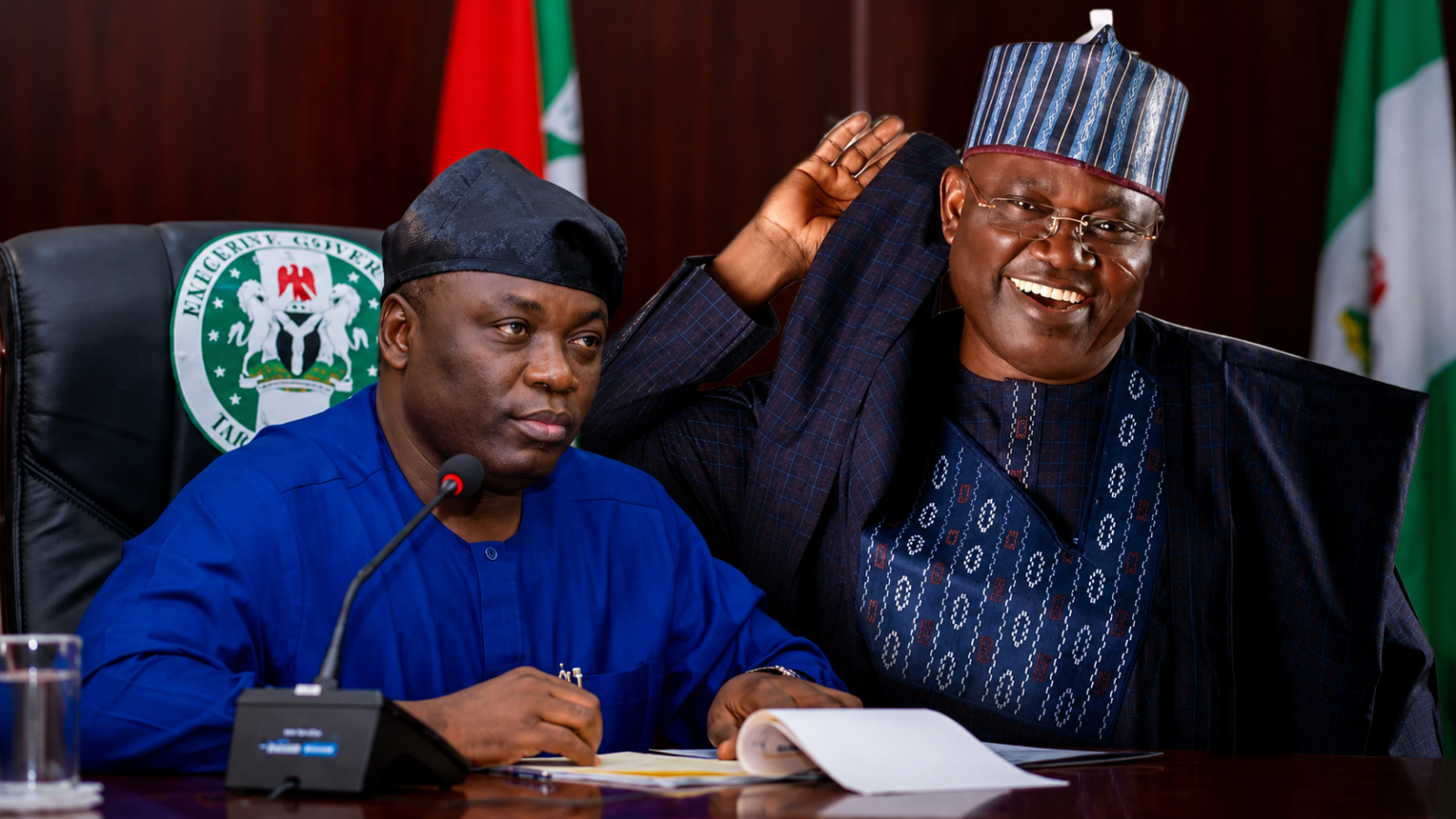

The 2027 governorship race in Taraba State is shaping into a high-stakes rematch between two familiar rivals, Governor Agbu Kefas, now flying the flag of the All Progressives Congress (APC), and former senator Emmanuel Bwacha of the Peoples Democratic Party (PDP).
But unlike the 2023 contest, which was heavily influenced by elite endorsements and coordinated political blocs, the emerging race is being reshaped by voter sentiment, performance records, and shifting grassroots loyalties.
The 2023 coalition that delivered Kefas
When Mr Kefas secured victory in 2023, his campaign benefited from an unusually broad coalition that stretched beyond party structures. Central to that victory was the influence of elder statesman Theophilus Danjuma, whose endorsement carried significant weight among political elites and undecided voters across the state.
Equally important was the role of the Christian Association of Nigeria (CAN) in the state, which mobilised parts of the Christian community around a message of stability, inclusion, and inter-communal harmony. The group’s backing helped consolidate support in several local government areas where religious leadership strongly shapes electoral choices.
Together, Mr Danjuma’s elite credibility and CAN’s grassroots religious influence expanded Mr Kefas’s reach, reinforcing a perception of broad acceptability that proved decisive in a tightly contested election.

From goodwill to growing discontent
However, a few years later, the political mood has shifted noticeably.
Across Taraba, sections of the electorate now express dissatisfaction with what they describe as underwhelming governance performance. Issues around infrastructure delivery, youth employment, and local economic development have become recurring points of criticism.
This has fuelled a popular narrative that has trailed Governor Kefas in recent political conversations. “Mr Promises” is a label increasingly used by critics who argue that campaign commitments have not translated into visible outcomes.
While the administration continues to defend its record, the perception gap between expectations raised in 2023 and the realities of governance has become a defining feature of the early 2027 political climate.
Bwacha’s resurgence and PDP recalibration
For Emmanuel Bwacha, the 2027 race represents a political comeback built on sustained grassroots engagement and strengthened elite alliances.
Mr Bwacha’s campaign has leaned heavily on long-standing networks cultivated during his years in the National Assembly, particularly in rural communities where he maintains deep political ties. Analysts say this embedded presence gives him a structural advantage in voter mobilisation across Taraba.
His candidacy has also gained momentum from high-profile endorsements within the PDP establishment. Among the most significant is the backing of former governor Jolly Nyame, whose influence among political actors and traditional elites has helped consolidate support for Mr Bwacha’s bid.
The PDP camp has increasingly framed Mr Bwacha as a candidate of experience and delivery, contrasting his long legislative record with what it describes as unmet expectations under the current administration.
Endorsements versus electorate fatigue
The 2023 election demonstrated the power of elite endorsements in Taraba politics. But as the 2027 contest approaches, that equation appears less certain.
While figures like Mr Danjuma retain symbolic influence, and CAN continues to command moral authority within religious communities, analysts argue that their ability to decisively shape electoral outcomes may be diminishing in the face of growing voter scepticism.
ALSO READ: Former Taraba Governor Jolly Nyame dumps APC for PDP
Many voters, particularly younger demographics, are now placing greater emphasis on governance outcomes rather than elite signals of approval. This shift is gradually weakening the traditional leverage of endorsements that once played a central role in determining electoral outcomes in the state.
A contest increasingly defined by voters
As the campaigns intensify, both leading candidates face distinct challenges.
For Governor Kefas, the task is to rebuild public confidence and counter the narrative of unfulfilled promises while leveraging his new alignment with the APC to argue for stronger federal-state synergy.
For Mr Bwacha, the challenge lies in sustaining momentum beyond elite backing and translating establishment support into broad-based voter turnout across diverse communities.
Ultimately, the 2027 Taraba governorship race is emerging less as a contest of endorsements and more as a referendum on performance, trust, and political credibility.
In a state known for competitive elections and politically engaged communities, it is increasingly clear that the final verdict will rest not with endorsements of the past, but with the choices of an electorate that is more demanding and more discerning than ever.