


The enterprises that anchor food systems, energy access, and local production are no longer peripheral actors in development. They are strategic assets in economic risk management. Investing in them intentionally, especially during uncertainty, is how markets become less fragile over time… AECF’s role is to lead this shift by directing capital toward enterprises that do not simply withstand shocks, but actively reduce the force of those shocks on the wider economy.
In one of Africa Enterprise Challenge Fund’s WhatsApp groups last week, as colleagues were getting ready to travel home for the Easter break, a message came through: fuel prices had just jumped by around 30 per cent. Someone joked, “Those heading to the village, be careful — you might end up walking back to the city.”
It was funny because it was true.
Behind the humour was a familiar reality. Global crises do not stay global for long. In Africa, they show up quickly: in the price at the pump, the cost of transport, and the price of food. And then in the small decisions people make every day: whether to spend, invest, or hold back. Those decisions, multiplied across millions of households and businesses, are what quietly slow entire economies.
Sub-Saharan Africa’s economy shrank by 1.6 per cent in 2020, marking its first recession in 25 years. Shortly afterward, fertiliser prices skyrocketed by nearly 80 per cent, while wheat prices increased by more than 60 per cent at their peak. These weren’t isolated market events; they signalled how strongly external volatility continues to influence economic outcomes across the continent.

What repeated crises have made unmistakable is that the challenge is not the shock itself, but the architecture of exposure.
Time and again, global disruptions transmit through the same three channels: energy, food systems, and finance. These are not temporary vulnerabilities. They are structural pressure points that continue to fuel inflation, stifle enterprise growth, and erode market confidence.
This demands a shift in policy and investment thinking.
The prevailing discourse on resilience has focused too heavily on absorption, how quickly systems can recover after disruption. That framing is now insufficient. The strategic priority must be market buffering: building enterprise ecosystems that reduce dependence on volatile external supply chains, stabilise access to essential goods and services, and sustain productive capacity during periods of uncertainty.
This is where intentional enterprise investment becomes a policy instrument.
At AECF, our investment thesis has consistently recognised that well-capitalised enterprises in critical sectors do more than generate returns. They build the productive buffers that economies rely on when external markets tighten.
Our support to distributed renewable energy enterprises during the COVID-19 disruption enabled businesses and households to maintain access to affordable, productive power at a time when fuel and logistics costs were escalating. Likewise, investments in climate-smart agriculture, local agro-processing, and alternative input systems during the food and fertiliser crisis strengthened domestic value chains and expanded enterprises’ capacity to meet local demand. Today, these businesses are not merely surviving volatility. They are functioning as market stabilisers, reducing pass-through risk to households, SMEs, and supply networks.
The policy implication is clear: catalytic capital must be treated as countercyclical infrastructure.
Periods of volatility should trigger greater deployment of blended finance, guarantees, and de-risking instruments into enterprises operating at the core of economic continuity. When private capital pauses, catalytic institutions have a responsibility to move deliberately into the market, crowding in confidence and sustaining investment where systemic value is highest.
This is not only an investment strategy. It is a policy proposition for long-term economic resilience.
The enterprises that anchor food systems, energy access, and local production are no longer peripheral actors in development. They are strategic assets in economic risk management. Investing in them intentionally, especially during uncertainty, is how markets become less fragile over time.
AECF’s role is to lead this shift by directing capital toward enterprises that do not simply withstand shocks, but actively reduce the force of those shocks on the wider economy.
Another crisis will come. The defining question is whether capital will continue reacting after the fact, or whether institutions will invest intentionally in the enterprises that make economies fundamentally less vulnerable before the next disruption arrives
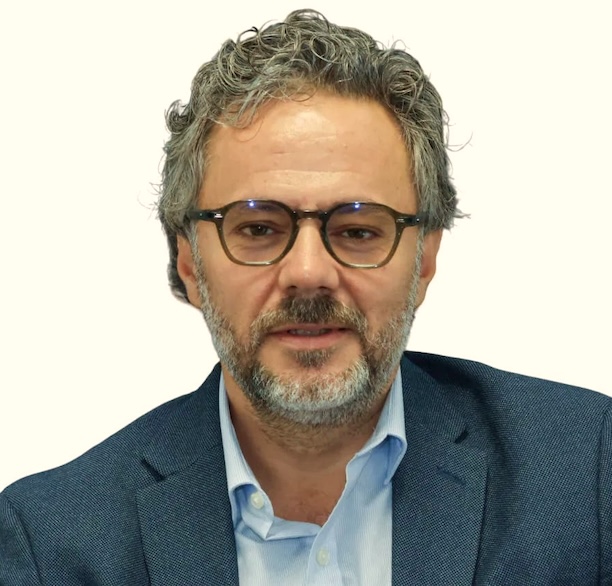
Lotfi Kourdali is the director for West Africa of the Africa Enterprise Challenge Fund (AECF).