
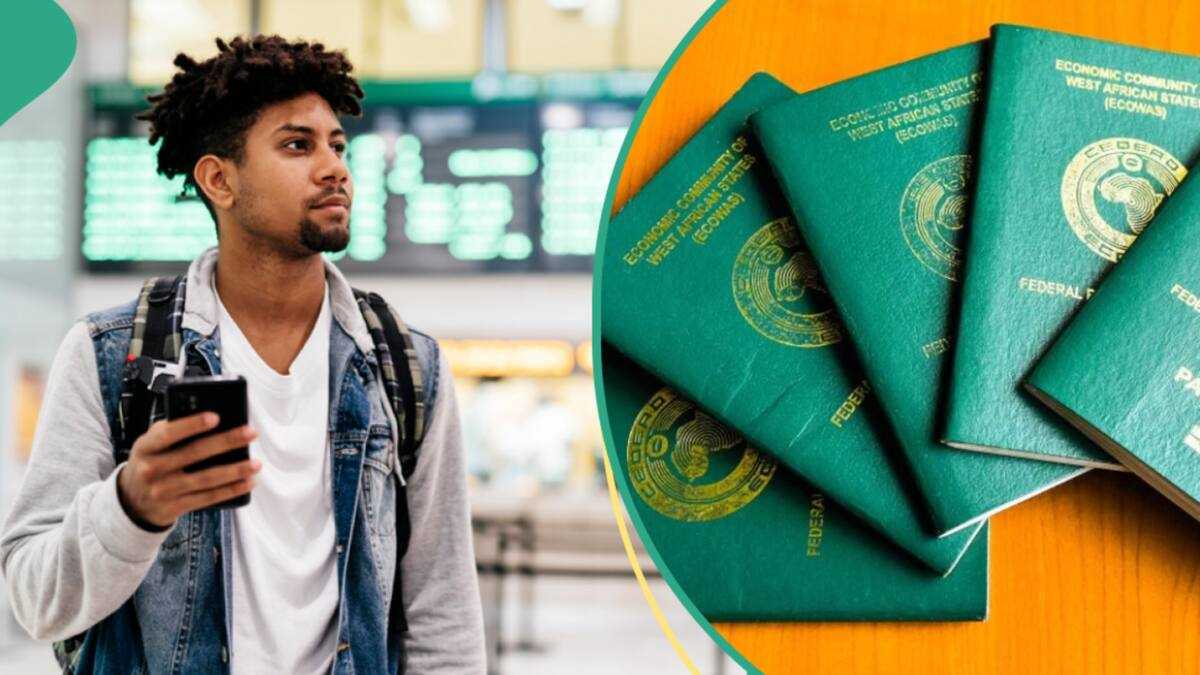

- Nigeria’s passport index improved to 89th, despite fewer visa-free countries for citizens
- Visa-free access dropped from 46 to 44 destinations, reflecting mixed travel opportunities
- Analysts warn ranking rise doesn’t equate to stronger passport power amid domestic challenges
Pascal Oparada is a journalist with Legit.ng, covering technology, energy, stocks, investment, and the economy for over a decade.
Nigeria’s passport has climbed six places on the latest Henley Passport Index since President Bola Tinubu assumed office, raising hopes for improved global travel access for citizens.
According to the April 2026 edition of the Henley Passport Index, the Nigerian passport moved from 95th position in January 2024 to 89th globally, marking a notable rise in ranking.

Credit: Novatis
Source: Getty Images
Despite this improvement, the number of countries Nigerians can visit without securing a visa beforehand has dropped slightly, creating a mixed picture for international mobility.
The latest report shows that Nigerian passport holders can now access 44 destinations visa-free or with minimal entry restrictions, down from 46 countries in January 2025 and 45 in January 2024.

This means that while Nigeria’s global passport ranking improved, actual visa-free access has reduced by two destinations.
Why Nigeria’s ranking improved
Analysts say Nigeria’s rise in ranking does not necessarily mean stronger passport power.
Data obtained from three consecutive editions of the Henley Passport Index revealed that several countries previously ranked below Nigeria also slipped further down the table, indirectly pushing Nigeria upward.
The Henley Passport Index, now in its 21st year, ranks 199 passports worldwide using exclusive data from the International Air Transport Association (IATA).
Historically, Nigeria’s passport has declined significantly over the past two decades, falling from 62nd position in 2006 to 89th in 2026, a drop of 27 places.
Countries where Nigerians gained and lost access to
Between January 2025 and April 2026, Nigerian passport holders gained access to nine new destinations, including Fiji, Micronesia, Mozambique, Rwanda, Togo, Samoa, Palau, Niue and Montserrat.
However, access was lost to several African countries that moved Nigeria into the “visa required” category.
These include Ethiopia, Zambia, Zimbabwe, Lesotho, Mauritania, São Tomé and Príncipe and Somalia.

One of the most significant changes came from Ethiopia, which ended visa-on-arrival for Nigerian citizens in October 2022. Nigerians must now obtain visas through the Ethiopian embassy in Abuja before travelling.
Similarly, Zambia now requires all West African passport holders to obtain visas, while Zimbabwe has also shifted from visa-on-arrival to prior visa applications.
Nigeria trails several African countries
Among West African nations, Nigeria remains near the lower end of the rankings.
Ghana ranked 67th globally with access to 67 visa-free destinations, 23 more than Nigeria.
The Gambia ranked 66th with 68 destinations, while Senegal ranked 77th with 56 destinations.
Burkina Faso, Côte d’Ivoire and Guinea-Bissau also ranked ahead of Nigeria.
Across Africa, South Africa retained the continent’s strongest passport, ranking 46th globally with access to 100 destinations.
It was followed by Botswana, Namibia, Morocco, Kenya and Ghana.
Globally, Singapore holds the world’s most powerful passport with visa-free access to 192 destinations, ahead of Japan and South Korea.
Experts explain the decline
Research Director at the Centre for China Studies, Abuja, Charles Onunaiju, said Nigeria’s shrinking visa-free access reflects deeper domestic problems.

According to him, economic hardship, youth unemployment and rising migration pressure have shaped how foreign governments view Nigerian travellers.
He noted that many embassies now apply stricter regulations to Nigerians because of the growing perception that many citizens are desperate to leave the country permanently.
“If we want to earn respect from outside, we must begin from home. If we want the world to take us seriously, we must get our acts together,” he said.
Immigration service speaks on passport strength
A former official of the Nigeria Immigration Service explained that visa-free access is largely driven by bilateral agreements and regional cooperation rather than passport quality alone, The Punch reported
The official noted that systems like the European Union and ECOWAS heavily influence passport mobility rankings.

Credit: Novatis
Source: Getty Images
He added that the agency’s current focus is on improving passport technology and ensuring compliance with International Civil Aviation Organisation (ICAO) standards rather than simply chasing rankings.
For many Nigerians, however, the bigger concern remains simple: how easily they can cross borders without lengthy visa processes.

Africa’s most powerful passports
Legit.ng earlier reported that Nigeria has climbed in the latest global passport ranking, highlighting gradual improvements in the country’s international travel mobility, even as Seychelles continues to dominate Africa’s list of the most powerful passports.
According to the Henley & Partners Passport Index, the Seychelles passport remains the strongest in Africa, granting visa-free or visa-on-arrival access to 152 destinations worldwide.
The ranking, which evaluates 199 passports and 227 travel destinations, relies on data from the International Air Transport Association alongside Henley & Partners’ own research. It measures how many destinations passport holders can visit without needing a visa beforehand.
Source: Legit.ng