
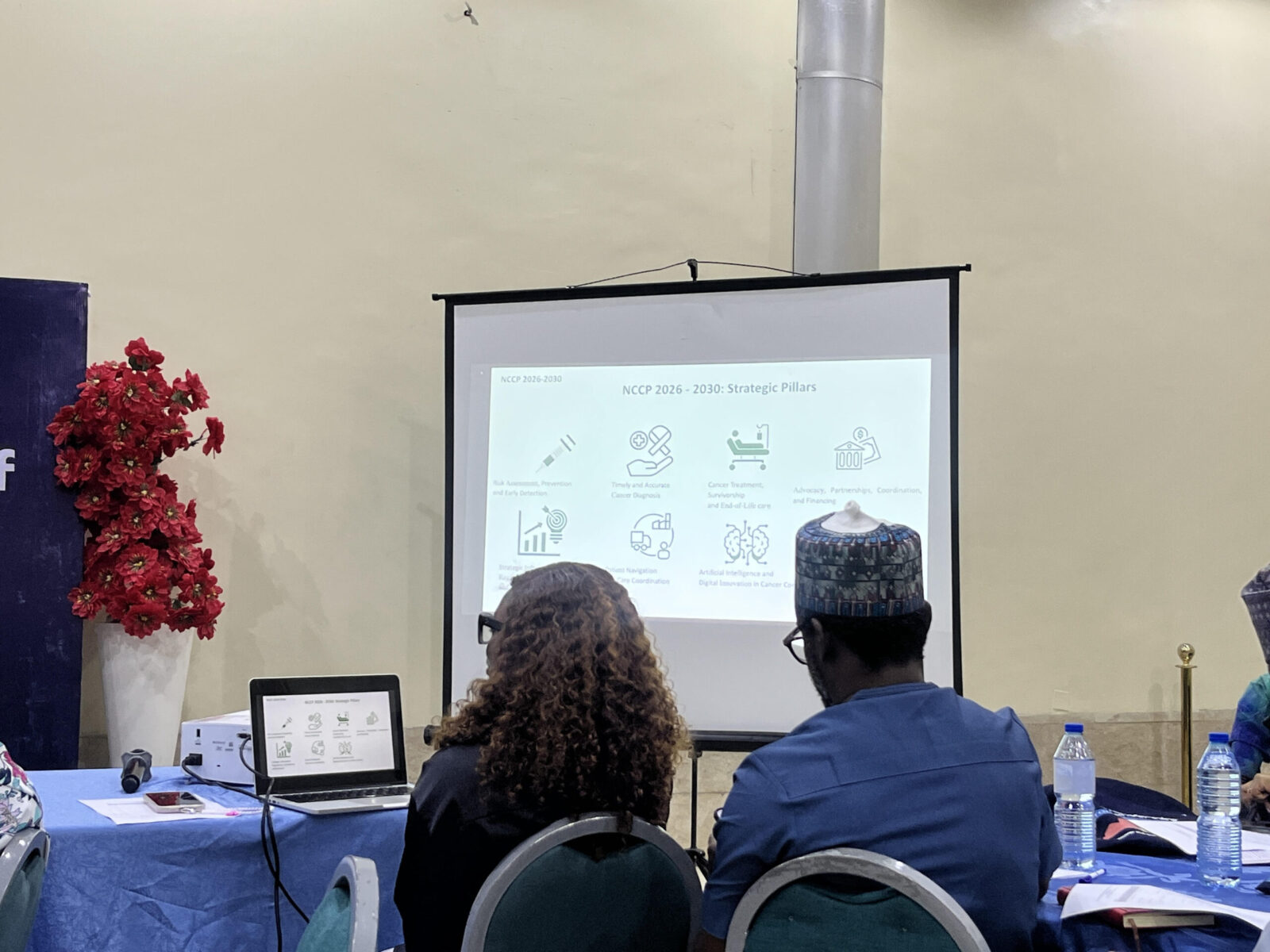

A multi-partner initiative aimed at strengthening cancer care in Nigeria’s capital has formally entered its implementation phase, with the launch of nine projects targeting longstanding gaps in diagnosis, treatment and coordination of services.
The projects, developed under the City Cancer Challenge (C/Can) programme, are the outcome of a process that has stretched over two years, involving government agencies, hospitals, civil society organisations and development partners.
Stakeholders say the focus now shifts to whether those plans can translate into measurable improvements for patients.
Speaking at the ceremony, the Mandate Secretary, FCT Health Services and Environment Secretariat, Adedolapo Fasawe, said the launch represents a transition from planning to action after months of consultations and assessments.
Ms Fasawe said the programme moved through stakeholder engagement, a city-wide needs assessment and a process of identifying and prioritising solutions.

According to her, the aim was to understand challenges across the cancer care pathway, from prevention and early detection to treatment and palliative care.
“Today marks a pivotal transition from planning to action. We are moving from design to implementation, from ideas to impact,” she said.
She added that the nine projects, covering areas such as imaging, laboratory services, radiotherapy, surgery and system coordination, are intended to function as a single, integrated response rather than isolated interventions.
A public concern
A February report by PREMIUM TIMES highlighted deeper structural issues shaping cancer outcomes in Nigeria, particularly among women.
The report, based on findings by Gatefield’s Public Health Practice, suggests that high cancer mortality in the country is driven less by medical limitations and more by policy and system failures.
According to the report, an estimated 125,000 Nigerians are diagnosed with cancer each year, while about 80,000 deaths are recorded annually, including thousands of women.
It noted that Nigeria’s health system often responds only after cancer has advanced, a pattern that increases treatment costs and reduces survival chances.
The report also found that prevention and early detection remain underfunded, with routine screening rarely integrated into primary healthcare services where many patients first seek care.
As a result, cases are frequently detected at late stages, outcomes the report described as both predictable and preventable.
Access, impact
Several speakers at the event emphasised that access and affordability remain central to cancer outcomes in Nigeria.
The President-elect of the Union for International Cancer Control (UICC) and founder of Medicaid Cancer Foundation, Zainab Shinkafi-Bagudu, said the FCT’s journey into the programme was not straightforward.
Mrs Shinkafi-Bagudu said the city eventually emerged after a lot of struggle, adding that early engagements revealed a gap in understanding about what the initiative was meant to achieve.
She suggested that while some of the programme’s outcomes, such as diagnostic and treatment equipment, may be visible, the more significant work lies in how systems are structured to support long-term care.
On patients, she acknowledged that going through cancer care in Nigeria remains difficult, particularly because of cost and limited access to services. She said patients often rely on informal networks and information sources to find appropriate care.
Intervention
The Regional Director for Africa and Europe at C/Can, Sophie Bussmann-Kemdjo, said the Abuja initiative is not designed as a short-term intervention.
Ms Bussmann-Kemdjo said the current phase should be seen as part of a broader cycle of work that will continue beyond the initial rollout.
She pointed to Kumasi in Ghana as an example, where the programme has moved from city-level implementation to national scale, suggesting that similar expansion could happen in Nigeria if results are achieved.
She also said discussions are ongoing with the Clinton Health Access Initiative (CHAI), which has been identified as a sustainability partner.
According to her, CHAI has been involved from the early stages and is expected to play a role in supporting long-term implementation and resource mobilisation.
She indicated that the aim is for local institutions to gradually take ownership of the programme while continuing to work with national and city-level authorities.
Institutional backing, cautious optimism
Government officials present at the event expressed support for the programme, while also framing their expectations around its potential impact over time.
The Overseer Director-General of the Hospital Management Board, Abubakar Amadu, said his agency had been involved from earlier stages of the initiative and would continue to support its implementation.
He added that the programme is focused on improving healthcare delivery in the FCT, particularly in cancer care, and assured stakeholders of continued institutional support.
Also speaking, Ali Gombe, who represented the Director-General of the National Institute for Cancer Research and Treatment (NICRAT), Usman Aliyu, said the agency had been involved in the programme since its early stages.
He explained that some NICRAT staff participated in the technical committees and said the initiative aligns with the institute’s mandate.
READ ALSO: IWD: FCTA provides free surgery, support for women in Kuje hospital
He said they are very happy to be part of the CCAN project since inception, noting that the institute is looking forward to the outcome of the programme.
Mr Aliyu added that NICRAT will continue to support the initiative and align its activities with it, expressing the hope that its outcomes could be replicated at the national level.
For the National Coordinator of the National Cancer Control Programme, Uchechukwu Nwokwu, the projects reflect priorities already identified through consultations.
The nine projects, he said, reflects a collective voice and need, noting that commitment is key to delivering lasting impact.
About the programme
The City Cancer Challenge is a global initiative that works with cities in low- and middle-income countries to strengthen cancer care systems through partnerships, data-driven planning and local capacity building.