
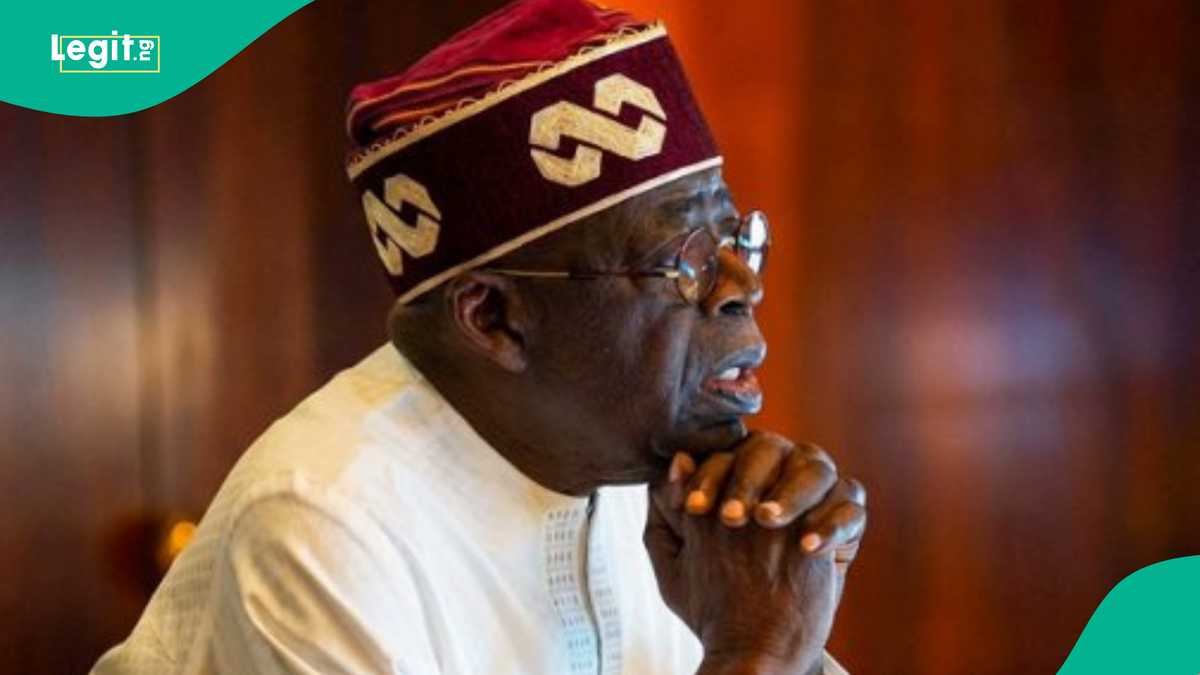

- President Bola Tinubu has asked a US court to block the release of his FBI and DEA records, arguing that privacy laws protect him from disclosure
- His lawyers say there is no public interest in the matter and accuse the requester of pursuing political motives
- The case has reignited controversy over Tinubu’s past, with opposition parties insisting Nigerians deserve transparency
President Bola Tinubu has asked the United States District Court for the District of Columbia to block the release of his unredacted records with the Federal Bureau of Investigation (FBI) and Drug Enforcement Agency (DEA).
His lawyers — Christopher Carmichael, Victor Henderson and Oluwole Afolabi — outlined four key reasons in filings published on Saturday.

Source: Twitter
1. FOIA and Privacy Act Block Disclosure
Tinubu’s team argued that the US Freedom of Information Act (FOIA) and Privacy Act prevent the release of private information. They cited Exemption 7(C), which protects personal details in law-enforcement records.

2. No Public Interest in Disclosure
The lawyers insisted there was no genuine public interest to balance against Tinubu’s privacy. They rejected claims that Nigerians’ curiosity about his background qualifies as public interest under US law.
3. Political Motives Behind the Request
The filings accused American activist Aaron Greenspan of seeking the records for political purposes in Nigeria. Tinubu’s team said Greenspan’s “singular focus is obtaining documents with intervenor’s ‘name on them.’”
4. Speculative Allegations Not Enough
The lawyers dismissed claims that the records could reveal a secret prosecution or deal with US authorities. They argued such allegations were speculative, unsupported by evidence, and insufficient to justify disclosure.
The Wider Controversy
The debate over Tinubu’s US law-enforcement history intensified during the February 25, 2023 presidential election. Documents from a 1993 civil forfeiture case showed that a US District Court in Illinois ordered the forfeiture of $460,000 from an account in Tinubu’s name, alleging links to narcotics traff-icking.

The All Progressives Congress maintained it was a civil forfeiture, not a criminal conviction. However, opposition parties like the Labour Party and candidate Peter Obi argued it amounted to a disqualifying conviction. In September 2023, the Presidential Election Petition Court ruled that petitioners had failed to prove Tinubu was arrested, arraigned, convicted or sentenced in the US.
Opposition Parties Demand Transparency
The African Democratic Congress (ADC) and Nigeria Democratic Congress (NDC) criticised Tinubu’s opposition to the release.
- ADC spokesperson Bolaji Abdullahi said: “Why is the President opposing the release of his past records? That is suspicious. The President should allow them to be released to clear himself.”
- NDC’s Osa Director added: “Nigerians deserve to know and in the interest of the President. He deserves to clear the air. This case has been hanging on since his time as a governor. It is over 20 years.”
What Happens Next?
In April 2025, US District Judge Beryl Howell ordered the FBI and DEA to process the requested records, subject to exemptions. The agencies have since sought to keep portions redacted, citing privacy, investigative techniques and safety concerns.
The ongoing FOIA case does not amount to a criminal prosecution or a finding that Tinubu committed drug traff-icking. Instead, it centres on whether US government records about him should be made public.
Source: Legit.ng