
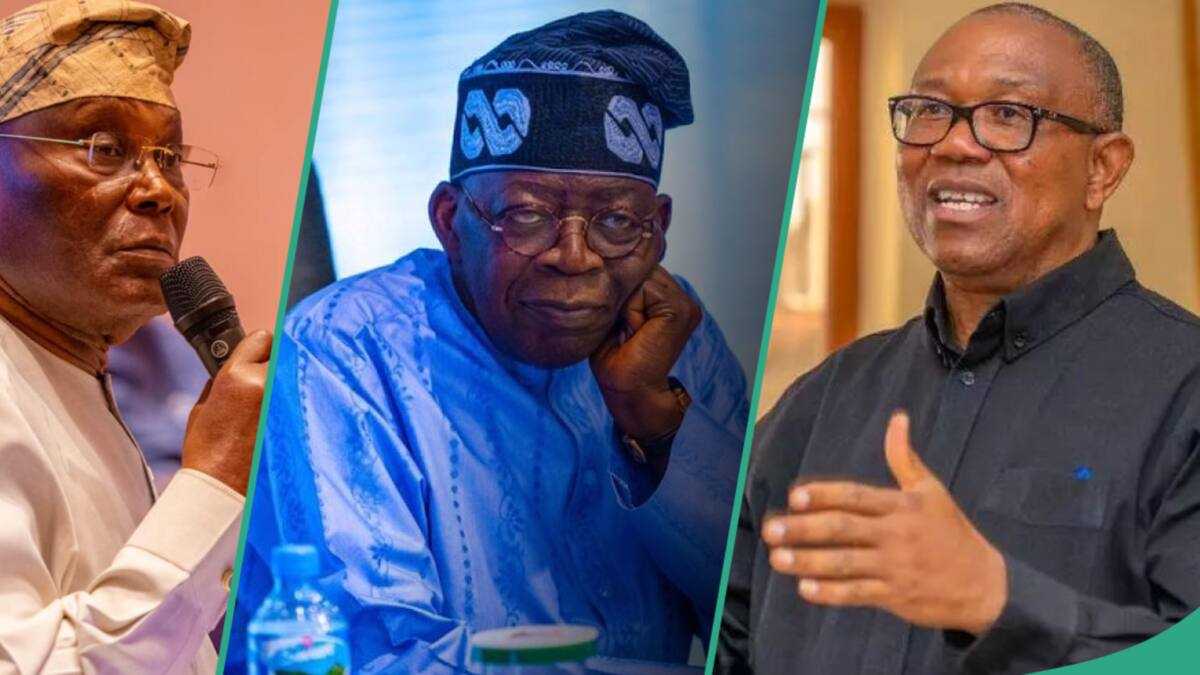

- A verified analyst on X listed five reasons President Tinubu currently holds an advantage ahead of the 2027 general elections
- The post pointed to a fragmented opposition, APC’s control of 31 states, and early signs of economic recovery as key factors
- The claims drew sharp pushback from Nigerians who challenged the economic arguments and questioned the analyst’s objectivity
Legit.ng journalist Adekunle Dada has over 8 years of experience covering metro, government policy, and international issues
A political analyst and former Obidient, Akin Olaoye, has sparked debate online after arguing that President Bola Tinubu is currently positioned to win the 2027 presidential election, citing structural and economic factors that favour the incumbent.
Olaoye listed five reasons he believes Tinubu enters the next election cycle as the front-runner.

Source: Facebook
He published the analysis via his X handle @akintollgate on Saturday, August 22, 2026.
Opposition split and APC’s ground game
At the top of Olaoye’s argument is what he described as a fragmented opposition.

He noted that both Atiku Abubakar and Peter Obi appear set to run separately again, mirroring the 2023 race in which split opposition votes allowed Tinubu to win with a minority of the total ballots cast.
Olaoye wrote that “when the anti-incumbent votes split three ways, the candidate with the biggest single bloc wins, even with a low percentage.”
He also pointed to the APC’s organisational muscle, noting that the ruling party controls the presidency, the National Assembly, and roughly 31 state governments.
In his view, governors, party structures, and grassroots networks remain more decisive in Nigerian elections than raw popularity figures.
On the economy, Olaoye argued that early signs of reform are beginning to show, citing cooling inflation, rising foreign reserves, and expanded local refining capacity as indicators of momentum that could benefit Tinubu by 2027.
Reactions divide along familiar lines.
The post drew wide engagement, with several users directly challenging his economic claims.
@9jaemperor wrote:
“Inflation is cooling? How and where? Are you seriously crediting Dangote refining capacity to him?”
@bigbank0125 questioned the government’s spending priorities:
“If you can pay 7 TRILLION NAIRA to one company to secure pipelines, is it subsidising poor Nigerians that you don’t have money for?”

@breakdboundary offered a counter-analysis, arguing that Peter Obi holds the real advantage heading into 2027.
He cited stronger NDC structures in the South-East, Rabiu Kwankwaso’s influence in the North, and widespread Northern frustration over insecurity as factors that could work against Tinubu even with APC governors in place.
@ManFearsGod__ acknowledged the ruling party’s structural strength but raised a key question:
“The machinery is clearly on Tinubu’s side, but political structure isn’t the same as public satisfaction. Nigerians are still feeling the pain in their pockets. Can the APC machine outrun that frustration by 2027?”
Not all responses engaged with the substance. @nze_Anambra said only the first two points carried weight, dismissing the rest as “just a campaign for Tinubu’s reelection,” while @olanrewajukay8 rejected the entire framing on hardship grounds.
Peter Obi left the Labour Party and was ratified as the presidential candidate of the New Democratic Congress (NDC) in May 2026, setting up what is shaping up to be a competitive multi-party contest ahead of the 2027 general elections.

Wike predicts broader political alliance for Tinubu
Meanwhile, Legit.ng also reported that FCT Minister Nyesom Wike said a broad cross-party coalition is taking shape ahead of the 2027 presidential election.
Wike linked Osun Governor Ademola Adeleke’s recent visit to Abuja to the ongoing political realignment behind President Tinubu.
The minister said opposition figures, including Atiku Abubakar and Peter Obi, are being unsettled by the growing defections.
Source: Legit.ng