
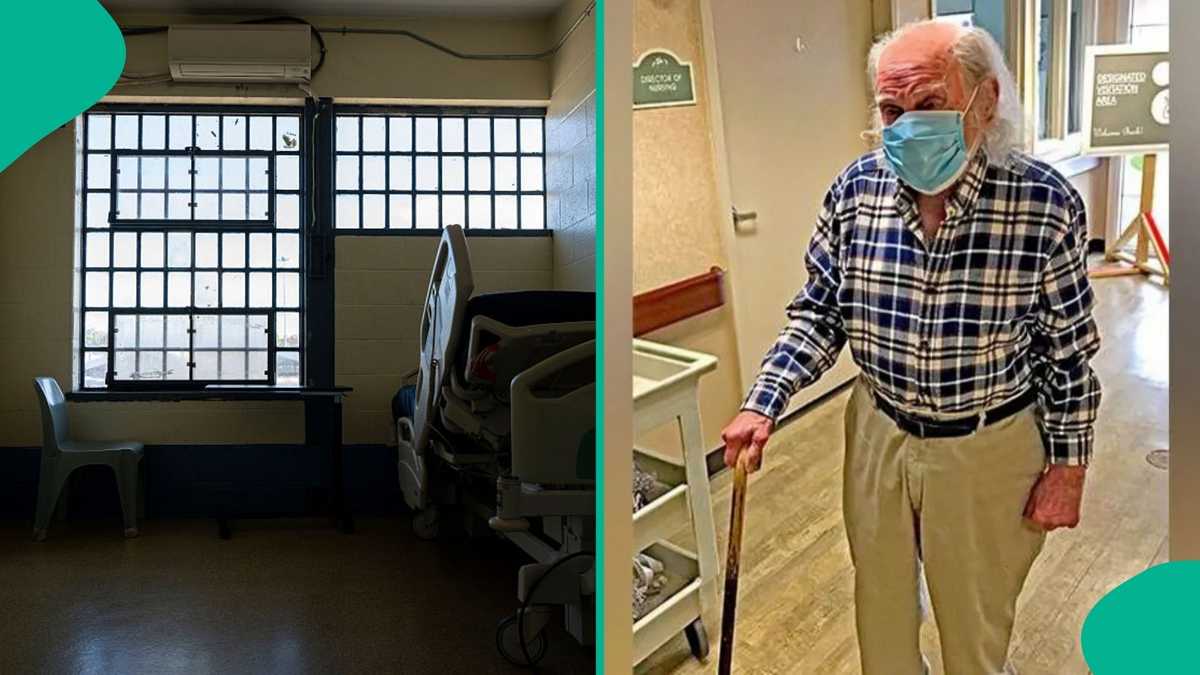

- Francis Clifford Smith, convicted of murder in 1950 at age 25, always maintained he was innocent throughout more than 70 years in prison
- Smith was scheduled for execution eight separate times before doubts about the evidence against him repeatedly spared his life
- His case has drawn fresh attention to the growing crisis of ageing prisoners in the US, where those aged 55 and older in custody rose by nearly 400% between 1991 and 2021
Francis Clifford Smith, widely regarded as the longest-serving prisoner in the United States, died in June 2026 at the age of 101 after spending more than seven decades behind bars for a murder he always said he did not commit.
Smith was 25 years old when he was convicted of first-degree murder in 1950 for the killing of Grover Hart, a night watchman at a Connecticut yacht club.

Source: UGC
He had been arrested the previous year alongside another man, who accepted a plea deal and testified against Smith. Years later, witnesses who had spoken against him recanted their statements, and a separate inmate confessed to the crime.

Eight dates with death row
Prison authorities scheduled Smith for execution eight times. Each occasion passed without the sentence being carried out, partly because the case against him continued to unravel. One of the officers who interrogated him after his arrest, Major Leo Carroll, later told the Board of Pardons that he did not believe Smith had even been present at the scene of the murder. In 1954, Smith’s death sentence was commuted to life imprisonment.
His time in custody was not unbroken. He escaped in 1967 and was recaptured 12 days later. In 1974, he was allowed to return home for Christmas Eve and came back the following day. A year later, he was granted parole but was arrested roughly 10 months afterwards for petty larceny and possession of a weapon, which ended his freedom.
According to Richard Sparaco, former executive director of what is now the Board of Pardons and Paroles, Smith turned down further parole opportunities until 2020, when he accepted supervised parole and moved to a specialist care home for elderly people within the justice system.

At Osborn prison, Smith had become something of a quiet institution himself. Andrius Banevicius, public information officer for Connecticut’s Department of Correction, recalled how Smith would fill his clothing with bread to feed the birds on the prison grounds, earning him the nickname “The Birdman of Osborn.”
“Everyone kind of turned a blind eye to it because they knew he was just feeding the birds,” Banevicius said.
The crisis of ageing behind bars
Smith spent his final years at 60 West, a nursing facility under the MissionCare Health scheme, which provides care specifically for incarcerated individuals and currently operates three sites in the north-eastern US.
David Skoczulek, spokesman for the facility, said Smith died peacefully in his sleep and was later cremated.
“Essentially, he died of old age,” Skoczulek said. “He had very limited family involvement around his passing but we assured it was appropriate, met his wishes and was dignified.”
Research shows long-term imprisonment can cause what experts describe as “accelerated ageing,” with conditions such as dementia arriving significantly earlier than they would in people who have not been incarcerated. Skoczulek noted that a person leaving a lengthy prison sentence at 60 can carry the health profile of someone 30 years older.

A 2025 study found that the number of people aged 55 and older in US prisons grew by nearly 400% between 1991 and 2021. The US Census Bureau projects that by 2030, at least one-third of the incarcerated population will be over 50.
Dr Stephanie Prost, a researcher at the University of Louisville who studies older adults in prison settings, told the BBC the issue extends well beyond the US. “We’re not the only jurisdiction that’s facing that ageing-related crisis, because similar issues are percolating in Australia and England,” she said.
COVID-19 kills man dies in prison
Previously, Legit.ng reported that a man who was acquitted of murder charges and released from prison succumbed to COVID-19.
Damon Thibodeaux was wrongfully imprisoned for 16 years in 1997 before a team of lawyers proved his innocence. Nine years upon his release from prison, he passed away after contracting the virus.
Source: Legit.ng