
- Nigeria’s SEC issued a circular directing capital market operators to end or restrict financial dealings with Iran and North Korea
- The order follows a June 2026 FATF statement classifying both countries as high-risk jurisdictions for money laundering and terrorist financing
- Operators who fail to comply risk fines, suspension, or outright revocation of their registration under Nigeria’s 2025 securities law
Legit.ng journalist Dave Ibemere has over a decade of experience in business journalism, with in-depth knowledge of the Nigerian economy, stocks, and general market trends.
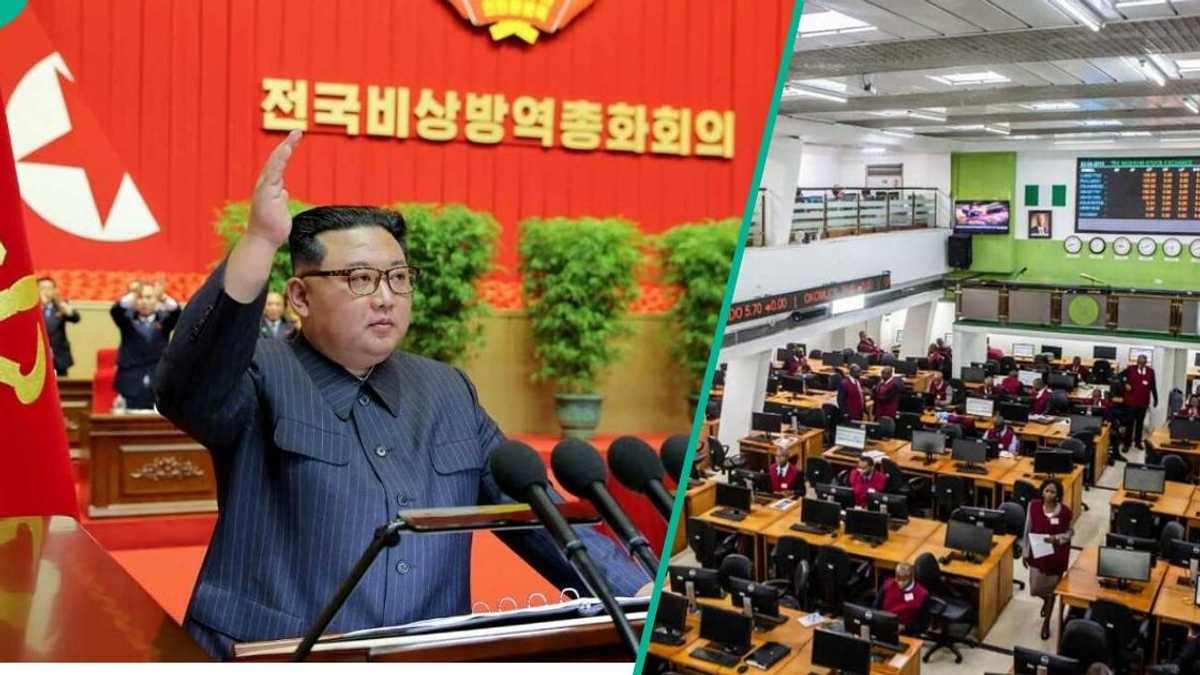
The Securities and Exchange Commission (SEC) in Nigeria has directed all capital market operators in the country to cut or restrict financial ties with Iran and North Korea, following a decision by the Financial Action Task Force (FATF) to flag both nations as high-risk jurisdictions in June 2026.
The directive came in a circular addressed to capital market-regulated entities, where the SEC warned that non-compliance would amount to a violation of the Investments and Securities Act 2025 and Nigeria’s anti-money laundering and counter-terrorist financing rules.


Photo: HKT
Source: Facebook
Operators who fail to comply face fines, suspension of operations, or revocation of their registration, the Sun reports.
What the SEC Wants Operators to Do
For North Korea, the commission ordered operators to terminate correspondent banking relationships with any financial institutions incorporated in, owned by, or controlled by North Korean persons or entities.
Operators must also ensure no subsidiaries, branches, or representative offices of North Korean financial institutions exist within their operations, and must refuse or restrict business with North Korean nationals, government bodies, or anyone acting on their behalf.
For Iran, operators are barred from processing or facilitating transactions involving Iranian financial institutions.
They are also prohibited from hosting subsidiaries, branches, or representative offices of Iranian financial institutions in Nigeria, and must not set up their own operations in Iran where that country’s weak compliance framework could undermine their obligations.
The FATF has kept both Iran and North Korea on its call-for-action list due to what it describes as significant strategic deficiencies, particularly around proliferation financing risks.

Punch reports that Myanmar, which also features on the same FATF list, will be treated differently.
The SEC said operators should apply enhanced due diligence to Myanmar-linked dealings rather than the outright restrictions imposed on Iran and North Korea.

Photo: AFP
Source: Getty Images
20 Countries Under Enhanced Monitoring
Beyond the Iran and North Korea measures, the SEC directed operators to apply enhanced monitoring to transactions and relationships connected to 20 jurisdictions currently under FATF increased monitoring.
These are Algeria, Angola, Bolivia, British Islands, Bulgaria, Cameroon, Côte d’Ivoire, Democratic Republic of the Congo, Haiti, Kenya, Lao People’s Democratic Republic, Lebanon, Monaco, Namibia, Nepal, South Sudan, Syria, Venezuela, Vietnam, and Yemen.
The commission also instructed all regulated capital market entities to subscribe to the Nigerian Financial Intelligence Unit’s Nigeria Sanctions (NigSac) Alerts system, which tracks terrorist financing and proliferation financing designations and supports the roll-out of targeted financial sanctions.
Operators are further required to report any suspicious or unusual transactions to the NFIU promptly.
The measures raise the compliance bar for Nigerian capital market operators engaged in cross-border transactions, as Nigeria continues to align its financial system with global anti-money laundering and counter-terrorism financing standards.

Investors lose N438bn
Earlier, Legit.ng reported that the Nigerian stock market closed negatively for the second consecutive session on Thursday, August 26.
Data showed that the market downturn was driven by profit-taking in banking, consumer goods, industrial, and oil & gas stocks, despite mild gains recorded in the insurance sector.
The market’s year-to-date return has dropped to 35.56%, while the week’s return after 4 days of trading is in the red zone at –0.32%.
Source: Legit.ng