
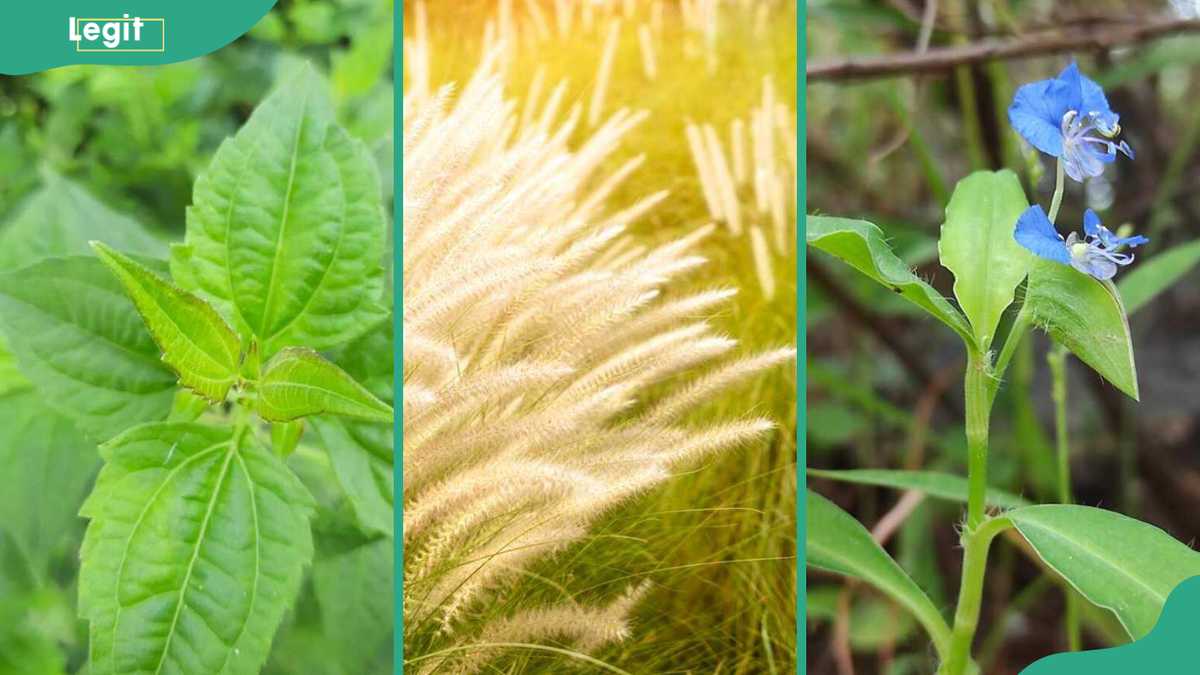

Did you know that weeds are plants considered undesirable in a specific situation? Agriculture in Nigeria accounts for a significant proportion of the nation’s gross domestic product (GDP). Dr Okon G. Okon, Plant Stress Physiologist at Akwa Ibom State University, notes that Nigeria’s varied ecological zones produce different common weeds, from drought-resistant types in the north to broadleaf species in the rainforest.

Source: Getty Images
TABLE OF CONTENTS
Key takeaways
- Weeds compete for valuable space and essential nutrients on farmlands, posing a significant threat to farmers.
- Specific weeds vary by ecological zone due to differences in climate, soil type, cropping systems, and land use practices.
- Effective weed management in Nigeria employs traditional, mechanical, cultural, chemical, and biological control methods, often through integrated weed management.
Common weeds and their scientific names in Nigeria
In Nigeria, common weeds range from fast-growing broadleaf shrubs and persistent grasses to parasitic species and floating aquatic plants. Check out the most common Nigerian weeds and their botanical names below.

Siam weed (Chromolaena odorata)

Source: Getty Images
Siam weed, or Chromolaena odorata, features among the common weeds and their scientific names in Nigeria. It can grow up to three metres tall in open fields.
This plant thrives in tropical and subtropical regions. It invades riparian zones, forest margins, bushland, waste sites, roadsides, disturbed sites, neglected pastures, crops and plantations.
Spear grass (Imperata cylindrica)

Source: Getty Images
You will not miss spear grass or Imperata cylindrica on the list of the top 50 weeds and their botanical names in Nigeria. This is a perennial grass that grows to a height of up to one metre.
The grass has an extensive and deeply penetrating system of rhizomes. Its leaves are in tufts, and it has dense, white, fluffy, cylindrical, spike-like heads. It is persistent in upland crops like maize, cassava, rice, and sorghum.
Dayflower (Commelina benghalensis)

Source: Getty Images
Dayflower, or Commelina benghalensis, is a perennial creeping herb. It has lily-like leaves and reddish hairs towards the tip.

Dayflower invades areas with moist soil, e.g. grasslands, roadsides, and other disturbed areas. It is problematic in pastures and crop fields because it forms dense, pure stands that can smother food plants.
Jimson weed/ burundanga (Datura stramonium)

Source: Getty Images
Jimson weed, or burundanga, is also known as Datura stramonium. The plant can reach a height of 5 feet. It bears white or purple flowers and has prickly seed pods that split open at maturity.
This plant is considered poisonous but has medicinal uses. It is also an aggressive invasive plant in temperate climates worldwide.
Nutgrass (Cyperus rotundus)

Source: Getty Images
Nutgrass, or Cyperus rotundus, cannot be missed on the list of grasses and their botanical names in Nigeria. It is a colony-forming perennial plant that adversely impacts agriculture.
It affects plantation crops in tropical and warm temperate climates around the world. Nutgrass is challenging to manage with either organic or conventional weed control strategies.
Milkweed (Euphorbia heterophylla)

Source: Getty Images
Milkweed, or Euphorbia heterophylla, is among the types of weeds in agriculture with pictures explored above. It thrives in orchards, cop plantations, roadsides, gardens, and waste areas. It occasionally grows in temperate regions.

The milkweed plant is short-lived with an upright and branched main stem. It usually grows 20-80 cm tall but can reach up to two metres in height.
Bahama grass (Cynodon dactylon)

Source: Getty Images
Bahama grass is a tropical grass found in all tropical and subtropical areas. Bahama grass’ botanical name is Cynodon dactylon. It is dominant in uncultivated areas, e.g. sea-coast sandy dunes, roadsides, and along rivers.
It is tolerant to drought and heavy grazing. As a result, it is valuable for pasture and is used for hay. On the flip side, this grass is a menace in plant farming.
Elephant grass (Pennisetum purpureum)

Source: Getty Images
Elephant grass is one of the top 10 grasses and their botanical names every Nigerian should know. Its botanical name is Pennisetum purpureum.
It is among the highest-yielding tropical grasses and can grow in dry or wet conditions. It forms dense, thick clumps up to one metre across. It has finely-toothed leaf margins and a prominent midrib on the leaf blade.
Carpet grass (Axonopus compressus)


Source: Getty Images
Carpet grass, or Axonopus compressus, is common on roadsides, gardens, waste areas, and plantations. It thrives in moist, warm environments with full sunlight.
Carpet grass is among the most persistent grasses. It can withstand trampling. It cannot withstand long periods of waterlogged conditions but grows on a wide range of soils.
African Club Moss (Selaginella kraussiana)

Source: Getty Images
If you are looking for an album of weeds and their botanical names, you will come across African Club Moss. Its botanical name is Selaginella kraussiana, a plant native to Africa.
This plant is a cousin to the true ferns. It is low-growing and mat-forming and thrives in rich, moist to wet soils. Trimming does not control its rapid spread because retained cuttings root and sprout quickly.
Buffalo grass (Stenotaphrum secundatum)

Source: Getty Images
Buffalo grass, or Stenotaphrum secundatum, invades roadsides, gardens, river banks, swamps, coastal areas, and other disturbed sites. It is considered an environmental weed.

While it can be used for lawns, it is a menace to crop farmers because it competes for nutrients and space with food crops.
Creeping foxglove (Asystasia gangetica)

Source: Getty Images
Creeping foxglove, or Asystasia gangetica, is a fast-growing, spreading, herbaceous groundcover plant that attracts many species of butterflies to the garden. It produces white flowers and is regarded as an environmental weed.
Falsethistle (Acanthus montanus)

Source: Getty Images
Falsethistle, or Acanthus montanus, is native to tropical areas in Western Africa. It is a thinly branched perennial with basal clusters of oblong, dark green leaves with silver marks and wavy margins. The leaves are also thorny.
While this prickly semi-woody herb has medicinal value in some communities, it is a nuisance to food crop farmers.
Nuke-Noh (Tridax procumbens)

Source: Getty Images
Nuke-Noh, or Tridax procumbens, is a flowering plant in the daisy family. It has great drought resistance and tends to outlive all grasses and most broad-leaved plants. In Nigeria, this plant is fed to poultry. Some communities use it for medicinal purposes.

Regional prevalence of weeds
Dr Okon G. Okon, Plant Stress Physiologist at Akwa Ibom State University, explains in an interview that specific weeds thrive in different regions in Nigeria due to variations in climate, soil type, cropping systems, and land use practices. He shared the following:
- Sudan and Sahel Savanna (Northern Nigeria) – In this region, low rainfall and semi-arid conditions favour drought-resistant weeds, such as:
- Striga hermonthica (Witchweed) – a parasitic weed affecting maize, sorghum, and millet.
- Cenchrus biflorus (African foxtail) – common in dryland farming.
- Echinochloa colona (Jungle rice) – found in irrigated fields.
- Tribulus terrestris (Puncture vine) – an aggressive ground-covering weed.
- Sida acuta (Wireweed) – common in disturbed soils.
- Guinea Savanna (Central Nigeria – Middle Belt) – This is characterised by moderate rainfall and mixed farming systems; weeds like the following frequently appear:
- Imperata cylindrica (Speargrass) – highly invasive in fallow lands and croplands.
- Chromolaena odorata (Siam weed) – common in abandoned farmlands and roadsides.
- Aspilia africana (Wild sunflower) – dominant in bush fallow systems.
- Ageratum conyzoides (Goat weed) – invades maize and cassava farms.
- Digitaria horizontalis (Smooth crabgrass) – common in cereal and legume fields.

- Rainforest (Southern Nigeria, including Akwa Ibom State) – This zone experiences high rainfall and dense vegetation and supports fast-growing broadleaf weeds and climbers. Examples include:
- Aspilia africana (Wild sunflower) – dominates farmland and forest edges.
- Pueraria phaseoloides (Tropical kudzu) – a smothering vine common in oil palm plantations.
- Panicum maximum (Guinea grass) – common in pastures and roadsides.
- Centrosema pubescens (Butterfly pea) – a creeping weed found in fallow lands.
- Mimosa pudica (Sensitive plant) – common in wet farmlands and plantation crops.
- Coastal and Mangrove Swamps (South-South Nigeria – Niger Delta region) – These areas are waterlogged and saline, supporting aquatic and salt-tolerant weeds like:
- Eichhornia crassipes (Water hyacinth) – a highly invasive floating weed in rivers and lakes.
- Nymphaea lotus (White water lily) – common in flooded areas.
- Paspalum vaginatum (Saltgrass) – found in brackish wetlands and mangroves.
- Ipomoea aquatica (Water spinach) – a creeping vine in swampy areas.
- Typha domingensis (Southern cattail) – invades irrigation canals and marshlands.

- Derived Savanna (a transition zone between Rainforest and Guinea Savanna) – This zone supports a mix of woody plants and herbaceous weeds, including:
- Andropogon gayanus (Gamba grass) – a dominant weed in pasturelands.
- Commelina benghalensis (Benghal dayflower) – invades crop fields and gardens.
- Panicum repens (Torpedo grass) – common in wetland rice fields.
- Rottboellia cochinchinensis (Itch grass) – problematic in maize and sorghum farms.
- Tridax procumbens (Tridax daisy) – a fast-growing weed in disturbed areas.
Harmful vs useful weeds
Dr Okon emphasises that distinguishing between harmful and useful weeds requires looking at several key factors:
Morphological characteristics
- Growth habit: Harmful weeds are often fast-growing, invasive, and spread rapidly (e.g., Chromolaena odorata), while useful plants are typically cultivated, well-managed, and have controlled growth patterns (e.g., Telfairia occidentalis – Fluted pumpkin).
- Leaf structure: Harmful weeds may have thorns, spines, or irritating hairs that deter animals and humans (e.g., Mimosa pudica – Sensitive plant), whereas useful plants generally have softer or edible leaves, often used for food, medicine, or fodder (e.g., Vernonia amygdalina – Bitter leaf).
- Root system: Harmful weeds often have deep, aggressive, or fibrous root systems that compete with crops for nutrients and water (e.g., Imperata cylindrica – Speargrass), while useful plants might be tuberous, shallow, or well-adapted for controlled growth (e.g., Dioscorea spp. – Yam).
- Seed production: Harmful weeds produce many seeds, often with dispersal adaptations (wind, water, animals) for rapid colonisation (e.g., Tridax procumbens – Coat buttons), compared to useful plants that have fewer, larger, or cultivated seeds, often requiring human intervention to propagate (e.g., Zea mays – Maize).

Ecological impact
- Competition with crops: Harmful weeds compete aggressively for nutrients, water, and sunlight, reducing crop yields (e.g., Striga hermonthica – Witchweed). In contrast, useful plants often complement crops by improving soil fertility or repelling pests (e.g., Tephrosia vogelii – Fish poison plant for pest control).
- Effects on soil health: Harmful weeds deplete soil nutrients, increase soil erosion, or release toxic chemicals that inhibit other plants (allelopathy) (e.g., Rottboellia cochinchinensis – Itch grass), meanwhile, useful plants may fix nitrogen, improve soil structure, or act as cover crops to prevent erosion (e.g., Mucuna pruriens – Velvet bean).
Economic and medicinal value
While harmful weeds are mostly non-edible, poisonous, or cause crop damage (e.g., Datura stramonium – Jimsonweed, toxic to humans and animals), useful plants have economic importance (food, medicine, fodder, fiber, fuel) (e.g., Colocasia esculenta – Cocoyam, Elaeis guineensis – Oil palm).

Examples of harmful weeds in Nigeria
These weeds negatively affect crops, animals, or human health.
|
Weed name |
Botanical name |
Harmful effects |
|
Witchweed |
Striga hermonthica |
Parasitic weed on maize, sorghum, and millet, reduces yield |
|
Speargrass |
Imperata cylindrica |
Spreads aggressively, difficult to eradicate |
|
Siam weed |
Chromolaena odorata |
Invasive, suppresses native vegetation |
|
Water hyacinth |
Eichhornia crassipes |
Blocks waterways, disrupts fishing and irrigation |
|
Itch grass |
Rottboellia cochinchinensis |
Causes skin irritation, competes with cereal crops |
|
Jimsonweed |
Datura stramonium |
Highly toxic to humans and livestock |
Examples of useful weeds in Nigeria
These weeds have economic, medicinal, soil enrichment, or pest control benefits.
|
Weed name |
Botanical name |
Useful properties |
|
Goat weed |
Ageratum conyzoides |
Soil cover, prevents erosion |
|
Sensitive plant |
Mimosa pudica |
Nitrogen fixer, medicinal |
|
Velvet bean |
Mucuna pruriens |
Soil improver, used in herbal medicine |
|
Purslane |
Portulaca oleracea |
Edible, rich in Omega-3 fatty acids |
|
Tephrosia |
Tephrosia vogelii |
Used for natural pest control |
Weed control methods in Nigeria
Effective weed management is critical, and Dr Okon details several methods used by Nigerian farmers:

- Traditional methods: Techniques like hand weeding and slash-and-burn (bush burning) are common among subsistence farmers. Although hand weeding is cheap and environmentally friendly, it is labour-intensive.
- Mechanical methods: Practices such as hoeing, tilling, and mowing help physically remove weeds. However, these can sometimes damage soil structure or be ineffective against deep-rooted species.
- Cultural methods: Crop rotation, cover cropping, proper plant spacing, and dense planting can reduce weed growth by suppressing light and nutrients available to weeds.
- Chemical methods: Selective, non-selective, pre-emergence (applied before weed germination), and post-emergence (applied after weeds have emerged) herbicides offer rapid control but must be managed carefully to avoid issues like herbicide resistance.
- Biological methods: Farmers also use natural enemies such as specific insects or grazing animals to control weeds, a sustainable method with minimal chemical impact.
- Integrated Weed Management (IWM): Combining multiple methods is often the most effective and environmentally friendly approach because it reduces herbicide resistance, minimises labour costs, and protects the environment.
Dr Okon also notes the challenges of weed control in Nigeria such as:
- High cost of herbicides and farm machinery.
- Lack of awareness of sustainable methods.
- Climate change affecting weed patterns.
- Resistance of some weeds to herbicides.
What are common weeds?
Common weeds are plants that grow where they are not wanted. They tend to compete with cultivated crops, lawns, or landscaping for light, water, nutrients, and space. A plant is generally labelled a weed based on context because the same species can be a nuisance on a farm but valuable as fodder, medicine, or soil cover elsewhere.
What is the scientific name for weeds?
There is no single scientific name for weeds, since “weed” is not a taxonomic category but a descriptive term for any undesirable plant growing in the wrong place. Each weed species has its own unique botanical or scientific name made up of a genus and species.

What is the botanical name of Bahama grass?
The botanical name of Bahama grass is Cynodon dactylon.
What are the 10 common weeds and their botanical names?
Ten common Nigerian weeds and their botanical names are Siam weed (Chromolaena odorata), spear grass (Imperata cylindrica), dayflower (Commelina benghalensis), Jimson weed (Datura stramonium), nutgrass (Cyperus rotundus), milkweed (Euphorbia heterophylla), Bahama grass (Cynodon dactylon), elephant grass (Pennisetum purpureum), carpet grass (Axonopus compressus), and African club moss (Selaginella kraussiana).
What are the 10 scientific names of plants?
Among common Nigerian weeds, 10 scientific names include Chromolaena odorata, Imperata cylindrica, Commelina benghalensis, Datura stramonium, Cyperus rotundus, Euphorbia heterophylla, Cynodon dactylon, Pennisetum purpureum, Axonopus compressus, and Selaginella kraussiana.
What are the common weeds found on farms?
Some common weeds found on farms are Nuke-Noh, False thistle, Creeping foxglove, Buffalo grass, African club moss, Dayflower, Carpet grass, Elephant grass, Bahama grass, Burundanga, Milkweed, and Nutgrass.

What is the botanical name of Carpet grass?
The botanical name of Carpet grass is Axonopus compressus. This grass is common on roadsides, gardens, waste areas, and plantations.
All farmers must learn about common weeds and their scientific names with pictures in Nigeria. This information is useful for identifying problem species early and choosing the right traditional, mechanical, cultural, chemical, or biological control method, whether managing a small farm or a large agribusiness operation.
Legit.ng recently published a list of the best career opportunities in agriculture in Nigeria and the courses to select. The best career opportunities in agriculture in Nigeria include agribusiness management, agricultural engineering, food science, and agronomy, with high-demand roles like farm managers, agricultural consultants, and veterinary doctors.
The key courses to select for these paths include B.Sc. in Agriculture, Agricultural Economics, Horticulture, or Animal Science. Specialised fields like soil science, fisheries, and animal science help improve productivity and sustainable farming practices.
Source: Legit.ng