
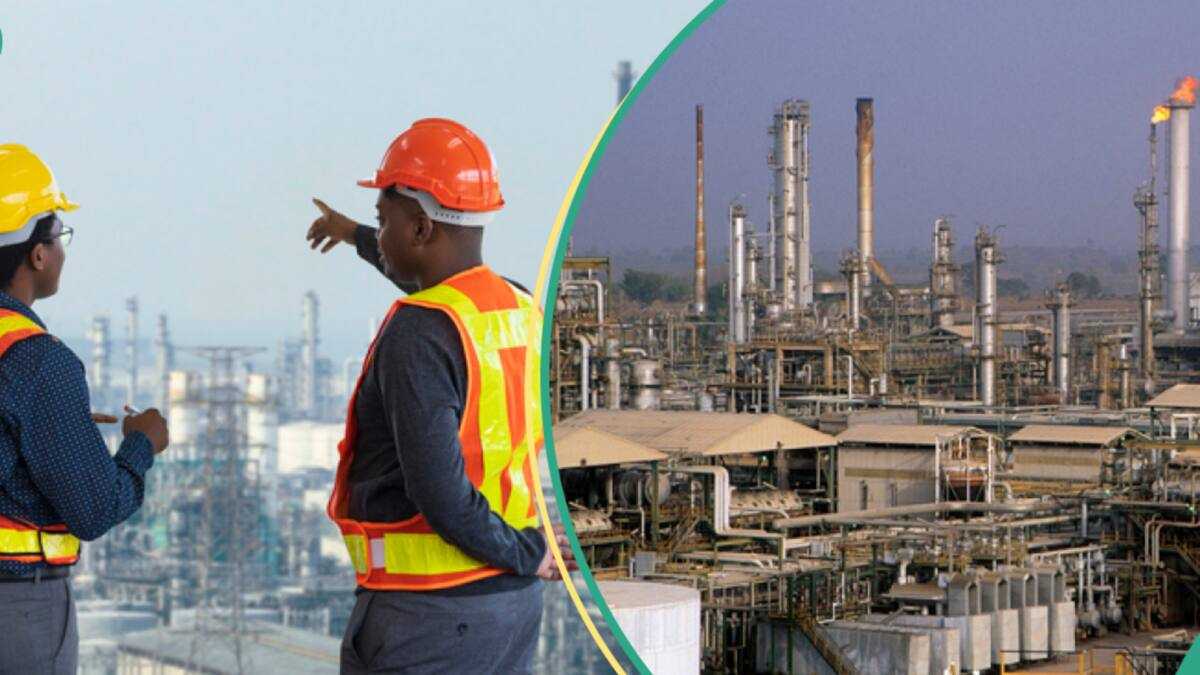

- Aradel Holdings aims to produce petrol by 2027, adding a local fuel source in Nigeria’s evolving market
- Removal of petrol subsidies in 2023 has incentivised local refiners, paving the way for Aradel’s expansion plans
- Aradel is also exploring aviation fuel production, targeting Europe as a potential export market
Pascal Oparada is a journalist with Legit.ng, covering technology, energy, stocks, investment, and the economy for over a decade.
Nigerian energy company Aradel Holdings Plc is targeting 2027 to begin producing petrol at its modular refinery in Rivers State, potentially adding another domestic source of fuel to Nigeria’s rapidly changing downstream market.
Temitayo Ogunbanjo, who oversees Aradel’s refining business, disclosed the plan on the sidelines of a conference in Abuja, saying the removal of petrol subsidies and deregulation of the downstream sector had created a clearer commercial path for local refiners to produce petrol.


Credit: Novatis
Source: Getty Images
The 11,000-barrel-per-day facility currently produces kerosene, diesel, gas oil and naphtha. The company is now considering petrol production as part of plans to expand its refining operations.
Subsidy removal changes the equation
For years, Nigerian refiners largely stayed away from petrol production because government-controlled pump prices and fuel subsidies made it difficult for local plants to compete with imported products.
That changed dramatically in 2023 when President Bola Tinubu removed the petrol subsidy shortly after taking office. The decision pushed pump prices sharply higher and contributed to inflationary pressures but also opened the market to greater private-sector participation.
With prices now more closely determined by market forces, domestic refiners have a stronger incentive to invest in petrol production.
The shift has already transformed Nigeria’s downstream sector, with the 650,000-barrel-per-day Dangote Petroleum Refinery becoming the biggest local player and reducing the country’s dependence on imported refined products.
Aradel eyes expansion and export opportunities

Although Aradel’s refinery is much smaller than Dangote’s giant facility, the company believes modular plants can play an important role in meeting domestic and regional fuel demand.
Ogunbanjo said Aradel is also examining a potential expansion of the refinery, crude supply arrangements and export logistics. The company has yet to disclose the investment required for the petrol unit or any expanded capacity.
Engineering studies are expected to determine the final scope of the project over the coming year.
Aviation fuel also on the radar
Beyond petrol, Aradel is assessing opportunities to increase aviation fuel production, with Europe emerging as a potential export market.
The company’s integrated business model, which spans crude production, refining and distribution, could give it an advantage by allowing it to capture value across different stages of the oil industry.
Higher crude prices have also boosted earnings from its upstream operations, although rising feedstock costs could increase expenses for its refining business.
Smaller refineries face big challenges
Nigeria’s modular refineries are increasingly being positioned as complementary players alongside larger facilities such as Dangote’s refinery.

However, analysts say the profitability of petrol production at smaller plants will depend heavily on crude supply costs, exchange-rate movements and the continued operation of a deregulated pricing regime.
Any future return to government-controlled petrol prices could weaken the business case for new refining investments.

Credit: Novatis
Source: Getty Images
Aradel, which was listed on the Nigerian Exchange last year, has positioned itself as a major home-grown energy company as international oil firms continue to sell some of their Nigerian assets.
Its planned petrol production would mark another step in Nigeria’s long-running effort to reduce the costly cycle of exporting crude oil while importing the refined fuels consumed by its population.
Another billionaire set to complete $1bn refinery
Legit.ng earlier reported that Nigerians may soon have another operational refinery as billionaire businessman Azibapu Eruani’s Azikel Refinery in Yenagoa, Bayelsa State, enters its final stage of construction.
The refinery is designed to process 25,000 barrels of crude oil or condensate daily and produce petrol, diesel, aviation fuel, kerosene, liquefied petroleum gas, and other refined products.
The refinery is designed as a full-slate hydro-skimming plant with a capacity to process 25,000 barrels of crude oil or condensate per day.
Source: Legit.ng