
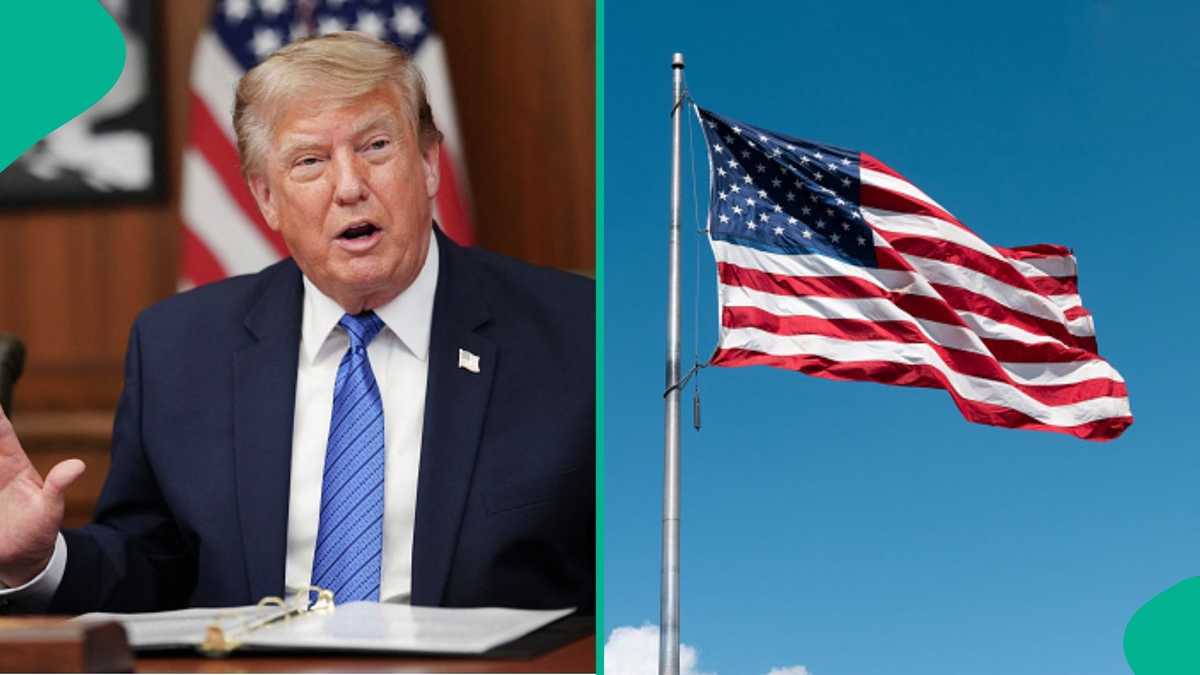

- The US government has outlined the number of years a foreign worker must hold a Green Card before becoming eligible to apply for citizenship in 2026
- Foreign workers who are married to a US citizen face a different waiting period compared to other permanent residents who seek American citizenship
- Eligible applicants must also meet several other conditions beyond the residency requirement before filing for naturalisation
The United States government has clarified that foreign workers must live in the country as lawful permanent residents for at least five years before they can apply for citizenship through naturalisation.
According to guidance published by the US Citizenship and Immigration Services (USCIS), naturalisation is the process through which a person not born in the United States voluntarily becomes a US citizen.

Photo Credit: Aaron Schwartz, Marcia Straub
Source: Getty Images
For most foreign workers, the standard path requires holding a Green Card for a minimum of five years. However, those married to a US citizen qualify after just three years as a permanent resident.

Read also
UK lists 4 categories of foreigners exempt from taking citizenship test during application
What foreign workers must show
Beyond the residency requirement, USCIS says applicants must satisfy a range of conditions before filing Form N-400, Application for Naturalisation.
Applicants must be at least 18 years old at the time of filing, and must show they have been physically present in the United States for at least 30 months out of the five years immediately before they submit their application.
They must also prove they have lived in a specific US state or USCIS district for at least three months before filing.
In addition to the time-based requirements, applicants must demonstrate good moral character for the five years leading up to their application.
They are required to show an understanding of US history and the principles of its government through a civics test, and must be able to read, write, and speak basic English. The final step is taking an Oath of Allegiance to the United States.

Exceptions to the English requirement
USCIS noted that some applicants are exempt from the English language test depending on their age and the length of time they have held permanent resident status. Those who qualify under this exemption may take the civics test in a language of their choice.
The agency also confirmed that students who are financially dependent on their parents have the option of applying for naturalisation either where they attend school or where their family lives.
Foreign workers seeking US citizenship must first obtain lawful permanent resident status before the naturalisation clock begins. The five-year countdown starts from the date the Green Card is granted, not from the date of arrival in the country.
In a related story, Legit.ng reported that the US had released a list of 10 West African countries whose citizens must pay the $20,000 bond before applying for a visa in 2026.
Foreign journalists: US announces new screening measures

Meanwhile, Legit.ng previously reported that the US had announced new screening measures for foreign journalists applying for a visa.
The reported policy would extend existing “online presence vetting” requirements to foreign media representatives, adding them to a growing list of visa applicants whose social media activity is scrutinised before they are allowed into the United States.
The development comes as the Trump administration continues to broaden the role of online activity in immigration decisions, a move that has attracted criticism from civil liberties advocates who argue it could affect freedom of expression
Source: Legit.ng