
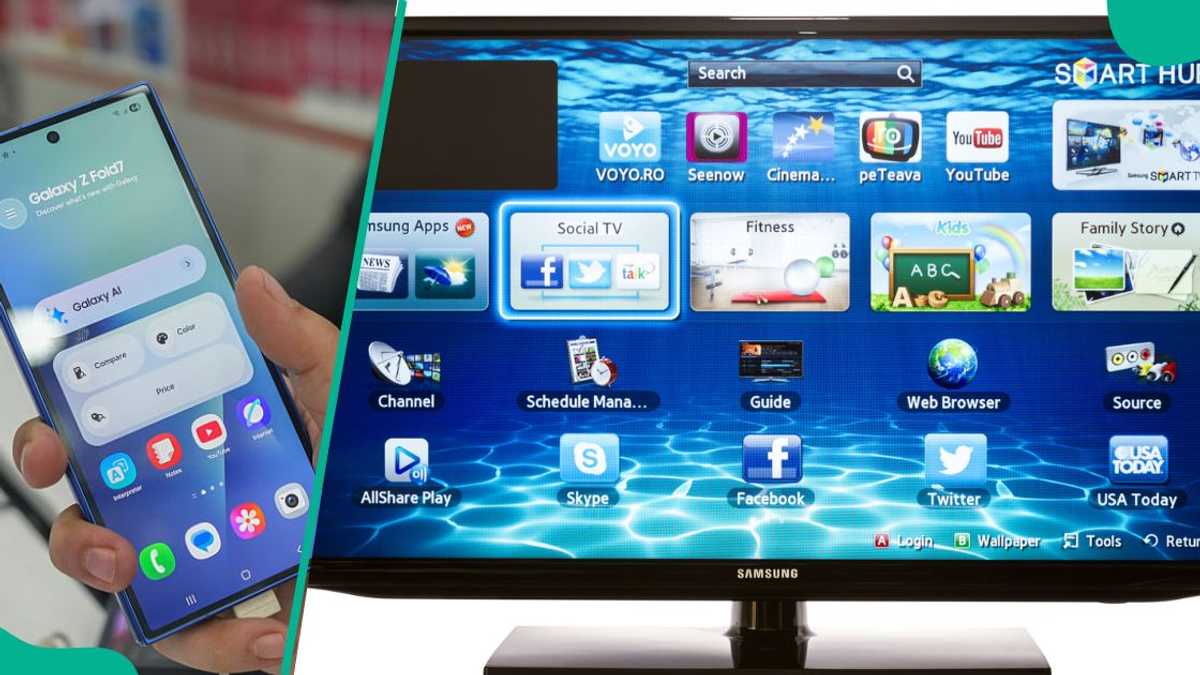

- Samsung plans to remove risky smart TV apps following cybersecurity concerns over residential proxy software
- Norwegian firm Mnemonic discovered some apps expose users’ internet connections to cyber threats
- Experts advise Samsung TV owners to uninstall unnecessary apps and maintain security awareness
Pascal Oparada is a journalist with Legit.ng, covering technology, energy, stocks, investment, and the economy for over a decade.
Samsung has announced plans to remove a number of smart TV apps after new cybersecurity research revealed that some of them could secretly share users’ internet connections with strangers, exposing millions of households to potential cyber threats.
The move follows findings by Norwegian cybersecurity firm Mnemonic, which discovered that several apps available through Samsung’s Smart TV platform contained software capable of turning users’ internet connections into so-called “residential proxy” networks.

Credit: manaemedia
Source: Getty Images
These networks can be exploited by third parties, including cybercriminals, to hide their online activities.

Samsung moves to remove risky apps
The security research, published on Monday, prompted Samsung to introduce stricter policies aimed at eliminating apps that contain residential proxy software.
In a statement, the company confirmed that it has already stopped accepting new Smart TV apps that include such technology and is now working to identify and remove existing apps that violate the policy.
“We have already restricted new app registrations that incorporate such proxy functionalities on our Smart TV platform,” a Samsung spokesperson said.
“We are currently implementing strict platform-wide developer policies explicitly banning residential proxy SDKs, and we are working to identify and remove all apps currently available in our store that contain these components.”
The announcement comes only weeks after LG introduced a similar ban following reports that nearly half of the apps on its own smart TV store contained comparable proxy software.
Popular apps included a featured Pac-Man game

One of the most surprising discoveries involved a simple Pac-Man game that Samsung had previously highlighted in its “Editor’s Choice” section.
According to the researchers, the game contained code supplied by proxy network provider Bright Data.
While the software remained inactive until users accepted a consent prompt, it continued running in the background after activation, even when the game itself was no longer open.
The researchers stressed that users who granted permission effectively turned their televisions into internet “exit nodes,” allowing outside parties to route web traffic through their home connections.
How the threat works
Residential proxy networks, commonly known as “resproxies,” allow internet traffic to appear as though it originates from ordinary homes rather than commercial servers.
While the technology has legitimate uses, including bypassing internet censorship and collecting publicly available online data for research and artificial intelligence training, cybersecurity experts say it has increasingly become a preferred tool for hackers, fraudsters and cyber spies seeking to conceal malicious activities.
Because the traffic passes through residential internet connections and is typically encrypted, security companies often struggle to distinguish legitimate users from cybercriminals.

Researchers warn of bigger risks
Mnemonic security consultant Harrison Sand warned that the issue extends beyond a handful of apps.
Many Smart TV apps, he said, consist of only a few lines of code that simply load content from external servers. As a result, app reviews may inspect only the limited code submitted to Samsung rather than the software ultimately delivered to users. TechCrunch reported.
“What was reviewed is not necessarily what is running,” Sand explained.
The researcher also cautioned that a simple change to code hosted on external servers could potentially activate proxy functionality across millions of Smart TVs simultaneously, creating an enormous botnet capable of supporting large-scale cyber operations.
During his investigation, Sand observed network activity that appeared to be associated with large-scale web scraping, including the collection of publicly available LinkedIn profiles and data used to train artificial intelligence models.
What Samsung users should do
Samsung Smart TV owners are advised to review installed apps and uninstall any that appear unnecessary or unfamiliar, particularly older games or little-known applications.


Credit: Novatis
Source: Getty Images
Users should also avoid granting permissions without understanding their purpose, keep their Smart TVs updated with the latest firmware, and download apps only from trusted developers.
Samsung’s latest crackdown reflects growing concern that even everyday household devices can become gateways for cyber threats if left unchecked.
With smart TVs becoming increasingly connected, experts say users should treat them with the same level of security awareness as smartphones and computers.
Samsung ends support for some Galaxy phones
Legit.ng earlier reported that Samsung’s decision to remove the Galaxy A13, A23 LTE, and M33 5G from software update eligibility leaves users vulnerable to security threats starting May 2026.
As these devices, popular in emerging markets like Nigeria, lose support, their users face a critical choice: upgrade for better security or risk the growing dangers of operating outdated technology.
Source: Legit.ng