
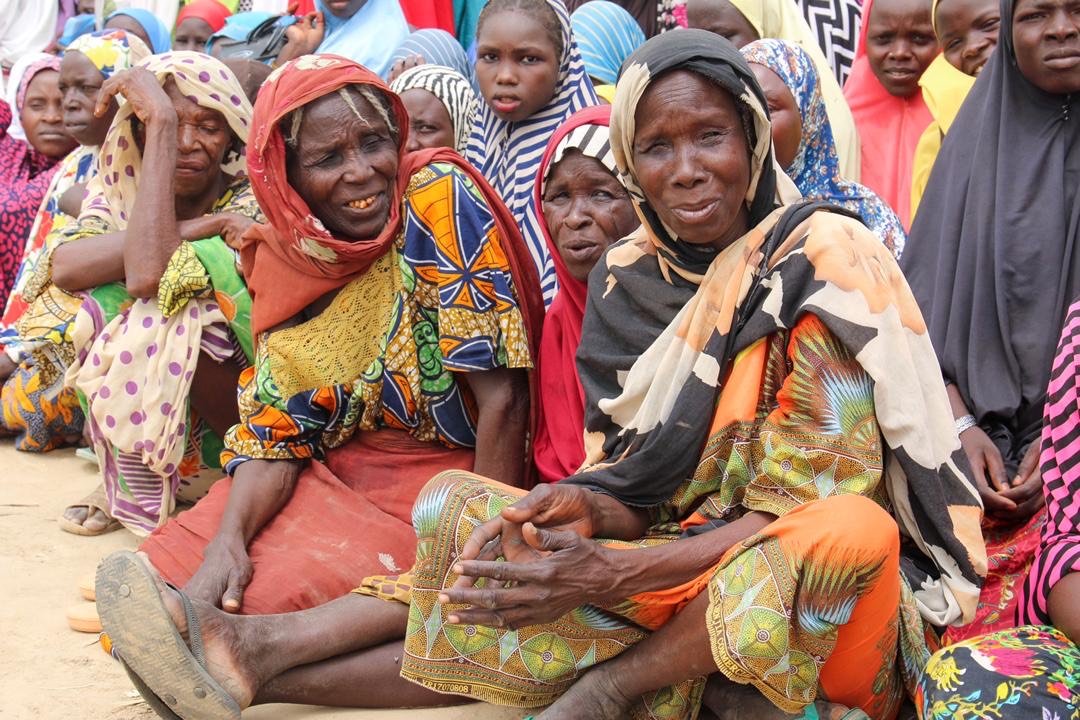


A bandit attack in Zamfara State has displaced 484 people, including 271 children, as the number of internally displaced persons (IDPs) across Nigeria’s North-west approaches 800,000, according to the International Organisation for Migration (IOM).
The figures are contained in Flash Report 291, released by the IOM on 19 June, following a rapid assessment of the 15 June attack on Gamo Gidan Bita in Birnin Magaji Ward of Gummi Local Government Area, Zamfara State.
According to the report, residents fled to Ubandawaki in neighbouring Magaji Gari Ward after armed bandits attacked the community.
The IOM said it activated its Displacement Tracking Matrix (DTM) 72-hour early warning protocol on 16 June, a day after the attack, to assess the humanitarian impact and support emergency response planning.
The assessment found that the attack displaced 484 people from 101 households and forms part of a broader humanitarian crisis that has forced more than 143,189 people from their homes across Nigeria’s North-west between December 2025 and June 2026.

The cumulative number of internally displaced persons in the region now stands at about 794,018.
Children accounted for more than half of those displaced. Of the 484 displaced persons, 271 were children, while 129 were women and 84 were men.
The attack also left five casualties, comprising three deaths and two injuries.
The IOM identified emergency food assistance, temporary shelter and essential non-food items as the most urgent needs, noting that every affected household requires humanitarian support.
Women and children bear the heaviest burden
The assessment highlights the disproportionate impact of the violence on women and children.
According to the IOM, females accounted for about 60 per cent of those displaced, while males made up the remaining 40 per cent.
Girls aged between six and 12 years constituted the largest female age group among the displaced population, while infants under one year were also among those forced to flee.
North-west displacement crisis deepens
The latest attack underscores the worsening humanitarian situation across Nigeria’s North-west, where repeated attacks by armed groups continue to uproot communities.
According to the IOM, Zamfara accounted for 279,224 internally displaced persons as of early 2026, representing an increase of 74,648 from the previous reporting period.
Separate IOM data also showed that attacks in neighbouring Katsina State displaced 3,830 people from 517 households between 21 May and 1 June.
Beyond internal displacement, insecurity across Nigeria’s North-west and North-east has also forced thousands of people across international borders. Separate data from the United Nations High Commissioner for Refugees (UNHCR) indicate that more than 8,500 Nigerians sought refuge in neighbouring Niger, Cameroon and Chad during the same six-month period.
Climate pressures and seasonal migration
In a separate publication—its Transhumance Tracking Tool Dashboard 20, released on 16 June—the IOM reported that 388 pastoralists moved 10,572 livestock across Katsina and Zamfara states during May.
The livestock comprised 6,527 cattle, 2,205 sheep, 1,303 goats and 537 other animals.
The agency identified Zamfara as Nigeria’s third-largest destination for seasonal livestock movement during the period, while the Kaduna–Zamfara corridor emerged as the country’s busiest domestic transhumance route.
According to the IOM, climate change, desertification, inadequate rainfall and rapid population growth continue to intensify competition over land and water resources, worsening tensions between farming and pastoral communities across the North-west.
READ ALSO: Suspected ISWAP collaborator arrested in IDP camp
Humanitarian response
Bandit attacks have continued to devastate communities across Zamfara and other North-west states, causing widespread displacement, kidnappings and loss of lives.
The latest IOM reports underscore the urgent need for sustained humanitarian assistance and improved security measures to protect vulnerable communities, particularly women and children, who continue to bear the greatest consequences of the violence.
PREMIUM TIMES will update this report as soon as it gets feedback from the National Emergency Management Agency (NEMA), the Zamfara State Emergency Management Agency (SEMA) and the Zamfara State Police Command on relief efforts and the latest displacement.