
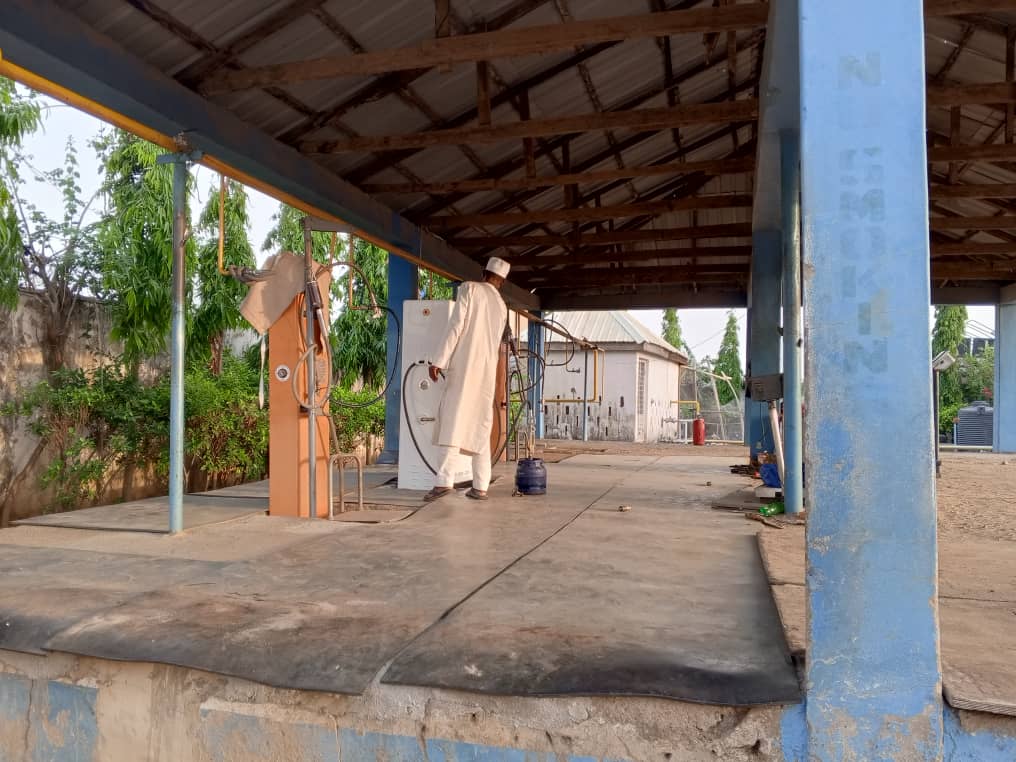


Despite persistent complaints about the rising cost of cooking gas, millions of Nigerians continue to rely on it for their daily cooking needs, underscoring its growing importance in households nationwide.
Prices have surged due to a combination of supply deficits, currency fluctuations, and distribution challenges.
Although Nigeria holds massive gas reserves, it relies heavily on imports because a large volume of domestically produced gas is exported. This leaves local marketers at the mercy of the international market
Findings by PREMIUM TIMES HAUSA in Zaria and Kaduna show that while many families can no longer afford to refill their gas cylinders, they still purchase small quantities because of the convenience and efficiency that Liquefied Petroleum Gas (LPG), commonly known as cooking gas, offers.
Residents, charcoal sellers, gas retailers and plant operators interviewed said the product has become almost indispensable, even as its price continues to climb.
Households Resort to Buying Small Quantities
Christiana Yakubu, a mother of three, said the rising cost of cooking gas has placed enormous pressure on family budgets.
According to her, many households now purchase only two or three kilogrammes of gas at a time instead of filling their cylinders completely.

“Cooking gas is very expensive now. What many families do is buy two or three kilogrammes to prepare meals quickly, especially in the mornings when children are going to school. The rest of the cooking is done with charcoal or firewood,” she said.
Charcoal business booms as families seek cheaper alternatives
For some households, charcoal has become the primary source of cooking energy.
A charcoal seller, Habiba Irimiya, said her family reserves gas for emergencies while relying mainly on charcoal for everyday cooking.

“I use charcoal most of the time because it is readily available and cheaper than gas,” she said.
Mrs Irimiya added that demand for charcoal has increased significantly in recent months, a development she attributes to the rising cost of cooking gas.
“Business is moving well because many people can no longer afford to depend entirely on gas,” she said.
Students drive demand for small gas purchases
Joshua Dauda, a cooking gas retailer in Zaria, said students constitute a large percentage of his customers.
According to him, most students buy between two and three kilograms of gas at a time due to financial constraints.

“Students usually buy small quantities. Once it finishes, they come back for more because many of them do not have access to alternatives such as charcoal or firewood,” he said.
Gas plant operators cite scarcity and supply challenges
At the Mamu Gas Plant in Zaria, a senior technician, Dauda Abdulrahim, said demand for cooking gas remains strong despite the high prices.
He explained that the company has attempted to keep prices lower than those of many competitors.
“Some gas plants sell between N1,700 and N1,800 per kilogramme, while we sell at about N1,600 per kilogramme. We try to make it affordable for our customers,” he said.

However, operators say supply shortages are compounding rising prices.
The Managing Director of Sanco Gas Plant, Hamza Aliyu-Harande, described the current situation as one of the most challenging periods in the industry.
“I have been in this business for 11 years, and two weeks ago was the first time I completely ran out of gas to sell,” he said.
Mr Aliyu-Harande revealed that some marketers resort to purchasing substandard products to stay in business, but he refused to compromise quality.
“There were cheaper products available, but I chose to wait for quality supplies, even though it affected my business,” he said.
Kaduna gas seller shuts down business
The impact of rising prices is not limited to consumers.
A gas retailer in Kaduna, Abdulshakur Hamza, who spoke to PREMIUM TIMES HAUSA, said he shut down his business because customers could no longer afford to buy cooking gas regularly.
“People stopped patronising us because of the high prices. I could no longer sustain the business under the current conditions, so I closed my shop and left the gas business entirely,” he said.
Asked what he plans to do next, the former retailer said he would seek alternative means of livelihood.
“I will look for another job to do,” he added.
Kaduna residents express frustration
Several residents of Kaduna metropolis said the increasing cost of cooking gas has worsened the economic hardship facing ordinary Nigerians.
A civil servant in Kaduna, Musa Lukman, said cooking gas has become a luxury item for many families.
“Before now, I could fill my cylinder once and use it for weeks. Today, I buy small quantities because my salary can no longer cover household expenses,” he said.
Why many Nigerians are not returning to Kerosene
Although kerosene was once a major cooking fuel in Nigeria, many households have not returned to its use despite the high cost of cooking gas.
Interviews with residents revealed that kerosene has become increasingly scarce in many parts of the country, while its price has also risen significantly.
ALSO READ: Nigerian govt unveils measures to boost LPG supply, ease rising cooking gas prices
Many respondents said they often struggle to find the product, making it an unreliable alternative.
” I can’t remember the last time I saw Kerosene, so it is very scare and it is not even an option and not go area.
Nigeria’s gas sector and government efforts
Nigeria possesses one of the largest natural gas reserves in Africa, with proven reserves estimated at more than 200 trillion cubic feet.
Successive governments have promoted the adoption of LPG as a cleaner alternative to firewood and kerosene, while also seeking to reduce environmental degradation and deforestation.
Over the years, the federal government has launched several initiatives to deepen domestic gas utilisation through its “Decade of Gas” programme and other energy transition policies.
However, industry stakeholders argue that domestic consumers continue to face challenges arising from foreign exchange pressures, transportation costs, inadequate infrastructure, supply constraints and the continued export of significant volumes of gas.
Calls for government intervention
As cooking gas prices continue to rise, many Nigerians are urging the federal government to take urgent steps to address the situation.
Consumers and industry players alike called for policies that would prioritise domestic supply, improve distribution infrastructure and reduce the cost burden on households.